![GreenPort[PortStrategy]](https://www.portstrategy.com/greenport/wp-content/uploads/sites/4/2026/09/GreenPortPortStrategy.svg)



WATCH: BP drops Teesside hydrogen plan
BP has withdrawn its Teesside UK hydrogen and carbon capture application, citing major changes affecting the project’s viability and the region’s energy transition outlook.
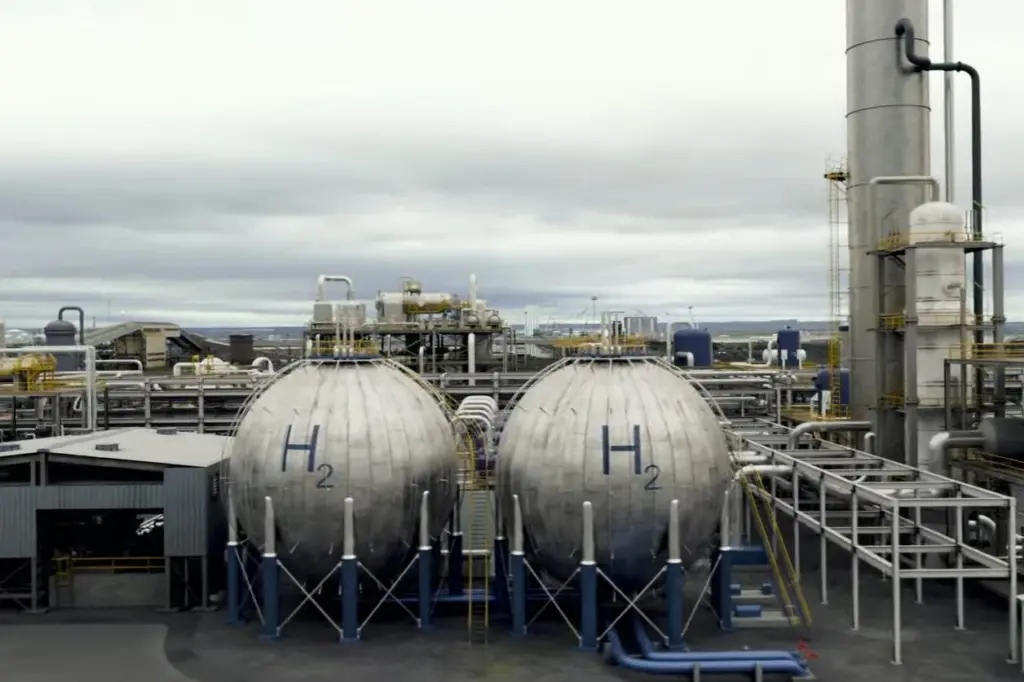
H2 Teesside Limited (H2T) originally submitted its bid to develop the large-scale hydrogen production and carbon capture scheme back in March 2024.
In its withdrawal letter to the Department for Energy Security and Net Zero, the company said: “While we believe that hydrogen could have an important role to play in the future energy market… the hydrogen demand situation in Teesside has also deteriorated as some major industrial consumers have either scaled back operations or postponed decarbonisation plans.”
Step back
The H2Teesside proposed development included a blue hydrogen plant of up to 1,200MW thermal capacity, distribution pipelines, an air separation unit, extensive carbon capture and compression facilities, grid connections and links to the Northern Endurance Partnership’s CO₂ infrastructure.
It was positioned as a flagship project supporting the UK’s shift to alternative fuels and accelerating the national energy transition – producing over 10% of the UK’s hydrogen production target by 2023.
However, objections from Teesworks Ltd and the South Tees Development Corporation argued the hydrogen scheme would undermine the feasibility of a planned data centre on the same site.
This created a fundamental land-use conflict between the different parties resulting in what H2T has called two incompatible development proposals.
H2T said the decision to withdraw stemmed from “material and significant changes” affecting development options at Teesworks, combined with declining regional hydrogen demand that increased commercial risk.
The company stressed the move reflected evolving market conditions rather than waning confidence in hydrogen or carbon capture as long-term decarbonisation technologies.
Related Articles
 ALTERNATIVE FUELS GREENPORT
 ALTERNATIVE FUELS GREENPORT
 ALTERNATIVE FUELS GREENPORT