![GreenPort[PortStrategy]](https://www.portstrategy.com/greenport/wp-content/uploads/sites/4/2026/09/GreenPortPortStrategy.svg)


WATCH: HVO testing milestone at Gothenburg
Gothenburg RoRo Terminal has surpassed one million operating hours using HVO across its machine fleet, marking a major sustainability milestone for port equipment operations.
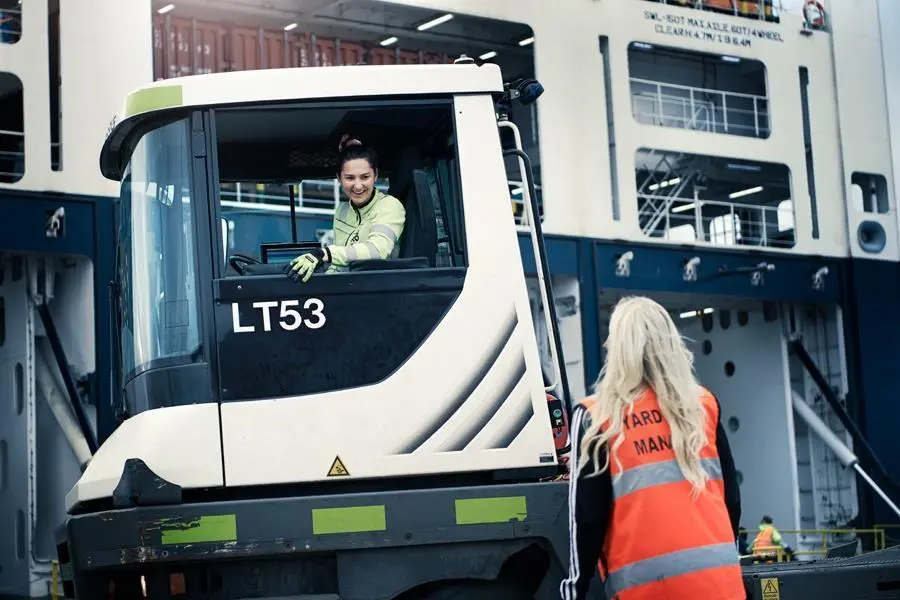
The milestone, reached in May 2026, highlights the terminal’s long-term collaboration with Volvo Penta to reduce emissions, trial alternative fuels and support the future energy transition across the commercial ports and terminals sector.
“Our partnership with Volvo Penta has been ongoing since 2014,” said Göran Dittmer, technical manager at Gothenburg RoRo Terminal.
“We provide the machines and operational environment and run as many hours as possible, while Volvo Penta uses this to test and validate driveline solutions and collect data that supports future development.”
Terminal testbed
The partnership combines real-world RoRo operations with technical testing aimed at validating next-generation driveline technologies.
Located near Volvo Penta’s headquarters, the terminal has become a testing ground for technologies including electric driveline development, hydrogen injector trials, turbo testing and component validation under demanding operating conditions.
According to Mr Dittmer, the collaboration also provides practical experience ahead of future infrastructure and regulatory changes.
The terminal introduced HVO in 2018 through a 40% fuel blend before transitioning its full machine fleet to 100% HVO in 2019, including engines dating back to 1999.
Mr Dittmer said CO2 emissions per unit have fallen to around one third of previous levels, enabling production growth while remaining within environmental limits.
The switch to HVO has also allowed the terminal to improve the environmental performance of existing port equipment without immediate investment in electrification.
Gothenburg RoRo Terminal is now exploring future retrofit and repowering opportunities as emissions regulations continue to tighten and the industry moves towards electrification and hydrogen technologies.
Related Articles
 ALTERNATIVE FUELS GREENPORT
 ALTERNATIVE FUELS GREENPORT
 ALTERNATIVE FUELS GREENPORT