![GreenPort[PortStrategy]](https://www.portstrategy.com/greenport/wp-content/uploads/sites/4/2026/09/GreenPortPortStrategy.svg)



Where does hydrogen fit in with ports net zero path?
Hydrogen has an essential but limited role in ports’ path to net zero, according to a new market report by environmental and engineering consultancy, Ricardo.
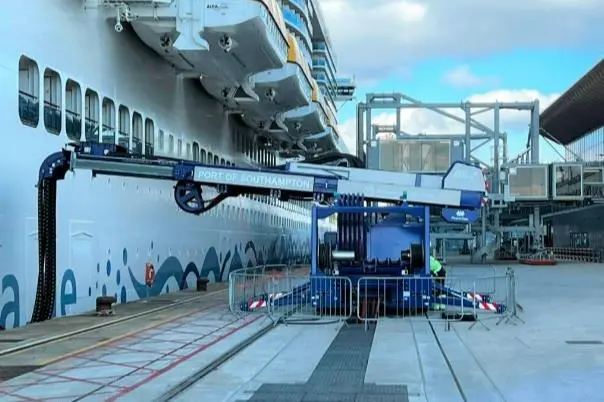
Ricardo’s new report discusses port energy ecosystems in relation to decarbonisation and where hydrogen may play its role.
“To understand where hydrogen could contribute to decarbonisation within a port system, it is important to understand its current and potential demands for energy consumption,” said Maggie Adams, hydrogen consultant, Ricardo and author of the report.
Energy demand
Despite the large variation in port activity and size, typically, a port includes more than one or up to several of the following that require energy: On-site machinery and mobility, maritime traffic, electricity consumption and port infrastructure.
“Each port’s configuration is unique, influenced by the size and types of vessels they accommodate and subsequent port machinery and vehicles required to service and maintain their operations,” said Ms Adams.
The report says that when it comes to low-carbon fuels for shipping, the research points to ammonia, but the investment headlines shout methanol.
It’s expected that in the long-term ammonia will win out for long distance cargo, though with the low flame speed and toxicity issues, there are still many technology hurdles that will take a significant time to solve.
Ms Adams said that in most cases, hydrogen is unlikely to be the predominant fuel for shipping – the age-old challenge of volumetric energy density and shear amount of stored energy required to propel the very large vessels across the oceans removes compressed hydrogen as an option.
Liquid hydrogen is still overly difficult to handle, store and requires significant space. The exception could be smaller or niche applications such as cruise ships
With this in mind, Ricardo is part of the sHYpS Project that is investigating hydrogen fuel cell power and liquid hydrogen storage for passenger ships.
The company is designing a multi-stack fuel cell capable of being containerised for megawatt power generation.
”Within a port’s energy ecosystem, the main opportunity for hydrogen lies with port equipment and mobility,” writes Ms Adams.
”To decarbonise, ports of the future will most likely electrify most of their energy uses, while hydrogen and other green fuels will play a role in covering the last mile of the road to zero emissions.”
Despite this Ms Adams said, however, upstream in the fuel supply chain, low-carbon hydrogen is a critical ingredient in alternative fuel production.
”Closer to the ports, hydrogen is most likely to have higher utilisation in industrial areas adjacent to the ports,” she said.
Related Articles
 ALTERNATIVE FUELS GREENPORT
 ALTERNATIVE FUELS GREENPORT
 ALTERNATIVE FUELS GREENPORT