![GreenPort[PortStrategy]](https://www.portstrategy.com/greenport/wp-content/uploads/sites/4/2026/09/GreenPortPortStrategy.svg)

Bio-lubricants: Safeguarding Ports and Harbours
Greater responsibility for the environment drives innovation and demand for new solutions that enable ships to maintain and improve delivery of daily operations is growing. Port and harbour areas in particular are subject to the industry’s most stringent regulations and here; environmental protection is considered an absolute priority, says Serge Dal-Farra, Marketing Manager of TOTAL Lubmarine.
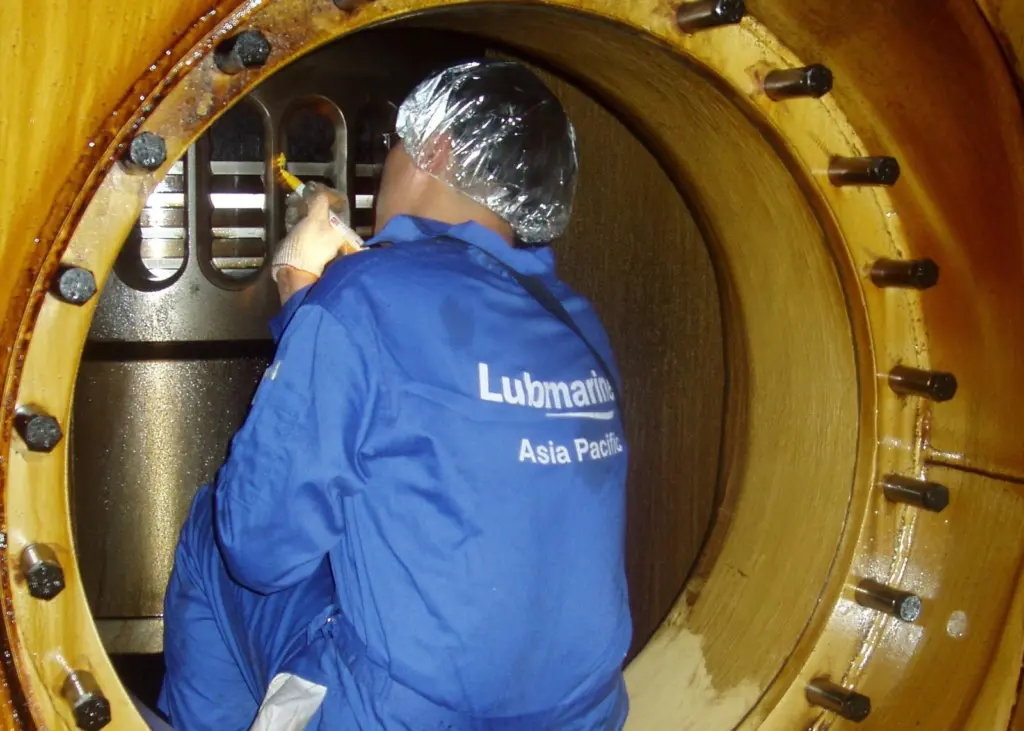
New legislation is influencing ship owners’ choices right across the board. And although the use of bio-lubricants is not currently widespread, industry interest is growing in light of upcoming regulations, governmental cost relief and public awareness, particularly from those who work closer to port and harbour areas.
2013 Vessel General Permit
Historically, legislation governing the lubricants used onboard vessels has simply not existed. However, last March the US Environmental Protection Agency (EPA) issued the 2013 Vessel General Permit (VGP) with regulations that will enter into force from December of this year. The VGP states that: “all vessels constructed on or after December 19, 2013 must use an environmentally acceptable lubricant in all oil-to-sea interfaces. For all vessels built before December 19, 2013, unless technically infeasible, owners/operators must use an environmentally acceptable lubricant in all oil to sea interfaces. “Environmentally acceptable lubricants” means lubricants that are “biodegradable” and “non-toxic” and are not “bio-accumulative”…” Ship owners worldwide will now have to use lubricants that are compliant with this new legislation if they want to transit through U.S. waters.
A key challenge for all vessel operators is stern tube lubricant leakage, which can remain undetected until the vessel’s next dry dock. In some cases, this may continue for up to 4-5 years. With the global fleet totalling more than 100,000, the cumulative effect of oil leaks, no matter how miniscule, must be regarded as a critical factor in environmental protection. According to the US Environmental Protection Agency, one litre of mineral lubricant pollutes 1,000,000 litres of seawater. Indeed previous studies from the European Commission have shown that routine, unauthorised, operational discharges of oil from ships in the Mediterranean Sea created more pollution than accidental spills.
It is common practice to use the lubricant supplied for the vessel’s main engines as the stern tube lubricant to minimise the number of lubricants carried on board. Engine oil formulations have the correct characteristics to fulfil the role of lubricants specifically formulated for stern tubes. Yet, engine oil additives, which can be up to 30% of the formulation, are strongly alkaline. Consequently, due to the nature of engine oil additives, this practice greatly increases the toxic effects of stern tube discharges.
TOTAL Lubmarine bio-lubricants
Flexible hoses, stern tube seals, controllable-pitch propellers and other hydraulic power units aboard ships are susceptible to rupture, damage and ultimately leakage. This is why the significance of lubricant discharges into the ocean, unrelated to accidental spills, is substantial. The majority of ships operate with oil-lubricated stern tubes and use lubricating oils in a large number of applications in on-deck and underwater machinery. Oil leakage from stern tubes, once considered a part of normal “operational consumption” of oil, is now considered oil pollution.
To aid in the fight against this issue; TOTAL Lubmarine has developed a range of bio-lubricants covering bearings, gears, hydraulic systems, wire ropes and stern tubes. Bioneptan, its stern tube bio-lubricant, for example, has minimal impact on the marine environment, should it come in contact with the ocean. Bioneptan is a synthetic ester biodegradable lubricant and is manufactured with synthetic base oils making it non-toxic and biodegradable to nearly 80% of its ultimate state of carbon and water within 28 days. Not only that, Bioneptan is also more durable than mineral lubricants, which are high in toxicity for the marine environment.
Given the indisputable impact of lubricants on the marine environment and the fact that all machinery uses lubricants, the risk of spills and leaks is impossible to eliminate. TOTAL Lubmarine’s bio-lubricants address the need for more sustainable lubricants, especially important for stern tubes and propeller shafts – areas where leaks are most common. The bio-lubricants have been through rigorous independent testing under the OECD 301 B requirements and produced excellent results. Not only are they eco-friendly, they perform better when compared to mineral products and also fulfil the European Ecolabel criteria for biodegradability, renewable carbon content and eco-toxicity.
Lubricant oil spills involve response costs as well as socio-economic and environmental damage costs. Frequent low-volume operational discharges of lubricants are unlikely to result in the type of response generally applied in major oil spills. For this reason, it is important that all possible measures are taken to ensure that the harmful effects of leaks are neutralised. According to a study published by Environmental Research Consulting, total estimated costs for lubricating oil operational leak and discharge worldwide, based on the probabilities of operational discharges by vessel type in the 4,708 global ports are estimated to be US$322 million annually.
The final VGP also contains more stringent effluent limits for oil to sea interfaces and exhaust gas scrubber wash water, which will assist in the environmental protection of U.S. waters. The EPA has also improved the efficiency of several of the VGP’s administrative requirements. This includes allowing electronic recordkeeping, allowing combined annual reports for some vessel operators and reduced inspection frequency for vessels in a prolonged idle status, among others.
Evolving to a more energy efficient industry
Along with the development of bio-lubricants, there have also been significant advances through alternative engineering designs for stern tubes that eliminate or reduce the amount of lubricating oil in use, such as seawater-lubricated propeller shaft bearings. Also, since a certain proportion of lubricant lost to the sea comes from mechanical failure, regular equipment inspection by port authorities and modernisation of fleets, are all valid ways of reducing leakage impact.
TOTAL Lubmarine will continue to work closely with both OEMs and customers to demonstrate that innovative technology and lubricants combined can safeguard efficient operations for the future, both improving performance, whilst also reducing environmental impact. As shipping evolves into a more energy efficient and sustainable industry, lubricant providers must remain one step ahead to ensure that the global fleet is protected and fully equipped to deal with the developing eco-efficient technology solutions of the future.
Related Articles
 ENERGY & TECHNOLOGY GREENPORT
 PROJECTS & INITIATIVES GREENPORT
 ALTERNATIVE FUELS GREENPORT