![GreenPort[PortStrategy]](https://www.portstrategy.com/greenport/wp-content/uploads/sites/4/2026/09/GreenPortPortStrategy.svg)


BP dedicates shore power for oil tankers
The Port of Long Beach and BP America unveiled the world’s first oil tanker terminal equipped with shore power to eliminate air emissions from docked vessels.
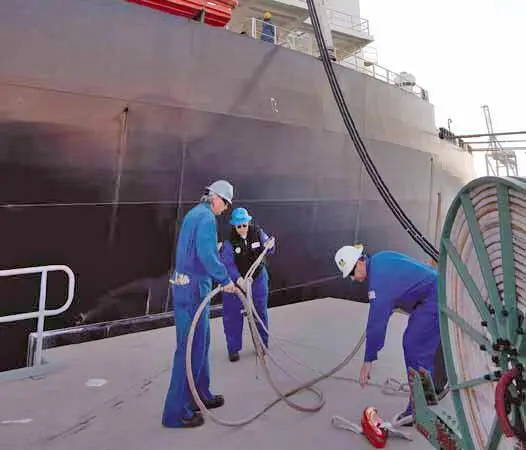
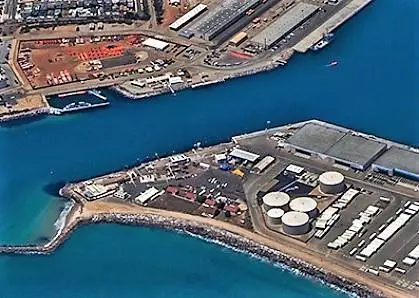
The BP terminal on Pier T becomes the Port of Long Beach’s second dock equipped with shore power, but the first such facility in the world for “liquid bulk” ships — vessels that transport large amounts of petroleum, etc. Shore power, also known as “cold-ironing,” allows a specially equipped vessel to plug in at berth. The vessel can then draw power for its pumps, communications, ventilation, lighting and other needs from Southern California Edison, instead of its own diesel engines. Providing shore power to an off-loading oil tanker is the pollution-reducing equivalent of removing 187,000 cars from the road for a day. In a year, shore power will eliminate more than 30 tons of pollution. The BP shore power installation delivers enough electricity to power about 5,500 homes — up to 8 megawatts at 6,660 volts. The Alaska Tanker Company has equipped two of vessels that regularly visit the Port to be able to plug into the BP Terminal on Pier T, which supplies local refineries with crude oil. The joint project, which was undertaken voluntarily, was completed at a cost of $23.7 million — $17.5 million from the Port and $6.2 million from BP.
Related Articles
 ENERGY & TECHNOLOGY GREENPORT
 PROJECTS & INITIATIVES GREENPORT
 ALTERNATIVE FUELS GREENPORT