![GreenPort[PortStrategy]](https://www.portstrategy.com/greenport/wp-content/uploads/sites/4/2026/09/GreenPortPortStrategy.svg)

Counting the benefits of carbon credits
Porto Itapoá will be the first port in Brazil to include carbon credits in its operations, helping reinforce the terminal’s leadership in environmental issues.
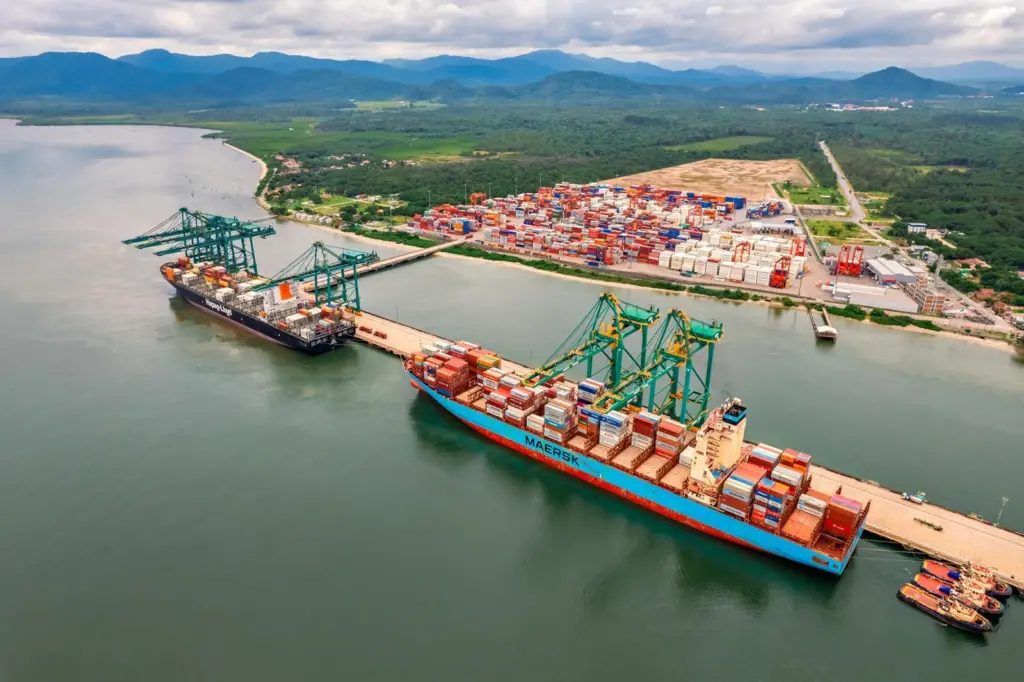
The port’s Carbon Neutralization Project, launched in partnership with the Ambipar Group, will allow terminal customers to purchase carbon credits to offset their emissions.
“These credits, derived from forest conservation or reforestation, are certified by Ambipar,” said Sergni Pessoa Rosa Jr, director of operations, technology and environment at Porto Itapoá.
“The data we have available today relates to the macro region where we are located, so we need to better understand the specificities of this energy source in our municipality. It will serve as a basis for future projects, not only for Porto Itapoá but for all entrepreneurs in the city.”
Energy policy
By pioneering the carbon credit market, Porto Itapoá said it wants to impact the entire logistics chain, part of its new energy policy ro reduce carbon emissions across the board.
In 2023, Porto Itapoá changed its energy acquisition policy in the national system, opting to consume only renewable energy in new contracts. The transaction is certified by I-REC(e), a global tracking system for renewable energy attributes designed to facilitate reliable accounting of renewable energy attributed to the consumer.
Porto Itapoá is also developing a solar energy capture project, with panels already installed for a specific study of solar light incidence at the port.
The port achieved, for the second time in 2023, the Gold Seal of the GHG Protocol, a program implemented in Brazil by the Center for Sustainability Studies at the Getúlio Vargas Foundation (FGVces) in partnership with the Ministry of the Environment.
Additionally, it has invested over R$ 25 million in new autonomous RTGs – the first terminal in South America to operate them – which consume up to three times less fuel than conventional ones.
Related Articles
 ENERGY & TECHNOLOGY GREENPORT
 PROJECTS & INITIATIVES GREENPORT
 ALTERNATIVE FUELS GREENPORT