![GreenPort[PortStrategy]](https://www.portstrategy.com/greenport/wp-content/uploads/sites/4/2026/09/GreenPortPortStrategy.svg)
Electric tugs kick port emissions to the kerb
Electric tugs at the Port of Vancouver have dramatically cut port emissions over the last year, marking a major step forward in the port’s decarbonisation efforts.
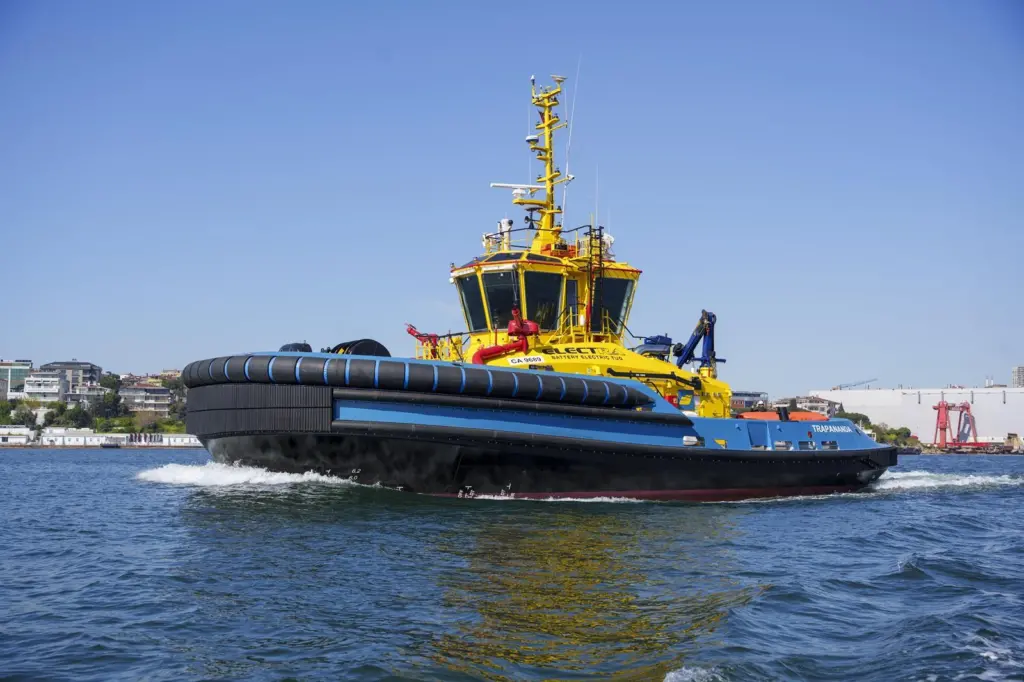
SAAM Towage’s Dynamo Project, launched in early 2024, introduced two electric tugs into port operations, reducing the company’s carbon intensity index by 72% compared to similar diesel-powered port vessels.
“Introducing electric tugboats marks a profound change in our industry,” said Pablo Cáceres, sustainability and development manager, SAAM Towage.
“Our experience in Vancouver demonstrates that maritime electromobility is not only a viable solution we can provide to our customers, but also offers outstanding environmental and economic benefits.”
Added benefits
As well as the carbon intensity reduction achievment in the first year, SAAM Towage said an additional 90% reduction is projected in the second year, alongside 70% lower operating costs.
The success of these electric tugs highlights the company’s commitment to sustainable port operations and the project has helped to address challenges like battery charging, crew training and vessel design.
Collaborations with Robert Allan Ltd and Sanmar Shipyards have been critical in overcoming these hurdles and advancing the transition to greener port vessels.
Beyond Vancouver, a third electric tug will soon operate in Puerto Chacabuco, Chile, reinforcing SAAM Towage’s role in global port decarbonisation.
The company’s long-term vision includes re-engineering existing fleets, adopting alternative fuels, improving energy efficiency and reducing underwater noise.
As ports worldwide push to lower port emissions and meet climate targets, the project has helped demonstrate how the benefits of electric tugs are not only limited to environmental impact, but also operational and financial gains too.
Related Articles
 ENERGY & TECHNOLOGY GREENPORT
 PROJECTS & INITIATIVES GREENPORT
 ALTERNATIVE FUELS GREENPORT