![GreenPort[PortStrategy]](https://www.portstrategy.com/greenport/wp-content/uploads/sites/4/2026/09/GreenPortPortStrategy.svg)


Florida ports advance their electrification strategy
Florida’s seaports are advancing port electrification strategies to modernise port infrastructure, improve competitiveness and significantly reduce port emissions.
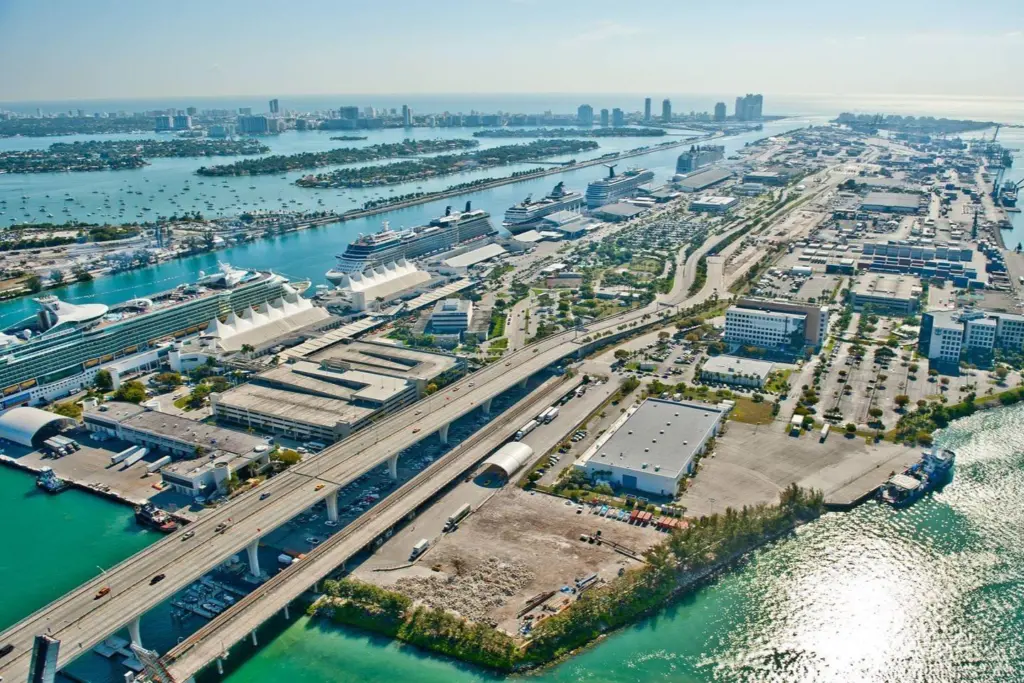
That’s according to the report, Powering Florida: Port Electrification as a Pillar of Global Competitiveness, by the Environmental Defense Fund and consultants AECOM, which outlines how ports are deploying shore power systems and electrified terminal equipment to meet evolving regulatory, operational and environmental demands.
The report states: “To be a good steward of the environment by reducing air emissions,” highlighting how Floridian ports collectively view electrification as essential to improving air quality while responding to customer and regulatory expectations.
Shore power focus
Electrification is being implemented across landside cargo handling operations and waterside vessel connections, allowing ships to plug into onshore electrical grids instead of running auxiliary engines while berthed.
A central driver behind investment is emissions reduction alongside operational efficiency gains.
Electrified cranes, terminal tractors and shore-to-ship power systems are enabling ports to optimise terminal density and throughput without expanding physical footprints.
Shore power infrastructure also plays a critical role in addressing maritime decarbonisation targets at Florida’s ports. At-berth connections eliminate direct vessel emissions during port stays, helping ports align with global greenhouse gas reduction strategies and shipping industry sustainability commitments.
Studies cited in the report demonstrate substantial reductions in nitrogen oxides, sulphur oxides and particulate emissions following shore power adoption.
For example, PortMiami recently implemented a US$130 million shore power installation programme at five cruise berths. The project was primarily funded by PortMiami, with US$18 million from Federal and State grants. The first berth was operational in May 2024, with the rest completed by in mid-2025.
Port Everglades is also embarking on a cruise shore power programme. The port currently has shore power systems for tug operations and the U.S. Coast Guard Fort Lauderdale Station located within the port jurisdictional area also has active shore power systems.
With global carriers increasingly deploying shore-power-ready vessels, the report concludes that investment in modernised electrical port infrastructure will be essential for Florida ports seeking long-term growth, regulatory compliance and reduced port emissions going forward.
Related Articles
 ENERGY & TECHNOLOGY GREENPORT
 PROJECTS & INITIATIVES GREENPORT
 ALTERNATIVE FUELS GREENPORT