![GreenPort[PortStrategy]](https://www.portstrategy.com/greenport/wp-content/uploads/sites/4/2026/09/GreenPortPortStrategy.svg)

US puts electrification on the agenda
The Port of Vancouver USA has been awarded a US$22.5 million grant from the EPA’s Clean Ports Program, aimed at reducing emissions through expanded port electrification and clean energy infrastructure.
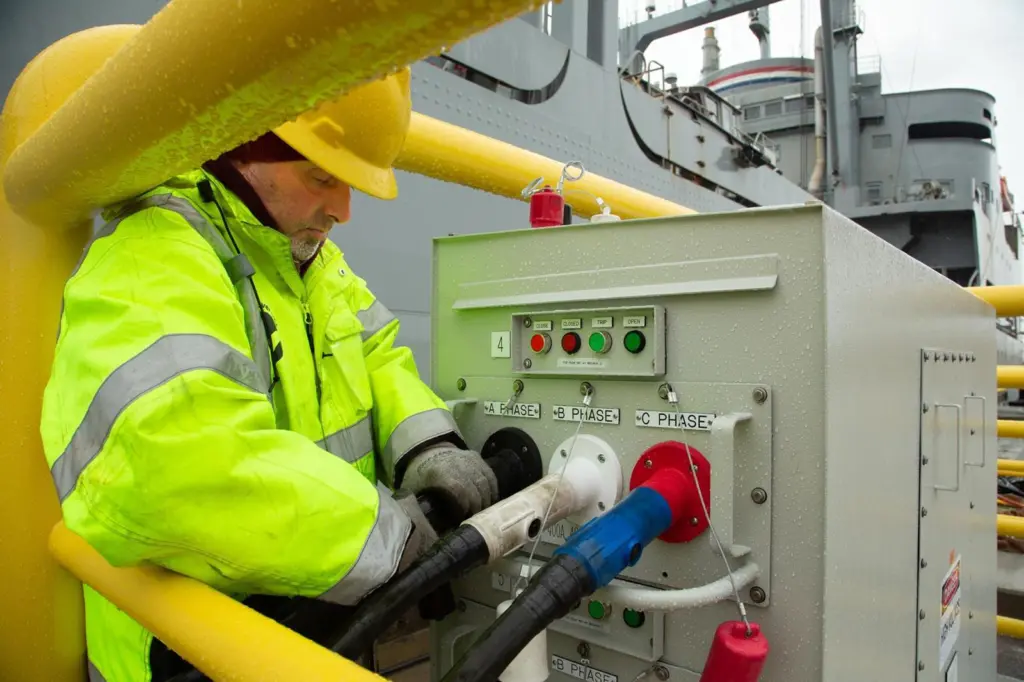
This funding will support the port’s ambitious climate goals by enabling the purchase of zero-emissions mobile harbour cranes, construction of crane charging stations and installation of shore power at Terminal 1.
“This award represents a huge leap forward in achieving our Climate Action Plan. We’re grateful to the EPA and to Senators Murray and Cantwell for their continued support, empowering ports like ours to accelerate clean energy transformation,” said Julianna Marler, CEO of the Port of Vancouver USA
Ambitious goals
These advancements underscore the port’s commitment to sustainable port infrastructure and cleaner air for surrounding communities.
The port will contribute an additional US$2.5 million toward the project, ensuring the deployment of two electric Liebherr mobile harbor cranes to replace older diesel models.
These cranes will enhance cargo-handling capabilities for large items such as wind blades and heavy metals while producing zero emissions. The grant also provides for essential charging infrastructure, which will support the cranes through electric cables and batteries.
Perhaps most notably, the grant facilitates shore power installation at Terminal 1.
Once completed, shore power will allow visiting river cruise vessels to connect to the port’s electrical grid instead of using diesel generators, significantly reducing emissions.
The funding underpins the port’s Climate Action Plan launched in 2021 which aims to reduce greenhouse gas emissions while also improving air quality and health benefits in the community.
Port of Vancouver is just one of several ports in America to receive funding under the EPA’s Clean Ports Program. The Biden-Harris Administration has announced nearly US$3 billion of investments in clean ports as part of its Investing in America Agenda.
The program will fund 55 zero-emission port equipment, infrastructure and planning projects across the nation.
Related Articles
 ENERGY & TECHNOLOGY GREENPORT
 PROJECTS & INITIATIVES GREENPORT
 ALTERNATIVE FUELS GREENPORT