![GreenPort[PortStrategy]](https://www.portstrategy.com/greenport/wp-content/uploads/sites/4/2026/09/GreenPortPortStrategy.svg)
EXCLUSIVE: A big vision for Hong Kong’s green cruise hub
Kai Tak Cruise Terminal has been providing a hub for sustainable cruise operations in Hong Kong and beyond since 2013, Michele Witthaus talks to managing director Jeff Bent about the terminal’s environmental achievements and plans
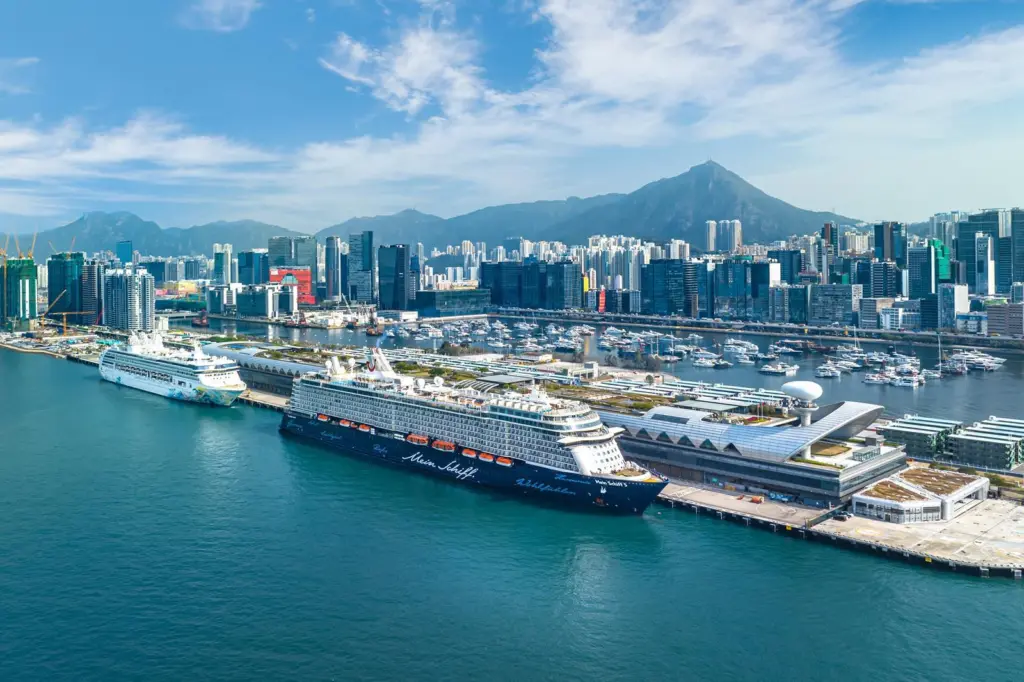
Built on the site of a former airport runway in Hong Kong’s Victoria Harbor, Kai Tak Cruise Terminal (KTCT) opened in June 2013. The design of the three-storey terminal building was conceived with a multifunctional space in mind.
Stretching 850m in length and 65m in width, the terminal provides restaurants, event spaces, and Hong Kong’s largest rooftop garden, in addition to the cruise facilities it houses.
The international cruise traffic that forms a vital part of KTKC’s business experienced significant impacts as a result of the Covid-19 pandemic and the terminal only resumed welcoming international cruise ships again in March 2023 for the first time in three years (local cruises having resumed after a one-year hiatus).
However, the terminal has bounced back strongly since the global shutdown of tourist travel. Within the first ten active months following the resumption of normal cruise business, WCT reported that the terminal reached 75% of pre-pandemic full year levels and retained local market share of over 90% of cruise passengers.
Community friendly
The social aspects of sustainability have been at the heart of KTCT’s ethos since inception, with a particular focus on making the terminal a community-friendly hub. Attractions include a central lawned area, fountain plaza and water garden, along with a viewing platform with vistas of Hong Kong Island and the Kowloon Peninsula.
“We reached throughput goals several years early, committed to a barrier-free workplace, and maintain close ties with the community,” says Jeff Bent, managing director for Worldwide Cruise Terminals (WCT), which manages and operates the terminal.
“We continue to work on environmental goals. We have already reduced the terminal’s carbon footprint by 50% and continue to lobby for more alternative fuel bunkering options for visiting ships, so that the industry as a whole can improve its environmental performance.”
WCT has been recognised for its ESG efforts with many local and regional, private and public, awards and certificates and KTCT has amassed an impressive array of accolades since it opened for business. In 2023 alone, WCT collected 17 awards and certifications on behalf of the terminal.
These included the ISO 14001:2015 and ISO 45001:2018 certifications honouring the organisation’s commitment to environmental management and occupational health and safety standards. The terminal also received the ISO 9001:2015 Quality Management System award, for which it has been certified since Nov 2015 and which is valid until Jan 2027.
Local commendations in 2023 include the HK Awards for Environmental Excellence (received in December for the 7th consecutive time), along with the HK Green Awards 2023’s Environmental, Health and Safety Award and 5 Years + Sustained Performance Award in November. The terminal also won a Wastewi$e Certificate (Good Level) presented by HKGO in November.
Other markers of success in the last year include a UNSDG Achievement Awards 2023 Recognised Organisation (second consecutive year), received 24 Aug 2023; an APEC Green Port Award 2023 issued by the APEC Port Services Network and an Indoor Air Quality Certificate (Excellent Class) 2023-2024, both received in October. The terminal also attracted an HSBC Living Business ESG Award (Certificate of Excellence) and a BOCHK Corporate Low-Carbon Environmental Leadership Award. Received 8 Aug 2023.
Decarbonising transport
These awards recognise HKCT’s sustainability endeavours on multiple fronts, with an emphasis on decarbonising transport in and around the terminal.
“WCT conducted the first LNG bunkering safety study in Hong Kong several years ago, which was circulated and discussed amongst government departments,” says Mr Bent.
“A local source of LNG has been available since 2023, the government will pass necessary legislation for LNG bunkering in 3Q2024, and it is likely that we will see LNG bunkering locally in Hong Kong in early 2025.”
Future fuels are readily accessible in the region. Hydrogen is readily available in Hong Kong, and there are already buses running on hydrogen. The city is also working on methanol bunkering.
Provision of shore power for visiting cruise ships is under consideration, but “may not be the best alternative for Hong Kong, until the power generation is significantly cleaner than the ships are since IMO2020,” adds Mr Bent.
The terminal building contributes to improving the sustainability of the wider port and of the city and region and boasts both a radar tower and a solar power system. “The KTCT is a showcase for environmental technologies,” explains Mr Bent.
“It is a BEAM platinum-class building, already very efficient, and WCT was able to further reduce carbon emissions by over 50%.”
A broad range of local bus routes connect travellers to various metro stations. “KTCT contributes to the sustainability of the wider port and city by providing an electric bus charger, Hong Kong’s first Tesla superchargers since 2014, and additional standard chargers for users of the public car park,” says Mr Bent.
Development plans for KTKC are centred on ensuring sustainable cruise operations going forward. “Our goals are to continue to become more efficient on both a per passenger and absolute basis. There are always incremental improvements that can be found and made,” says Mr Bent.
The organisation works with partners and stakeholders, and other nearby ports, to ensure ‘joined-up’ sustainable cruise tourism. “Hong Kong’s Environmental Protection Department is very aware that air quality depends on all nearby cities coordinating efforts to reduce pollution,” he adds.
“They communicate closely, measure emissions, track sources, and tackle issues jointly.”
Kai Tak’s green journey
With a steadfast commitment to reducing its ecological footprint, Kai Tak Cruise Terminal has emerged as a shining example of responsible tourism in Hong Kong.
From innovative green technologies to comprehensive waste management systems, the terminal has implemented a range of initiatives aimed at promoting environmental conservation.
In addition, by harnessing renewable energy sources and optimising energy efficiency, the terminal has significantly decreased its carbon emissions while enhancing operational sustainability.
Furthermore, Kai Tak Cruise Terminal has prioritised water conservation and quality improvement efforts, implementing advanced filtration systems and eco-friendly practices to minimise its impact on local water resources.
These initiatives not only benefit the environment but also contribute to the preservation of Hong Kong’s natural beauty and marine ecosystems.
Through ongoing community engagement and educational outreach programs, the terminal continues to inspire individuals and businesses alike to embrace environmentally responsible practices.
As the maritime industry evolves towards a more sustainable future, Kai Tak Cruise Terminal stands at the forefront, demonstrating the significant positive impact that can be achieved through proactive environmental initiatives.
With a continued focus on innovation and collaboration, the terminal said it remains committed to charting a course towards a greener, more sustainable tomorrow.
Interested in finding out about green shipping and ports and fostering good business relationships in Asia? GreenPort and Port Strategy are behind the inaugural Green Ports & Shipping Congress taking place from 8 to 9 May 2024 in Singapore.
The event will cover a range of topics addressing the aspects of energy transition plans and implementation as they affect port operations and ships, both in the container and cruise sectors. More information from https://www.portstrategy.com/green-ports-and-shipping
Related Articles
 ASIA GREENPORT
 PRODUCTS & SERVICES GREENPORT
 ALTERNATIVE FUELS GREENPORT