![GreenPort[PortStrategy]](https://www.portstrategy.com/greenport/wp-content/uploads/sites/4/2026/09/GreenPortPortStrategy.svg)




Big plans for Busan
Busan Port Authority (BPA) says it’s ramping up development at the world’s fifth largest port – both to make it the logistics hub of Northeast Asia and keep up with projected demand.
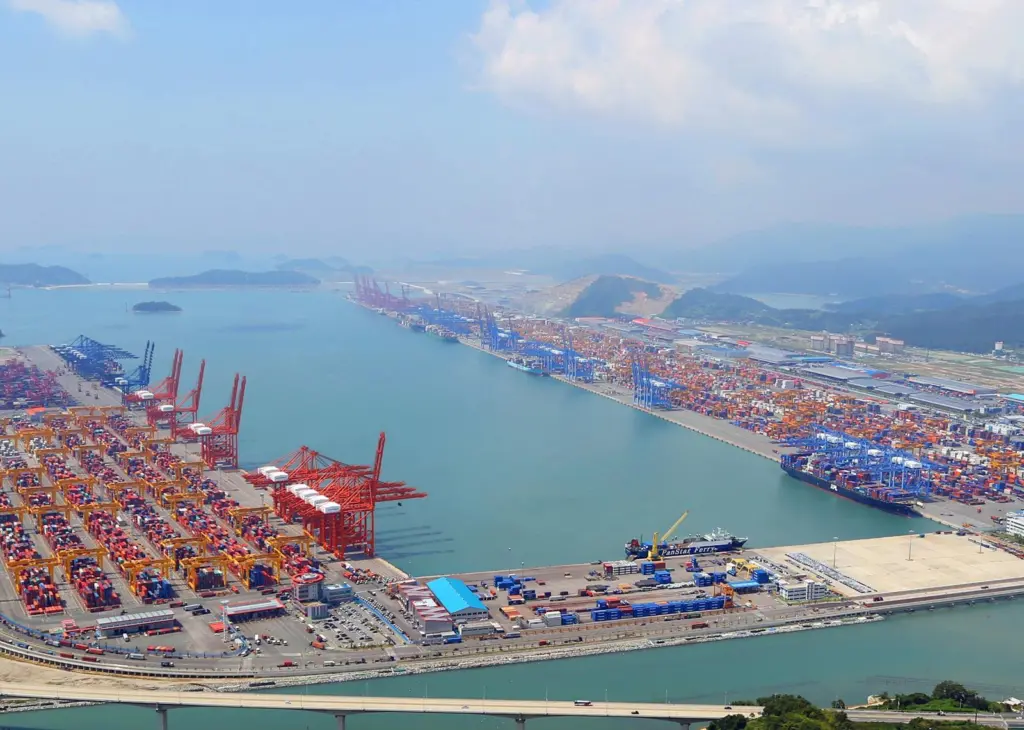
The port handled 17.68m teu in 2013 and this has been increasing each year since Busan New Port opened for business in 2006 so the port’s present total capacity of 15.5m teu is being surpassed.
Busan’s New Port operates 23 berths with a total capacity of 9.23m teu. But BPA plans to develop up to 22 new berths at both ports to add a further 6.6m teu overall by 2020 and this is being completed in phases.
When added to the current capacity at North Port, this should give the port the total capacity of around 22m teu by 2020.
As part of the development, a new ITT container handling system will be installed to better streamline the handling of increased cargo volumes. A large distripark and a Class II Dangerous Cargo storage facility will also be created. The existing three logistics parks will also be amalgamated next year creating a space that is 5.1 million square metres.
Meanwhile, US$8.5bn of work is underway at Busan North Port to create a new residential waterside development and a brand new cruise facility – one of the largest construction projects ever undertaken in South Korea.
Mr Ki-tack Lim, BPA President, explained that being Northeast Asia’s hub though is not all about the port development being undertaken. “There is still plenty to do to become a global hub port, we need to create a better network around the world,” he said.
Hence, BPA is trying to create closer links with shippers and carriers and has opened representative offices in Shanghai, China and Tokyo, Japan. It has also just opened a brand new office in London, UK.
The port authority clearly sees itself as more than just an Asian port. But the reality is at the moment that most of its transhipment cargo (96% of cargo handled at the port) is received from China and Japan and then is bound for North America (55%).
So it’s looking at expanding its reach, especially in light of the formation of carrier alliances such as 2M, O3, G6 and CKHE, which are helping to spur the trend towards larger ships.
Mrs Jinsun Sin, general manager, BPA London office, told Port Strategy: “Our new office in London is vital to creating more cooperation between parties if we are going to attract more east-west and north-south transhipment trade to the port.”