![GreenPort[PortStrategy]](https://www.portstrategy.com/greenport/wp-content/uploads/sites/4/2026/09/GreenPortPortStrategy.svg)



Have they gone overboard?
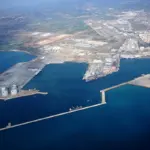
Well on the road to becoming the worlds workshop, a port building frenzy has hit China in recent years. But does it amount to too much, asks Neil Madden .

China’s exports and imports are almost entirely dependent on sea transport since 90% of its total trade is handled via the country’s ports. With the buoyant world demand for household goods, so many of them now made in China, growth rates of container movements through its ports are staggering.
In fact, in June this year, the Chinese government announced that the country’s handling capacity had reached 61.68m TEUs, the largest volume by country in the world. The government expects that by 2010, China’s shipping volumes could surge to 6.1bn tons, from 4bn tons in 2004, and container handling capacity could reach 140m TEUs. China now has 1,430 ports and 34,000 berths.
The port of Shanghai and the combined facilities of Shenzhen have edged out traditional giants Busan and Kaohsiung to claim, respectively, third and fourth spots in the world container port league. Since the late 1990s, Shanghai has recorded spectacular annual growth: 37% in 1999, 34% in 2000, 46% in 2001, 40% in 2002, 31% in 2003, 30% in 2004.
Large-scale developments such as Shanghai’s giant Yangshan Project abound and the government has relaxed regulations covering maritime transportation to stimulate smoother cargo operations.
These efforts are striking enough to have caught the notice of port operators in the region who directly compete with China for cargoes.
And private terminal operators have been queuing to invest hundred of millions of dollars up and down the coast.
There are three major port regions in China: Hong Kong and Shenzhen in the southeast; Shanghai in the centre; and the Bohai Rim (Dalian, Qingdao, and Tianjin) in the northeast. Within each region a picture is emerging in which one port stands as the principal hub, while others vie for the remainder of the business.
In the southeast (and despite the protestations of many interested parties) Hong Kong remains dominant, with the numerous facilities in Guangdong province playing an auxiliary role (albeit a very important and fast growing one).
In the centre, Shanghai has established itself as the region’s principal port. But in the northeast the picture is not so clear.
Qingdao developed quickly to become the region’s biggest port. The provincial government plans to invest US$6.4bn for port construction in the next five years building 159 berths and increasing annual handling capacity to 13.5m TEUs. And both Tianjin and Dalian are investing huge sums to boost their respective claims to be the maritime centres for the northeast.
QUESTION OF MEETING DEMAND All this begs the question of whether there is too much port building.
Not surprisingly, the Chinese government does not see things that way. The country’s container cargo will rise to 140m TEUs by 2010, up from 61.5m TEUs in 2004, according to minister of communications Zhang Chunxian. Zhang points out that cargo volumes for China are expected to grow by more than 50% a year in the next five years. “It is not a question of over-building in Chinese ports; it is a question of being able to meet demand, ” says Zhang.
“Current development is based on market demand and integrating this with central government policy. Some of the ports cannot be upgraded and so we will have to build new ones.”
Despite the surge in new projects, the terminal operations arm of shipping group Cosco Pacific reckons that the increase in handling capacity has not been catching up with demand. This phenomenal growth is forcing the government to consider increasing capacity in second tier cities in an effort to ease bottlenecks. Earlier this year, Wang Rongrong, associate director of the Economic and Trade Bureau for Zhejiang Province Development and Reform, told Reuters that the government is mulling over the building of a container terminal in Jaixing, in the province of Zhejiang, located just across the bay from Ningbo, itself the site of major port expansion plans.
Nevertheless, overall port planning was wrested back to central government last year. This followed a law passed in 2002, which divested port planning to provincial and regional authorities, and resulted in a plethora of new project plans. Now the Ministry of Communications is in overall charge and has been revising the national ports plan. Some projects have been put on the backburner while additional guidelines, such as environmental sustainability, have been introduced into the planning process.
But there are some more cautious voices being raised. Charles de Trenck, head of shipping research, at Citigroup Smith Barney, has actually researched available capacity throughout China and calculated which areas might actually suffer capacity constraints. He has cautioned: “We’re not saying ‘don’t build’. . . but ‘beware of overbuilding’.”
According to de Trenck’s research, Shenzhen handled 13.7m TEUs in 2004 with about 14 main berths indicating productivity as high as Hong Kong’s. Figures supplied by consultant engineers GHK show new berths in the Pearl River Delta will number 11 this year, with a further 16 by 2010. Nansha is the next new port project outside Guangzhou and Dachan, after some delay, has now got the green light. “So there is no shortage of capacity in the Shenzhen-Hong Kong corridor, ” he observes.
De Trenck’s argument is that the only high-growth region where capacity is “a little tight” is Shanghai, assuming 14.5mTEUs in 2004 and a relatively small level of transhipment. However, new capacity in Ningbo and the forthcoming Yangshan project should be more than enough to soak up expected growth levels.
Also, Qingdao, to date the principal port in the Bohai Rim, looks to have sufficient space planned for the rest of the decade while also keeping an eye on the aforementioned rivals of Dalian and Tianjin.
Moreover, the mainland China ports, from Ningbo northwards, will have to rely heavily on domestically generated cargoes. Those with ambitions to become transhipment hubs will have to compete with neighbouring facilities in Japan and Korea. Currently, utilisation at the Korean port of Gwangyang is estimated to be just 25%. The redevelopment of Busan (the first phase of which is due to open next year) will create additional capacity of around 8m TEUs. It should be said that the prime focus of Busan Newport is to relieve congestion in the existing port area rather than create a whole new cargo base.
However, there will undoubtedly be extra handling capacity available there, too.
The Korean government has set aside serious money in rebates, discounted towage and pilotage, free container storage and the like, in order to establish the peninsula as the most attractive transhipment hub for North Asia. “As a result of South Korea’s excess capacity, no China port, even Yangshan, should seriously consider transhipment unless tied into a specific carrier strategy, ” de Trenck said at this year’s TOC Asia. Thus, the picture for shipping lines choosing a hub looks good: there seems plenty of scope for driving hard bargains with ports anxious for transhipment.