![GreenPort[PortStrategy]](https://www.portstrategy.com/greenport/wp-content/uploads/sites/4/2026/09/GreenPortPortStrategy.svg)


A sanctuary for endangered penguins
Napier Port’s new Number 6 Wharf (Te Whiti), has attracted attention not only through being one of New Zealand’s largest pieces of privately-funded infrastructure in a decade, but because of its environmental initiatives – particularly for the protection of Little Blue Penguins.
The New Zealand port officially declared its new 350-metre wharf open for business at the end of July, delivering capacity to support the future growth of imports and exports across the central and lower North Island.
Remarkably, the project was achieved with harmony among stakeholders on social, environmental and governance objectives. There was strong support from the Hawke’s Bay community, iwi (local indigenous tribes), investors and shareholders alike, without any environmental court challenges.
Chief executive Todd Dawson says Napier was pleased to have achieved resource consent without any challenges. “This is something that doesn’t happen often with major projects now and is a credit to everyone involved and genuine engagement between many different stakeholder groups.”
Consultative process
Detailed planning was undertaken with mana whenua (tribes of the area), fishing groups and other marine users during a comprehensive resource consent process.
This saw the development of a Marine Cultural Health Programme (MCHP) – a partnership between mana whenua and Napier Port to monitor the health of the marine environment in and around the bird-rich Ahuriri Estuary. It is the first marine cultural health programme of its kind in New Zealand.
Two new artificial reefs were created, using limestone from a dismantled revetment seawall, to enhance the existing habitat and health of marine life and provide for local recreational fishing. This project was a unique collaboration with LegaSea – a group of recreational fishers dedicated to rebuilding Hawke’s Bay fish stock.
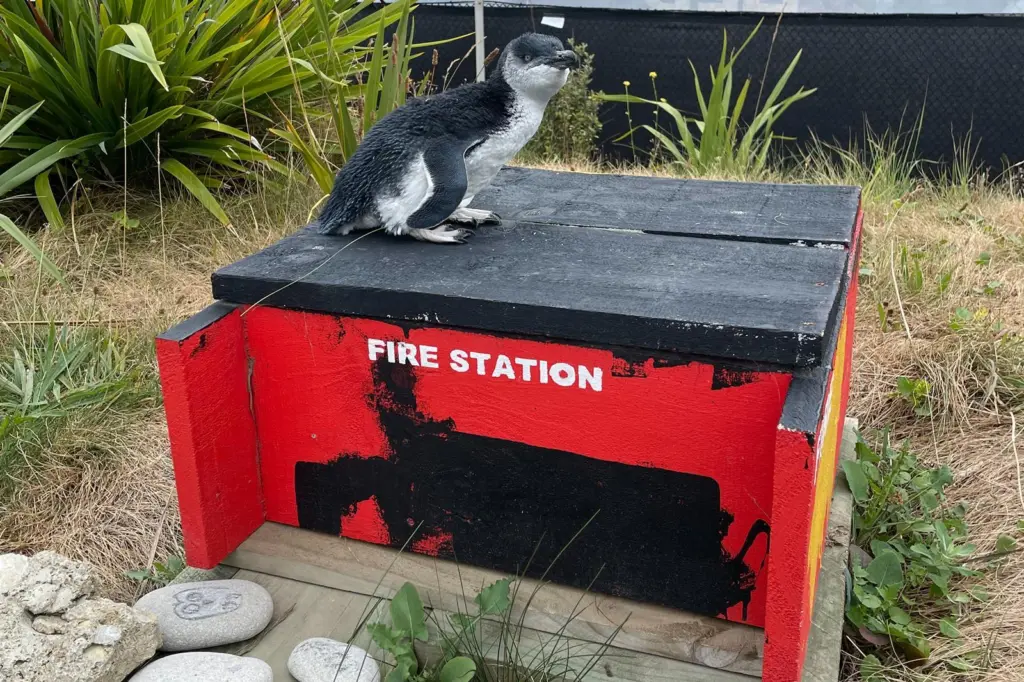
Then came the establishment of the Napier Port Little Blue Penguin (kororā) sanctuary to protect this at-risk species, including the microchipping of over 185 penguins.
The sanctuary was developed with the help of kororā expert Professor John Cockrem from Massey University in consultation with mana whenua as kaitiaki (guardians) of the area, the New Zealand Department of Conservation and the Hawke’s Bay Regional Council.
Local schools and family of the 6 Wharf project team combined to decorate the nesting boxes within the sanctuary.
In early September, it welcomed a special new resident when Ocean the kororā arrived safely back to a nesting box almost two years to the day after she was first found injured and dehydrated on a beach, with a fractured and swollen flipper.
Ocean was first brought to the National Aquarium of New Zealand for her initial care, followed by an operation and four-month rehabilitation stay at Wildbase Hospital in Massey University, Palmerston North, before being released to the Napier Port penguin sanctuary for her safe return to the wild.
Napier Port’s environmental advisor Paul Rose discovered that Ocean had returned to the port’s penguin sanctuary when he was carrying out his regular nesting box checks. All penguins that visit the sanctuary are microchipped and added to an extensive database of kororā survey information.
Professor Cockrem says that this is the first time in New Zealand that a kororā that has spent several months in rehabilitation is known to have both survived at sea after release and also returned to the colony where it was released.
“It’s a fantastic achievement for everyone involved and it’s stories like these that give a real boost to those of us who study and care for this at-risk and declining species, he says.
Related Articles
 ENERGY & TECHNOLOGY GREENPORT
 PROJECTS & INITIATIVES GREENPORT
 PRODUCTS & SERVICES GREENPORT