![GreenPort[PortStrategy]](https://www.portstrategy.com/greenport/wp-content/uploads/sites/4/2026/09/GreenPortPortStrategy.svg)

Australian rail solution combats congestion
Support for a major rail project developed by an Australian port to cut road congestion and emissions has been commended by the Australian Logistics Council (ALC).
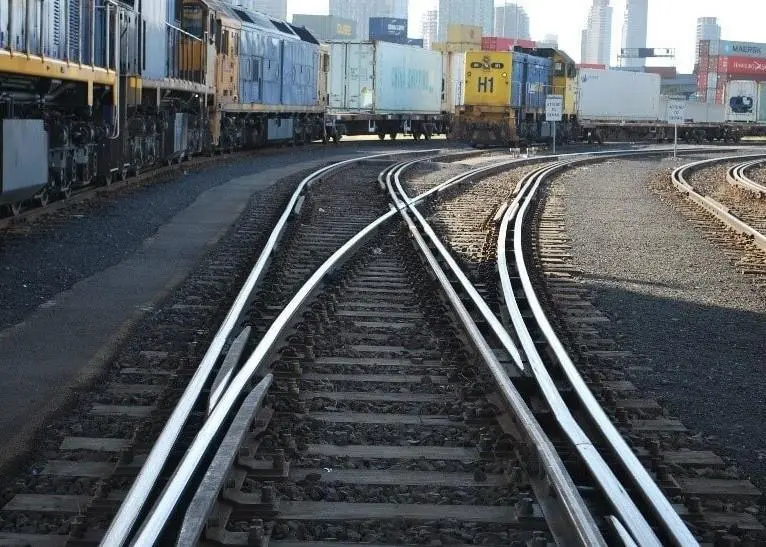
The ALC said the Victorian Government’s support of the AUS$125m Port Rail Transformation Project (PRTP) developed by the Port of Melbourne is a welcome recognition of industry’s efforts to reduce road congestion around major port precincts and improve the efficiency of supply chains.
“The PRTP will help to alleviate road congestion around the Port of Melbourne, which is critical for logistics companies moving freight into and out of the port, and also for improving the liveability of residential communities near the port,” said ALC CEO Kirk Coningham.
The port’s rail solution at Swanson Dock East will be developed over the next three years and will see more containers moved by rail more efficiently, by-passing roads in inner Melbourne.
Port of Melbourne CEO, Brendan Bourke said today “The port’s rail solution is a critical and missing link in Melbourne’s transport and supply chain network. It expands the rail offering for freight and delivers environmental benefits by reducing truck movements, congestion and pollution.”
Port rail shuttle trains will have a capacity of 84 Twenty-foot Equivalent Units (TEU) containers, in comparison to a B-Double truck having a capacity of three TEU. This project also supports regional exports by reducing the cost of the rail supply chain.
The project is being funded by a small increase in the tariff on full import containers, to take place no earlier than 1 April 2020.
The PRTP is a key project of the port’s Rail Access Strategy – Our Plan For Rail, which envisions an integrated freight rail network across Victoria.
Other rail investments in Australia include the Port Rail Shuttle network to make rail freight movement to and from the Port of Melbourne competitive with road, automated signalling to improve the efficiency of rail freight to GeelongPort and NSW Ports and Patrick Terminals’ investment in enhanced on-dock rail infrastructure at Port Botany.
Related Articles
 ENERGY & TECHNOLOGY GREENPORT
 PROJECTS & INITIATIVES GREENPORT
 PRODUCTS & SERVICES GREENPORT