![GreenPort[PortStrategy]](https://www.portstrategy.com/greenport/wp-content/uploads/sites/4/2026/09/GreenPortPortStrategy.svg)

Biosecurity: a front-line battle
Inevitably ports are increasingly involved in the battle against the flood of intruders piggybacking on global trade. However, some port defences are further developed than others, says Stevie Knight, GreenPort Contributor.
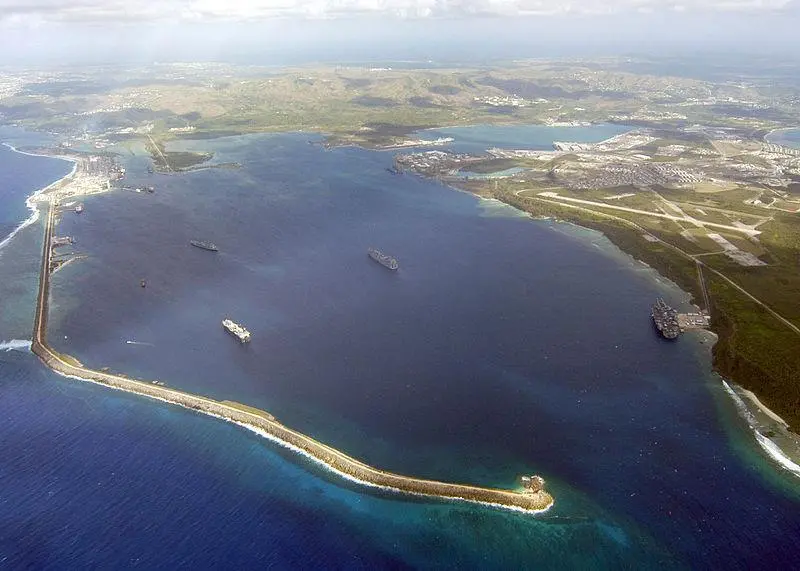
Certainly, there are lessons to be learned from Guam’s belated control programme. Belated because this ‘island paradise’ already has had several major headaches.
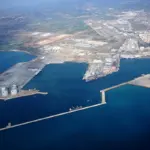
Guam is the largest island in Micronesia and unincorporated territory of the United States in the western Pacific Ocean. A coral table reef with deepwater channels surrounds most of Guam. Sandy beaches, rock cliff lines and mangroves characterize the coastline area. Sheer limestone coastal cliffs dominate the north, while the southern end of the island is mountainous, with lower hills in between.
Invasive species
“Guam has had a terrible history with invasive species,” admits Guam Department of Agriculture’s Chief of Biosecurity, Russell Campbell. He explains that the brown tree snake has already caused the extinction of several native bird species after its introduction in the 50s, but much other damage has been more recent: the island has lost most of its native Cycad trees in the last decade, the little fire ant and the coconut rhinoceros beetle – which turned up only six years ago – probably came in maritime containers and they are now beyond rooting out entirely with the beetle potentially threatening between 75% to 90% of the coconut palms on the island.
Guam is now trying to raise fees on containerised and ro-ro cargo to the tune of US$0.75 per 1,000 lbs to help fight the flood. It’s taken a while for the call for prevention to gain enough momentum; after all, the port’s competiveness has been very important to the economy – in fact at a recent roundtable discussion the customs staff admitted that they had never turned away a cargo shipment, relying entirely on a washdown facility to clean up any potential issues. Further, local business has been worried that it would impact on the islander’s cost of living, so there has been some back and forth with the levy bill and it has by no means had a straightforward path through to approval.
Now, however, the cost of fighting the invaders may have tipped the balance in favour of the fund, especially since it is modelled on a scheme already in place in Hawaii. So, with luck, Guam should have money for a training scheme, a fighting fund and an effective containment facility at the port “which will mean the destructive pests don’t just fly out and get into the surrounding area,” explains Dr Campbell.
Guam has other port cities experience to draw on and beyond the Hawaii-style levy, has its eyes on a multilayered approach similar to New Zealand’s. Certainly the training programme “will get the port staff and the stevedores on the quay looking out for anything unusual” says Dr Campbell. So both port staff and customs inspectors will be involved in the main defence.
But the importance placed on an emergency response may be of interest to other facilities. “At present, when a new destructive pest or invasive species turns up on the island, we have to go and seek funding for a response, and while we do that the pest is spreading and becoming more entrenched, making it almost impossible to eradicate it,” points out Dr. Campbell.
However, Guam isn’t standing alone, it can’t. The island is a transhipment hub for most of Micronesia and there is a history of destructive species being passed around like chickenpox at a preschool party; the Asian scale beetle that’s carried off Guam’s Cycads hopped from the east to Hawaii before getting to Guam, and Hawaii itself is just mobilising against the coconut rhinoceros beetle – which probably came from Guam. So Hawaii’s own biosecurity evolution is also important to Guam.
One last point: since Guam can’t simply lose its coconut palms, it is now involved in a long term, very costly protection project. This is really the most significant issue, both for Guam and other ports: “If you fail to eradicate a destructive species, you will have to live with it. Expenses are high and recurring forever,” Dr Campbell warns.
New Zealand – the model to follow
Rubbing shoulders as it does with both Asia and Australia, New Zealand’s biosecurity is one of the most effective, grown in order to deal with unexpected imports of its neighbours’ notoriously nasty wildlife.
It has meant a rigorous approach – and a certain amount of innovation. One interesting resource is the use of trained dogs to sniff out any reptiles that may have sought shelter within containerised cargo.
However, it isn’t just varieties of poisonous reptiles or even Black or Brown Widow spiders that can cause a high alert at New Zealand’s ports, it’s also the likes of exotic insects that stand to compromise the nation’s carefully guarded biosecurity that keeps everyone on their toes. “New Zealand is reliant upon its primary production,” says Andrew Spelman of Border Clearance Services, part of NZ’s Ministry for Primary Industries “so exports drive the economy”.
There are many interventions at different stages of the supply chain; audits of accredited offshore facilities, enroute treatments, inspection and verification at the border plus audits of vehicle sites in to Japan keep out invasive moth species. Then there’s routing of cargo via accredited import facilities, monitoring stations and early-warning insect traps around the ports and some imports go through washdown/decontamination facilities and of course there are targeted inspections of high risk cargo. But central to the show are the stevedores on the quay.
“The port staff often calls us when they spot something that doesn’t look quite right,” says Mr Spelman.
Everyone is aware of the fragility of NZ’s ecosystem, and how dependent the economy is on keeping invasive pests out. More, it’s led to practical initiatives like accredited systems in the Pacific Islands that clean and check empty sea containers offshore: “We have a vast number of empty sea containers coming in simply because we are an exporting nation, so it makes sense for some kind of check to be built into the supply chain itself,” he explains.
However, even with goodwill it’s not easy stopping colonies from getting a foothold and insects get into all sorts of places: “Poisonous spiders or insects from Australia or North America are associated with cargo or machinery that’s either been stored outside or in a barn,” he says “plus occasionally you get giant African snails turning up in containers.” Further, red fire ants can turn up in the refrigeration units of reefers: “These are a serious threat as they can attack in a swarm with potentially fatal consequences for wildlife, animals or even young children.”
The list of trouble is long: even fruit flies can cause huge disruptions in a country as dependent on produce as New Zealand. Further, ports here, along with others in Canada or the US’ east coast have regular ‘high alerts’ of potential invasions by the Asian gypsy moth, one of the most serious forest insect pests. They are attracted to the lights of loading ships during their flight season and lay eggs in vast numbers: checks at the export points don’t catch everything and only recently an egg-mass turned up on a used car on an Auckland quay, but, says MPI, the incidence of these finds are reducing.
Although these inspections inevitably raise the workload, it is a matter of local relationships as well as biosecurity: last time a Gypsy Moth population took hold in Auckland it meant aerial spraying of the whole region, not just the port. A situation that no-one wants to see repeated.
Inevitably, not all is sweetness and light. Recently there have been fears that the Ruakura inland port project on the edge Hamilton district could, some say, give an alien species a pathway right into the heart of Waikato’s extremely fertile farmland.
Despite this, the developers point to the success of the port biosecurity at both Tauranga and Aukland: the chief executive of Tainui Group Holdings Mike Pohio says that while Ruakura is going “fast forward” into operation, “those same controls that apply at the borders and other inland ports will apply at Ruakura”.
Related Articles
 ENERGY & TECHNOLOGY GREENPORT
 PROJECTS & INITIATIVES GREENPORT
 PRODUCTS & SERVICES GREENPORT