![GreenPort[PortStrategy]](https://www.portstrategy.com/greenport/wp-content/uploads/sites/4/2026/09/GreenPortPortStrategy.svg)

Brisbane undertakes port emissions survey
Earlier this year the Port of Brisbane Corporation initiated the commissioning of an inventory of emissions from waterside and landside activities at the port.
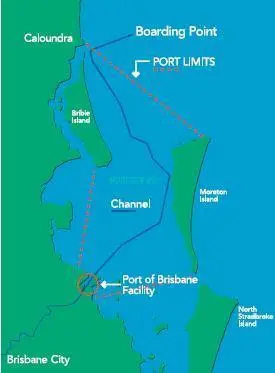
With trade through the Port of Brisbane increasing dramatically in the last 10 years, new facilities are being constructed with a growing network of terminal, road and rail services to cater for the growth in container, bulk and vehicle shipments. However, as with all port development, there is a price to pay. Resultant increases in ship, truck, rail and cargo vehicle traffic cause greenhouse gas emissions and air pollution associated with these transport modes to rise. With air emissions resulting from port activities are under increasing scrutiny worldwide by regulators and the ports’ communities, many ports are initiating their own emission inventories and clean air action plans in response. Early this year the Port of Brisbane Corporation initiated the commissioning of an inventory of emissions from waterside and landside activities at the port, which will be used to develop the baseline from which to create and implement emission reduction strategies and track performance in the future. Focus initially has been on the waterside emission inventory only. The landside emission inventory will be addressed in a separate, and subsequent project.
A survey of ocean going vessels was conducted from June through August 2008. Information on fuel type, engine configuration and operating practices was gained from 120 respondents. Vessel types were predominantly container ships, plus vehicle, general cargo and tankers. The inventory will draw from the survey of ocean going vessels but in addition, ship visit data, turn round time information and data from non-surveyed vessels including cruise ships, tugs and pilots boats will be required in the future. Rather than carrying out an inventory of all emissions associated with all port activities, the immediate goal is to identify those emissions which the Port may be able to influence through future strategies. The waterside port emission inventory seeks to quantify the air pollution and greenhouse gas emissions attributed to ships transiting, maneuvering and hotelling at the port for the base year 2007/08. This information will enable the Port to understand the source and magnitude of greenhouse gas emissions and air pollution attributed to port activities; develop strategies to reduce current and projected emissions and quantify progress and continued attainment of the port precinct in meeting air quality standards and objectives The Port is currently seeking proposals from qualified consultants knowledgeable of port operations, vessel engine modelling and air pollution calculations to assist in the interpretation of the survey results.
Related Articles
 ENERGY & TECHNOLOGY GREENPORT
 PROJECTS & INITIATIVES GREENPORT
 PRODUCTS & SERVICES GREENPORT