![GreenPort[PortStrategy]](https://www.portstrategy.com/greenport/wp-content/uploads/sites/4/2026/09/GreenPortPortStrategy.svg)

EXCLUSIVE: A sustainable path for Australia’s cruise ports
The Port Authority of New South Wales is engaged in a variety of projects to support the sustainable development of Australia’s $5 billion cruise industry.
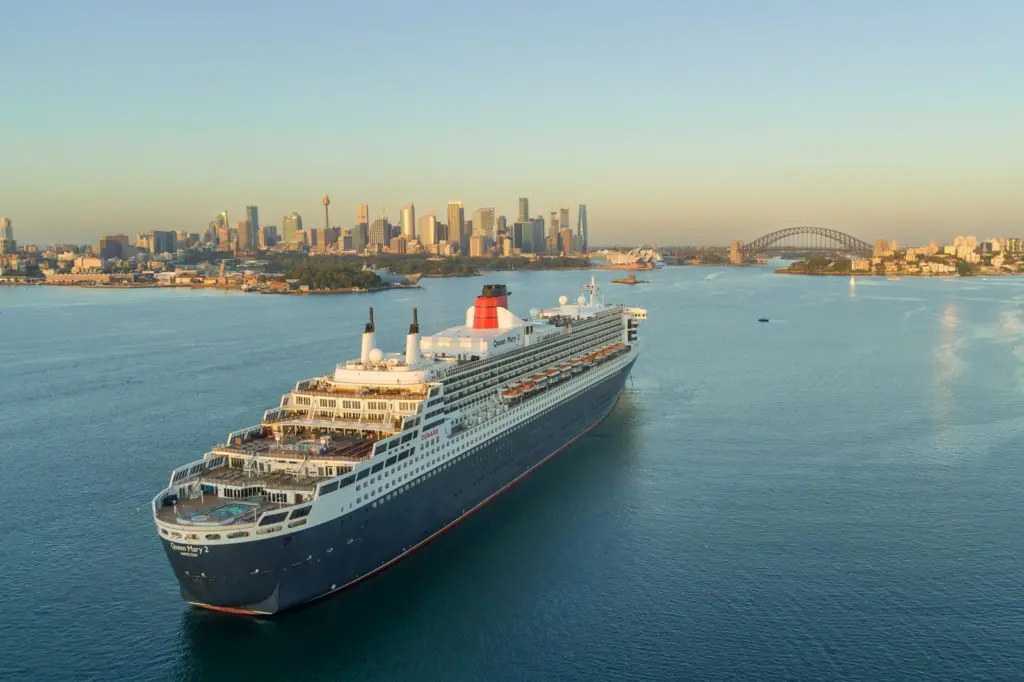
Come late 2026, it will boast Australia’s first shore power infrastructure at Sydney’s White Bay Cruise Terminal with all electricity sourced from certified renewable energy.
It has also been working hard to benchmark performance metrics including air emissions, water quality, community relations, noise and waste management at all of its six major port locations.
Understandably then, it has become the first Australian port authority to receive the globally recognised Green Marine accreditation for its sustainability endeavours.
Strategic role
The Port Authority of New South Wales manages the navigation, security and operational safety needs of commercial shipping of the Australian state of New South Wales, overseeing activities in the busy ports of Sydney and Port Botany, as well as in Newcastle, Australia’s second-oldest city and home to a major industrial port.
The cruise industry contributes significantly to the economy in the region. A quick look at the numbers reveals that cruise travel is booming in the region, with a total of 1.2 million passengers and crew visiting NSW ports annually across 366 cruise ship visits (23 of them maiden arrivals). Regional ports, meanwhile, welcome 59 cruise ship visits per year.
The State’s original international cruise terminal, the Overseas Passenger Terminal, occupies a prime location in Sydney harbour, directly across from the Opera House and beside the Sydney Harbour Bridge. This terminal continues to serve the growing number of large cruise ships visiting the city.
Smaller ships that can fit under the bridge are welcomed at the nearby White Bay Cruise Terminal.
The authority also manages the picturesque Eden Cruise Wharf, which is located on the Sapphire Coast about 480km south of Sydney. As the southernmost deep-water harbour in NSW, Eden acts as a gateway for tourism along the southern NSW coast.
In November 2025, Eden marked 20 years since its first cruise ship arrival, having since welcomed 200 ships (the 200th, Celebrity Edge, arrived on 14 November 2025) and over 400,000 visitors and crew. The terminal can now accommodate larger modern ships as well as smaller vessels.
John McKenna, who previously held the role of chief customer and commercial officer, was appointed chief executive of the Port Authority of New South Wales (NSW) in October 2025, with a particular focus on managing the growing maritime trade in the authority’s harbours and terminals.
“Sydney Harbour has a strong maritime heritage and, as a working port, has vital ongoing port and working harbour functions,” says Mr McKenna. “Major operations, such as our two international cruise terminals, are integrated with dynamic residential, commercial and recreational precincts.”
This creates a unique and challenging operating environment, says Mr McKenna. “We have to balance cruise operations and safely and efficiently moving ships through the harbour, with understanding, managing and reducing impacts on our surroundings.”
Green electricity
The Port Authority of NSW is addressing a range of sustainability objectives.
“The work we’re doing to support a sustainable cruise and maritime industry and protect the environment in which we operate is reflected in the recognition we’ve received, as the first Australian port to receive the globally recognised Green Marine accreditation and achieving Silver Partner status in the NSW Government’s Sustainability Advantage program,” explains Mr McKenna.
“This recognition reflects the work we’ve done to embed sustainable practices across our operations, including matching electricity use from across our port locations with purchased renewable electricity generation.
“The Port Authority is incredibly proud to have achieved certification from Green Marine, which follows a rigorous assessment of our environmental and sustainability practices. This has included benchmarking performance metrics including air emissions, water quality, community relations, noise and waste management at all our six major port locations.”
Another way in which the Port Authority of NSW is pursuing cleaner cruising is through the implementation of shore power facilities for visiting cruise ships.
“I’m proud to say that Australia’s first shore power infrastructure at Sydney’s White Bay Cruise Terminal will reduce the Port Authority’s scope three greenhouse gas emissions and the cruise operators’ scope one emissions by connecting ships to electricity through a landside power supply,” says Mr McKenna.
“The installation will feature wharf-side infrastructure to connect ships to electricity via a landside power supply matched by purchased renewable electricity generation.”
The project is being undertaken by PowerCon and construction is scheduled for completion by late 2026.
Environmental protection
The sustainability team is also working on initiatives that help reduce the industry’s environmental footprint, such as the ’Maritime Recycling Risk Assessment Trial’, which roadmaps procedures to recycle low-risk biosecurity materials from visiting international cruise ships at the Sydney terminals.
Noise generated by cruise vessels is a growing problem in ports around the world and Port Authority of NSW is taking targeted actions to address it.
“We have made significant investments to minimise noise from vessels and landside operations, including real-time, continuous noise logging, a port noise policy that includes noise limitsfor ships and a noise attenuation programme,” says Mr KcKenna. “This is backed by a 24/7 enquiries line so the community can reach us anytime.”
Port Authority of NSW has also contributed to a universal ship noise measurement protocol as part of Project NEPTUNES.
The port authority is also engaged in projects to restore the health of marine ecosystems in its port areas. In October 2025, the authority marked a successful first health check on a population of endangered seagrass in port authority waters at Penryhn Estuary in Sydney’s Gamay Botany Bay, planted from shoots collected from nearby beaches.
It’s a project which is ongoing under the auspices of scientists from the University of New South Wales. In addition, the university team is working to develop a genomic toolbox to optimise and future-proof seagrass restoration in the face of climate change.
Forging partnerships
Partnerships and cooperation with other organisations and key players are important aspects of cruise operations in the region, just as they are with the port authority’s container shipping operations.
“The port authority works closely with government partners, key port and cruise stakeholders, and surrounding communities with initiatives that embed sustainable practices across our operations,” says Mr McKenna.
“Across the state, we’re driving responsible growth in regional cruise tourism at destinations like Newcastle and Eden, partnering with councils and tourism bodies to help local businesses develop cruise-ready offerings and fund cruise coordinators to deliver exceptional experiences to visiting passengers.”
The Port Authority’s long-term support for regional cruise growth includes agreements with local councils and tourism bodies in the Hunter, Central Coast and Eden.
Newcastle’s Memorandum of Understanding supports local businesses to create tailored cruise tourism offerings and provides funding for a part-time cruise coordinator, while the Eden Memorandum of Understanding has been extended with Bega Valley Shire Council and Eden Tourism to support funding for an Eden Cruise Coordinator role.
The Port Authority of NSW’s recently published ‘Direction 2030’ document outlines its purpose (keeping the ports of NSW safe, efficient and open to the world), vision (growing trade and tourism in NSW) and values (care, accountability, integrity, collaboration and safety).
Direction 2030 also identifies three pillars (service, community and sustainability) that will shape its long-term goals and priorities over the next five years.
Building on the vision for tourism growth stated in Direction 2030, the Port Authority of NSW has set an ambitious target of doubling the number of cruise passengers visiting its ports by 2040, to ensure NSW’s place as Australia’s leading cruise destination and to support tourism, jobs and economic growth.
With plans for a possible third cruise terminal still on hold after the NSW Government’s decision to no longer pursue proposed sites at Yarra Bay or Molineux Point, the projected growth in cruise numbers will take place at the port authority’s existing terminals.
The Port Authority of NSW says it is also continuing to explore alternative options to meet the growing demand for cruise tourism.
Related Articles
 ENERGY & TECHNOLOGY GREENPORT
 PROJECTS & INITIATIVES GREENPORT
 PRODUCTS & SERVICES GREENPORT