![GreenPort[PortStrategy]](https://www.portstrategy.com/greenport/wp-content/uploads/sites/4/2026/09/GreenPortPortStrategy.svg)

GreenPort heads down under
In this Q&A, we sit down with the Port of Newcastle to find out why it’s well suited to host the inaugural GreenPort Oceania Congress.
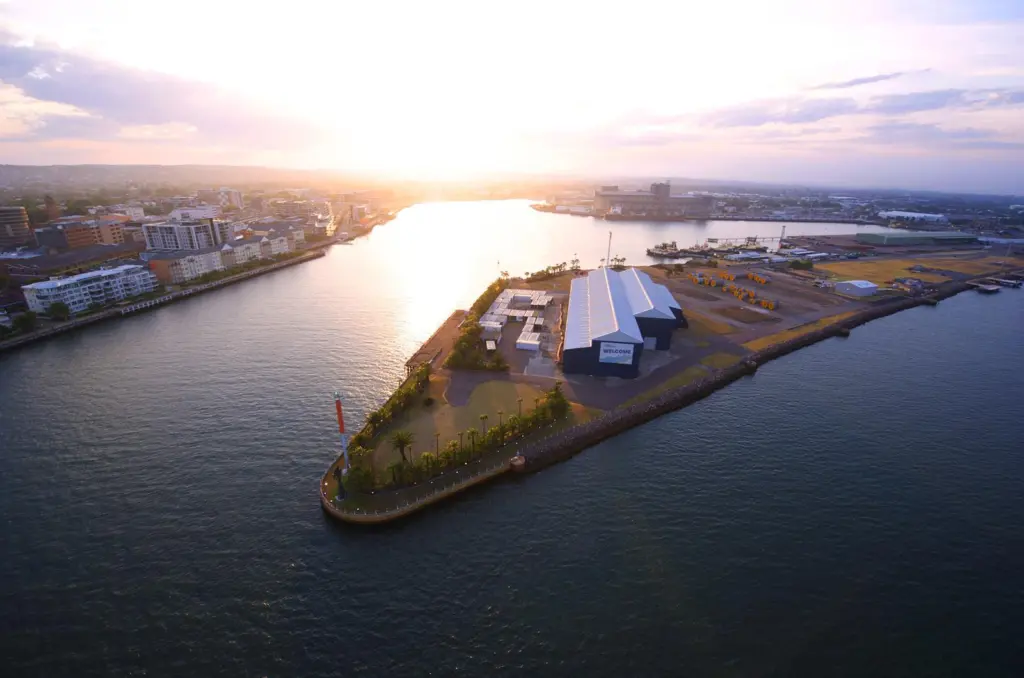
Q Why is the Port of Newcastle well placed to host the inaugural GreenPort Oceania conference?
A Forming partnerships and sharing knowledge are critical to the ability to create a safe, sustainable, environmentally and socially responsible Port of Newcastle for the future, says Craig Carmody, CEO, Port of Newcastle.
At Port of Newcastle we pride ourselves on not just talking about what we can do, but in taking action and to date we have made great inroads in delivering against our ambitious environmental, social and governance (ESG) targets and objectives.
The inaugural GreenPorts Congress Oceania provides an exciting opportunity for Port of Newcastle, as the host, to share our learnings and collaborate with a broad group of like-minded stakeholders, while showcasing beautiful Newcastle and the capability of our port and the region, to the world.
The future is exciting for Port of Newcastle. Diversification, ESG and supporting our community and economy are our priorities. When you are known nationally and internationally as the ‘world’s largest coal port’ change is always going to be like turning a large cargo ship in the harbour, a measured transition in tandem with the broader economy, but with the right tools and people around you, the end goals can be achieved.
A What makes Australian ports/Port of Newcastle unique in their approach to environmental readiness?
Q Australia overall has been slower than Europe in addressing environmental concerns, says Nick Livesey, chief financial officer, Port of Newcastle. Despite a resource heavy economy, however, I think we are now catching up and taking advantage of being a country that has vast amounts of empty, open space with plenty of wind and sun and so can continue to provide energy to the rest of the world.
Port of Newcastle has been a leader in driving forward that transition. With the region’s industrial heritage and main product through the Port being coal, we have a massive incentive to look to the future and shape our business priorities and opportunities now. While we are only an infrastructure asset, we have embedded ESG principles throughout our operations and further pushing the diversification agenda quite hard with our clean energy precinct plans.
In driving environmental readiness, despite our industrial heritage, our port is now considered a global leader in sustainability best practice. Our whole organisational commitment to ESG and diversification has seen us make significant progress towards environmental readiness. In 2017, at the beginning of our sustainability and diversification journey, we started with a GRESB score of 40. We jumped to 75 in 2020 before ranking first across participating ports in Oceania and second globally having achieved a score of 92 out of a possible 100 in 2021.
Our trajectory continues, with our port recently retaining its five-star GRESB rating and increasing its overall score to 95 out of a possible 100 points in 2022 – an incredible achievement in a few short years. And we are committed to doing more to build on our sustainability initiatives into 2023 and beyond.
Q What do you see as the priorities for the port in the next ten years and what is driving those?
A For Port of Newcastle our key priorities are central to supporting diversification and our local community. The diversification of the business is critical. At the moment, we are reliant on bulk cargo, predominantly coal. With the port running through the city of Newcastle, it is central to the economy of the city and wider region – therefore the Port needs to be leading the way on diversifying the economy to create a sustainable future and opportunities for the entire region.
Port of Newcastle has outlined a clear strategic roadmap for the next decade, underpinned by an ambitious diversification strategy and commitment to environmental, social and governance priorities.
As Australia’s deepwater global gateway and a global channel for New South Wales, Port of Newcastle enjoys significant competitive advantages. It is already a major seaport with connectivity to a world-class national rail and heavy vehicle road system, a shipping channel that is currently only operating at 50% capacity and supported by developable, vacant portside land.
Whilst coal exports provide a stable foundation for our growth, we are driven by the need to grow and diversify our trade base to meet the demands of our customers and the containerisation of some bulk trades including coal, fuel, fertiliser, wheat and mineral concentrates.
Q In 2020, the port broke new environmental ground for maritime authorities in Australia and New Zealand by becoming the first in the region to be certified by EcoPorts, why did you decide to go for certification? Why is this important to Port of Newcastle?
A It is important for our shareholders and management team to be doing the best we can in the ESG space and making meaningful change. Joining EcoPorts is a part of that – it shows that we are serious and undertaking real, positive change actions.
It also places us in a peer group where we can inspire others and also learn from each other. In many ways, we all benefit from positive sustainability actions and change will only happen if we work together and share best practices. ESG is an area where competition needs to be set aside and collaboration pursued – things like EcoPorts encourage this behaviour.
Applying for, and achieving, EcoPorts certification was a transparent way of proving our commitment to environmental management and sustainability and our commitment to enhancing our port’s contribution to the social, economic and environmental outcomes for the Hunter Region and NSW. Achieving this certification is important to the Port as sustainability is central to the port’s business strategy and we are actively working to manage the environmental challenges we face as a city-port by focusing on diversifying trade and improving efficiency and safety of the supply chain.
Q In terms of getting ready for the global energy transition, can you please explain the port’s strategy?
A The Hunter Region has been a key energy supplier to Japan, South Korea and Taiwan for decades. In this time, the fantastic businesses along the supply chain have built a loyal customer base who depend on our region for their energy security says Simon Byrnes, chief commercial officer, Port of Newcastle.
The Hunter Region has the REZ, transmission infrastructure and workforce required to deliver the clean energy economy. Although Port of Newcastle is the busiest port on the east coast of Australia, it only uses 50% of its channel capacity, meaning it could handle another 2,500 vessel visits a year, and has a dedicated 220-hectare clean energy precinct ready for development. We are very excited about the clean energy future that Port of Newcastle can contribute to and the benefits it will bring our region, local community, environment and economy.
The Federal Government has invested AUS$100-million to assist Port of Newcastle enable the clean energy economy in the Hunter. This is because Port of Newcastle and the Hunter offers a unique set of conditions.
We are the only Commonwealth designated hydrogen hub in New South Wales (NSW), 70% of NSW’s electricity is generated here, our port has proximity to three renewable energy zones, multiple sustainable water solutions, a deep water port with 388 vacant hectares and 50% channel capacity available, 16,800 highly skilled METS workers and another 47,600 people indirectly in the resources industry and Australia’s largest electricity user and NSW’s third and fifth biggest electricity users and largest gas user.
Activation of our clean energy precinct is expected to, by the end of this decade, generate AUS$2.1B in additional GRP, create 2900 new jobs for locals and decrease domestic emissions by 330kpta.
What other green projects are on the horizon for the port in the future?
We are working with EnergyCo to enable the delivery of the Hunter – Central Coast REZ, Central West REZ and New England REZ. The logistics task is huge, with over 1000 large scale components to be delivered and the largest wind farm blades measuring more than 100 metres long.
We are working with AmpControl and University of Newcastle to decarbonise our marine fleet. The initial stage could see us decreasing emissions by up to 25%.
Longer term, Port of Newcastle is well positioned to provide a construction, operations and maintenance facility for offshore wind. The Clean Energy Precinct could support offshore wind with a stable baseload of up to 3GW.
Port of Newcastle incorporates green design into all of its new projects from procuring hybrid cranes to meeting the highest standards for green building design.
Q From the port’s perspective, can you please impart some words of wisdom about how you think ports and terminals can ride out the storm and make the most of opportunities arising from these challenging times that we all find ourselves living in at present?
A It’s really about being aware of what is happening across the full supply chain, not just in ports and terminals. While troubling times tend to lead to innovative and technological advances to resolve, it is important to not only understand what is happening in that space in the port sector, but also the shipping lines, distribution centres, producers etcetera.
If you understand what the challenges your direct customers, ultimate end customers and suppliers are facing, it puts you in a much stronger position to be able to react, support, help and benefit, adds Mr Livesey.
Related Articles
 ENERGY & TECHNOLOGY GREENPORT
 PROJECTS & INITIATIVES GREENPORT
 PRODUCTS & SERVICES GREENPORT