![GreenPort[PortStrategy]](https://www.portstrategy.com/greenport/wp-content/uploads/sites/4/2026/09/GreenPortPortStrategy.svg)


Automation dry run
Automation for dry bulk terminals has arrived in Germany, as Alex Hughes finds out
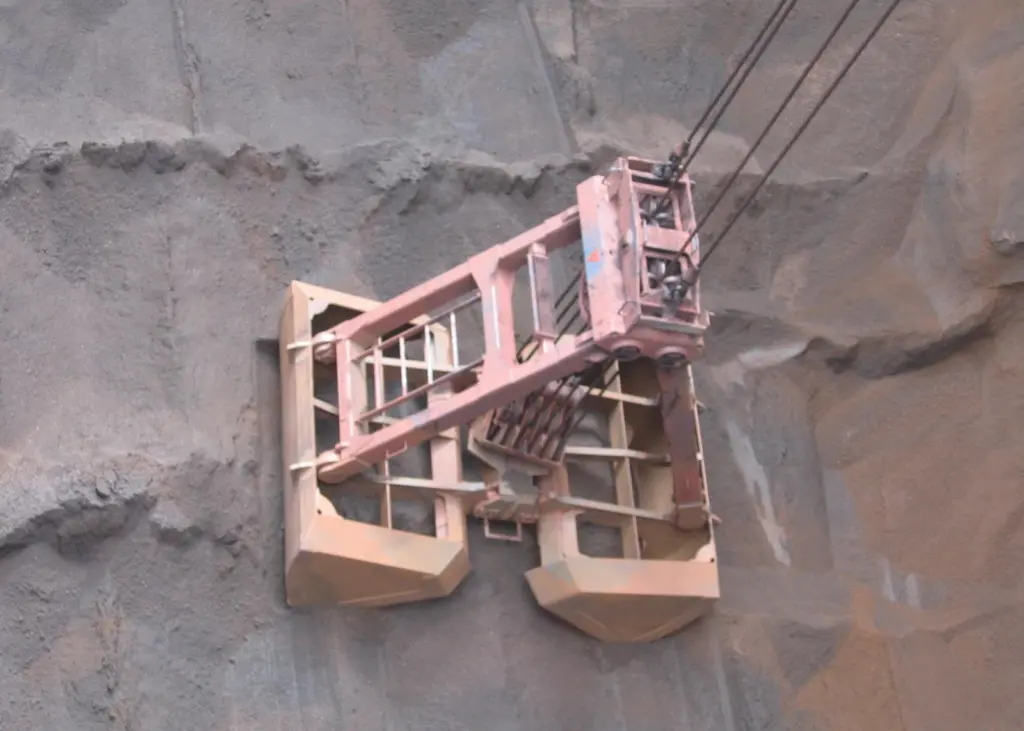
Port of Hamburg dry bulk terminal Hansaport stands alone as the first and, currently, only operator of automated grab unloaders in the world; other terminals might claim ‘automation’ with remote-controlled cranes but those at Hansaport are unique in that they are fully automated.
iSAM has been working jointly with Hansaport to automate all the large items of machinery that it deploys, from the stacker reclaimer to the rail wagon loading stations. Says Bernd Mann, chief development, design and technology officer at iSam: “The grab unloader was the last remaining piece of equipment to require the upgrade to automation, so it was a natural choice to do so. However it is fair to say, that without Hansaport continually striving to automate operations, this project would never have happened,” he says.
In his view, the grab unloader’s high speed and very difficult-to-control multiple sway movements makes successful automation of this piece of equipment “the pinnacle of port automation”.
Indeed, it took nearly six years and 25,000 man-hours to develop the current system which employs a 3D laser scanner and an inertial navigation system. The latter, which was taken from the world of aeronautics, delivers high-precision altitude position data, allowing the grab to be positioned within 0.5m in a vessel hold irrespective of weather conditions or tides.
Mr Mann admits that there were some teething problems with a project of this complexity: it was a long journey from the first prototype to an operational system. There were “a lot of problems to solve”, but everybody in the team was committed to do whatever it took to make the project a success, he says. All four grabs are now working to expected levels of productivity.
Grabbing savings
Dutch manufacturer Verstegen supplied the last 20 or so grabs acquired by Hansaport. Eric Vesser, managing director and joint-owner of Verstegen says that Erhard Mellor, Hansport’s managing director, has been the driving force behind the decision to automate the terminal.
Two factors, he suggests, have driven this radical move. Firstly, in Germany, as in the western world in general, labour is expensive and one way to drive down labour costs is through the adoption of automation. Secondly, Hansaport was faced with a situation whereby many of its most experienced crane operators were due to retire, with a concomitant loss of know-how. Replacing them would have been difficult.
“So, automating operations seemed to make a lot of sense, both in terms of staff and cost,” says Mr Visser.
As for how return on investment could be calculated, Mr Mann stresses that, apart from the obvious manpower savings, it is possible to continuously operate the grab unloader without breaks and shift changes. “A port terminal operating 24/7 can expect to achieve a return on investment in about three years,” he says.
Aside from monetary gain, there is also an important improvement to the safety of the entire operation, which benefits significantly from automation. Although the grabs involved in the automation upgrade came from Verstegen, Mr Visser says that these are no different from grabs the company regularly sells for manual operation, so there is no additional investment that needs to be made in this area. The only difference is that a metal plate has had to be attached onto each grab which is where the location receiver has been mounted. The receiver knows the exact position of the grab at any given moment.
“The receivers did not form part of the initial order from us, either, but were fitted by the technology provider at the time of the upgrade to automation,” he says. “From an operational viewpoint, we didn’t have to make any changes to our grabs at all.”
Dust gathering
As for whether dust or other emissions actually might mitigate against a dry bulk terminal adopting automation, Mr Visser thinks not. Hansaport basically uses two types of grabs: one for handling iron ore and one for handling coal. For coal handling, Verstegen simply supplied custom-made grabs that result in less spillage of material.
“I think it is important to stress that how easy or not it is to automate dry bulk handling has nothing to do with the grab itself. If the grab works well when manually operated, there is no reason why there should be any change when it is automatically driven,” he says. Indeed, Mr Visser makes the analogy with a car. If this is manually operated, or potentially driven by a computer, the wheels, the only part of the vehicle in contact with the road, aren’t impacted at all. Similarly, the bulk grab, which is the only part of a crane that interacts with dry bulk commodities, doesn’t perform any differently whether it is manually or automatically operated.
“You don’t need to change the type of tyres on a car should it be automated; so, you don’t need to change the type of grab deployed in an automated system either.”
Mr Visser does, however, concede that there are good and bad crane operators. A bad operator might cause more collisions to happen with the side of a vessel than a good one would. By automating this operation, in theory, there would be fewer collisions.
“However, just because less maintenance would be needed because of fewer collisions that doesn’t mean that the working life of a grab is automatically increased by a significant amount. The lifetime of a grab is much more impacted by the type of material being handled. Abrasive materials like iron ore or cement clinker result in wear and tear. But a grab unloader handling mostly grain or agribulk material won’t suffer so much in this respect. So we aren’t necessarily going to see fewer sales of grabs because those that are sold work slightly longer in automated mode.”
He points out that, even with an automated system, there will be occasions when a major incident occurs – such as when a closing rope unexpectedly breaks – and that automated detection of this has to be in place, so that the terminal can react quickly.
“In the longer term, I do expect more bulk terminals to automate their operations. But I’m not sure whether people are ready for this at the moment. Hansaport is taking a very brave step indeed,” says Mr Visser, who confirms that the terminal did suffer early teething problems. “Nevertheless, I understand that, now, 70%-80% of all operations are being successfully operated in automated mode.”
Related Articles
 CONTAINER & CARGO HANDLING
 CONTAINER & CARGO HANDLING