![GreenPort[PortStrategy]](https://www.portstrategy.com/greenport/wp-content/uploads/sites/4/2026/09/GreenPortPortStrategy.svg)


DBCT remains operational
Dalrymple Bay Coal Terminal remained operational throughout Queensland’s flooding, says Greg Smith, DBCT’s general manager of operations.
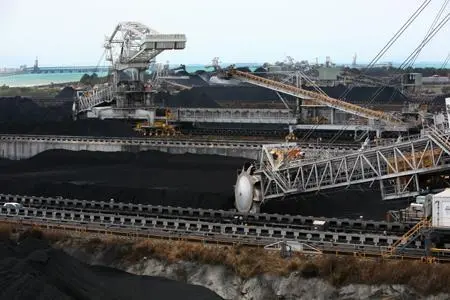
However, there was a delay to arriving trains between 24 and 31 December due to a train derailment which blocked the tracks in both directions, he adds. “Otherwise, some mines have had varying degrees of production difficulties due to the heavy rain, but none of the mines serviced by DBCT have come to a complete stop.”
The terminal did not need to put any special measures in place to keep operating, but it did offer to process coal from mines in the Blackwater system, to the south, if they could get the coal to DBCT, says Mr Smith. “This was due to the fact that the Blackwater rail line was flooded and Gladstone port was unable to operate due to no coal.”
DBCT’s most recent expansion, completed in 2009, took annual capacity from 59 to 85m tonnes per annum; the company holds access applications for another 100m tonnes per annum, so is planning its next expansion, which will be the construction of a second terminal at Dudgeon Point, about 5 kms north of DBCT.
DBCT, which handled 62m tonnes of coal exports last year, ships mainly coking [metallurgical] coal and is the leading supply port for this product, says Mr Smith. “We export coal globally but our largest markets are North Asia, India, Brazil and Europe.” With few options to source coking coal, DBCT anticipates a heavy demand in the coming months as steel mills seek to secure whatever they can, he adds.
“We relish the opportunity to perform at our rated capacity in the future. The ability to do so will depend on how quickly our mines can produce coal.”
Related Articles
 CONTAINER & CARGO HANDLING
 CONTAINER & CARGO HANDLING