![GreenPort[PortStrategy]](https://www.portstrategy.com/greenport/wp-content/uploads/sites/4/2026/09/GreenPortPortStrategy.svg)

Luxury cruising’s dirty secret
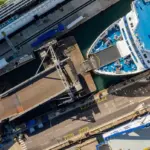
Luxury cruises may well have returned following the Covid-19 hiatus but so has pollution in and around ports.

A recent study by Transport & Environment has found that pollution from cruise ships is back to pre-pandemic levels with increases of 9% in SOx emissions, 18% in NOx, and 25% in particulate emissions.
Despite regulation in 2020 to limit sulphur emissions, the 218 cruise ships operating in Europe manged to emit more SOx than 1 billion cars in 2022, equivalent to 4.4 times all the cars on the continent.
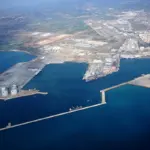
Top of the list is Barcelona in Spain followed by Civitavecchia, a coastal port northwest of Rome, and the Athenian port of Piraeus.
Levels in northern Europe are on the rise too. Hamburg rose from 17th most polluted in 2019 to sixth in 2022 and Southampton rose to seventh place. The city’s main cruise operator, Carnival, said it was working to reduce emissions and promote cleaner fuels.
Famously-polluted Venice enjoyed fresher air with a drop to 41st in the rankings following a ban on larger ships – showing that legislation can work – but Italy still surpassed Spain coming in at number one most polluting country overall.
The Port of Barcelona has reacted to news that it is the most polluting European port with assurances that improving air quality is a strategic objective. It challenges the figures from Transport & Environment, noting that SOx emissions as published by the regional government of Catalonia are below limits set by the World Health Organisation.
“SOx emissions at the Port of Barcelona average between 1 and 1.2 µg/m3, well below the following regulatory limits and even below the recommended limit by the WHO,” the port told GreenPort.
The port also points to its transition to more sustainable fuels as well as the €110m Nexigen project to install shore-based power.
“The project will eliminate 66,000 tons of CO2 per year and 1,234 tons of NOx,” the port told us. “This means reducing by 38% the tonnes of NOx and CO2 emitted by ships during their stay at the dock and by 22% the tonnes of NOx and CO2 of all port activity.
Is LNG the answer?
The Port of Barcelona has been supplying ships with LNG since 2017 and this year began hosting the first barge for ship-to-ship bunkering in a Mediterranean port. Similarly, MSC Cruises, with its dubious honour of most polluting operator, is one of many investing in LNG as an alternative fuel.
Whilst causing less air pollution when running on LNG, these ships are nonetheless more damaging than traditional fuel oils thanks to methane slip from their four-stroke engines. Methane is a potent greenhouse gas, said by the IMO to be 80 times more warming than CO2.
Recommendations
Transport & Environment is calling on policymakers to:
- establish more stringent decarbonisation requirements on cruise ships calling at European ports
- extend the zero-emission berth mandate for cruise ships to cover stay at anchorage
- implement zero-emission operational corridors for the most popular cruise ship routes in European waters
- extend the sulphur emission control areas to the rest of all EU and UK waters
- develop NOx operational standards for ships at the EU level
- ban the use of scrubbers, especially open-loop ones, in all European waters
It is also urging cruise companies to stop pursuing LNG as an alternative and instead prioritise zero emission technologies, such as hydrogen fuel-cells, batteries and wind-power.
Related Articles
 CRUISE GREENPORT
 EUROPE GREENPORT
 EUROPE GREENPORT