![GreenPort[PortStrategy]](https://www.portstrategy.com/greenport/wp-content/uploads/sites/4/2026/09/GreenPortPortStrategy.svg)
Working together for greener cruising
The Port of Montreal has renovated its cruise facilities with sustainability designed in from the ground up.
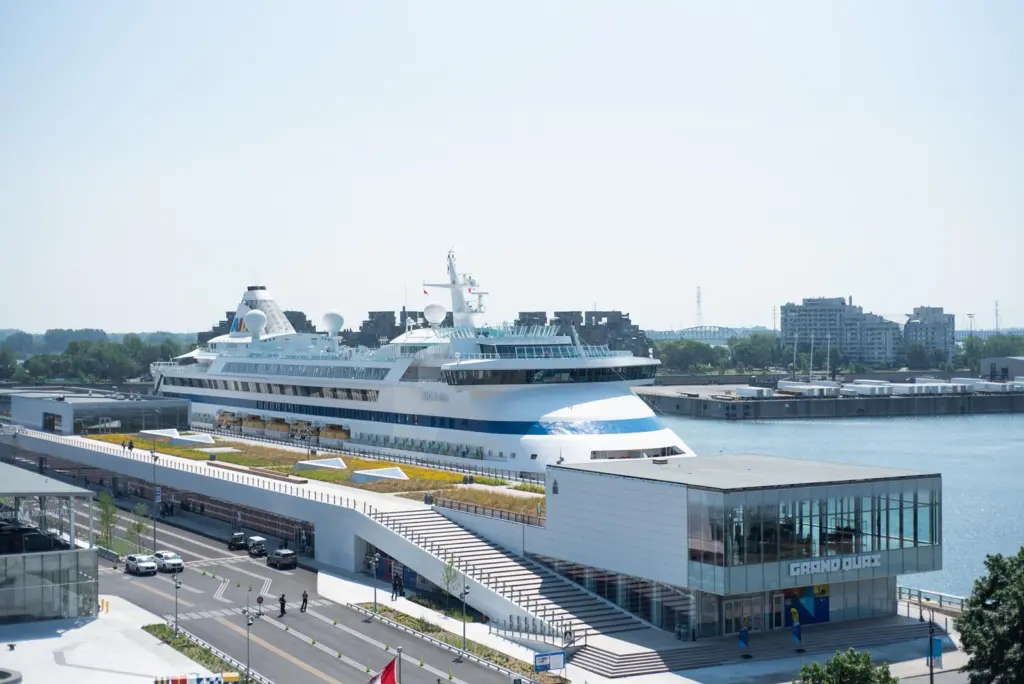
The Port of Montreal is the second largest cruise port on the Saint Lawrence after Quebec City. However, when it comes to turnaround operations, Montreal holds the number one spot, with 95% of calls being turnarounds.
The two new terminals at Grand Quay needed to address the complex challenges arising from these activities, says Yves Gilson, director, marketing & cruises at the port.
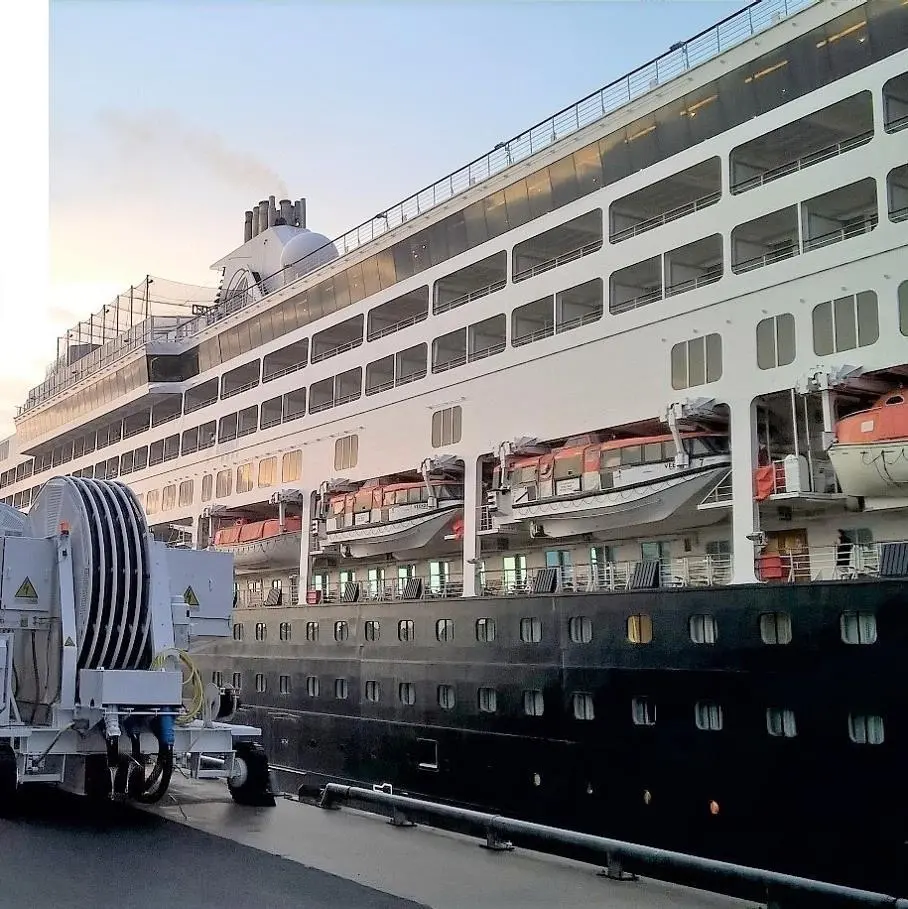
“The Grand Quay reconstruction and renovation were done with sustainability in mind, meaning we made sure cruise ships would have access to shore power,” he says.
So far, the shore power investment is paying off, with cruise operators including Viking Cruises and Oceania Cruises demonstrating their interest in connecting. Eager customers also include some of the smaller new luxury expedition ships equipped for shore power connection. “It’s an investment we made quite a few years ago which will pay off in future because of demand for a greener type of cruise ship,” Mr Gilson adds.
To date, the shore power facilities at the cruise terminal have saved 1,350 tonnes of greenhouse gases since 2019, and in the long term the port estimates that they will allow it to avoid 2,800 tonnes of greenhouse gases from cruise operations every year. “The city will benefit from the fact that we are positioning ourselves as being one of greenest cruise ports in North America,” says Mr Gilson.
Grand Quay also provides LNG refuelling services, delivered by trucks to the growing number of cruise ships that can run on the fuel. Shore power is another key aspect of the new facilities, with Port of Montreal being one of only 15 ports worldwide offering shore power access to visiting cruise ships. It’s all part of being future-ready, says Mr Gilson.
“The Port of Montreal has always been at the forefront of offering what market is heading towards. New cruise ships will be hybrid, able to connect to shore power, using scrubbers, LNG, zero-emission fuels, maybe even electrical cells.” In addition, the green options for ship calls at the port include waste reception facilities, with direct connection to a sanitary sewer for disposal of grey and black water.
Green facilities
The architecture of the new facilities was planned with the people of Montreal and the region in mind, Mr Gilson explains. “We decided before starting the renovation that we wanted to give back access to the river for Montrealers and this is how we came up with the idea of a green roof that is open to the public, so that people can take a close look at cruise ships and go from the city to the river. “
Terminal 1 has a green roof with 30,000 different species of plants and flowers, with a promenade for people to walk on. There is a vast green field at the end of Grand Quay, next to the river, with chairs where walkers can enjoy the view.
Montreal is limited in terms of the size of ships that can call at its cruise port due to the bridges on the river by which ships access the port. With a maximum air draft of 50m, it is difficult for larger ships to call. While major cruise lines keep on building bigger and bigger ships, there is also a reverse trend coming from some companies for smaller ships offering an exceptional guest experience, says Mr Gilson.
“What we see coming up in the next few years are smaller and luxury ships up to 500 passengers, so Montreal will never be overcrowded by cruise passengers.”
That is not to say that the port is not a busy hub of cruise activity. “Itineraries from Canada or New England go to New York or Boston on an open-jaw system, embarking new passengers and coming to Montreal,” says Mr Gilson. “In addition, we have transatlantic itineraries as well as those between Montreal and the Great Lakes.”
Partnership vision
The Port of Montreal has a strong vision for partnership with other organisations to achieve decarbonisation of cruise activities in the region. In 2011, the port joined with Tourism Montreal, Montreal Airport, the Old Port of Montreal Corporation, the Old Montreal Business Development Corporation, the Hotel Association of Greater Montreal, and the City of Montreal, to create an association called Cruises Montreal. The aim was to offer a one-stop shop for all aspects of cruise activities, with resources including a website with a toolkit for cruise lines.
Despite the shutdown of cruise operations since 2020 due to the pandemic, the port has 48 cruise calls booked for the 2022 season and will be offering new green tours as part of this. “Tourism Montreal is a great partner, offering tours that are sustainable,” says Mr Gilson. “They have developed a large variety of green tours, allowing people to use electric bicycles and electric coaches, and providing all kinds of experiences labelled as green itineraries.”
Looking further afield to cooperation with other port cities in the region, The Port of Montreal is also one of nine members of the Saint Lawrence Cruise Association, which is currently engaged in developing a sustainability action plan, which will be completed by the end of 2022.
“Everything we are doing now is done with sustainability in mind,” says Mr Gilson. At the port level, he is engaged in a long-term project to manage the flow of taxis to the quayside during cruise calls.
“We want to have a better idea of how many taxis and coaches we need when a ship is arriving and when they are really needed. In order to have more fluidity and to be more sustainable, and to reduce the number of waiting taxis that run their engines without stopping, we are developing an algorithm that will have an exact picture of each ship’s operation, which will translate into a provisional projection of passengers disembarking.”
The result will be a significant reduction in greenhouse gases emitted by idling taxis at the quayside. The port will recommence the collection of data from ships in the coming season and aims to have the application up and running by 2025, rolled out to all nine ports in the Saint Lawrence Cruise Association.
At the Port of Montreal, further growth of cruise operations is planned for the coming years, although always with an eye on sustainability. Communicating with cruise operators to see how the port can support their sustainability goals is a big part of the picture. “We are in contact with the cruise lines – which themselves have big ambitions in terms of sustainability – trying to connect on whatever projects we have, to see how we can enhance their sustainability strategy. We want to work with the cruise lines and to offer them alternatives to the tours offered onboard. Things are changing in the minds of tour operators, many of whom are going into greener tours. We believe that green tours are much more exciting and interesting than traditional tours.”
Although the port currently experiences favourable conditions that enable it to develop its cruise customer base without the risk of overcrowding as seen in some cruise ports in Europe and other parts of the world, Mr Gilson is mindful of the need to continue looking for a balance between cruise growth and sustainability. While the port is unlikely ever to face the challenge of tens of thousands of passengers disembarking in a single day, he sees public perception and acceptance as being of crucial importance. He believes that giving residents of the city and surrounding areas a sense of ownership is a critical part of attracting public support.
“It’s important that the inhabitants are not made to feel that the city doesn’t belong to them anymore. This is something we need to look at – we don’t want the population to be frustrated by cruise activities, we want them to embrace cruise, so we need to find the right balance between cruise activities and people’s living conditions. Currently, we can manage the number of passengers we receive in Montreal without having any backlog in the city, but nevertheless we should always keep an eye on that and work with our surrounding neighbours too, to make sure they understand what we are doing and to hear from them.”
Looking to the future, he sees great things coming out of the port’s participation in sustainability initiatives, both for its own activities and in the wider region. “It’s ambitious but we want the Saint Lawrence to be seen as one of most sustainable destinations in the world,” he says.
Related Articles
 CRUISE GREENPORT
 EUROPE GREENPORT
 EUROPE GREENPORT