![GreenPort[PortStrategy]](https://www.portstrategy.com/greenport/wp-content/uploads/sites/4/2026/09/GreenPortPortStrategy.svg)

Clean Baltic ferries
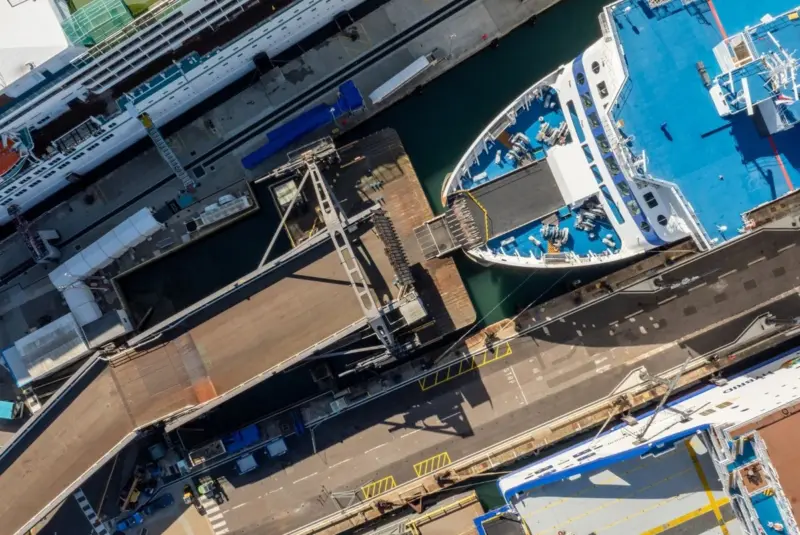
Three Baltic ports have made it possible for ferries to connect to shore power on all routes.

In a collaboration to agree standards and solutions, the three Baltic Sea ports in Stockholm, Helsinki and Tallinn have invested in onshore power connections that will significantly reduce the emission of air pollutants from vessels at the quayside.
Now it is possible for the ferries operating on the Helsinki – Tallinn route to connect to onshore power. All of the ferries operating on other routes between the ports, Stockholm – Helsinki and Stockholm – Tallinn, already connect to onshore power at the quayside.
“As the important transport and logistics hubs by the Baltic Sea, the biggest ports have a clear responsibility to ensure that the air is cleaner at the ports as well as in the urban surroundings,” said Valdo Kalm, CEO at the Port of Tallinn.
Cutting over 18,000t of C02
The reduction of greenhouse gases as a result of the ferries operating between the three ports connecting to onshore power is estimated to be more than 18,000t of carbon dioxide annually.
These ferries function as a bridge between the neighbouring countries and are hugely important for the supply of goods and transport of passengers. Under normal circumstances (times of non-pandemic) there are 200 cargo-loaded ferry sailings a week in total between the three ports.
Each year approximately 4,500,000 tonnes of freight, or 380,000 haulage vehicles/trailers and 12 million passengers travel by ferry between the three capital cities.
Related Articles
 ENERGY & TECHNOLOGY GREENPORT
 ALTERNATIVE FUELS GREENPORT
 ENERGY & TECHNOLOGY GREENPORT