![GreenPort[PortStrategy]](https://www.portstrategy.com/greenport/wp-content/uploads/sites/4/2026/09/GreenPortPortStrategy.svg)




Electric grid challenges
Shore power investment is more widespread than ever, but can ports handle electric grid challenges?
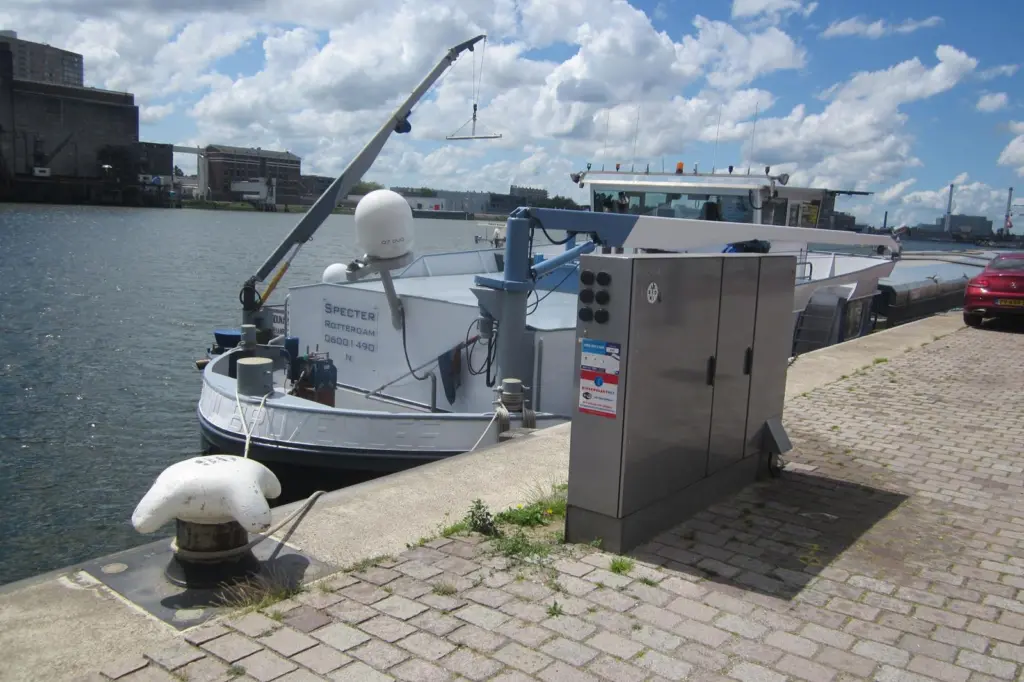
Capacity is one of the biggest concerns for ports offering onshore power supply (OPS), as shipping companies embrace decarbonisation and both shore power-enabled and battery-propelled ships increase in numbers, said Alex Ruijs, senior consultant for electrical power and energy within the water & maritime team at Royal HaskoningDHV.
Speaking exclusively to GreenPort, Ruijs explained: “The challenge for shore power is that we will have more and more ships with batteries onboard that are used for propulsion.”
As battery systems advance and ships are able to sail for longer on batteries, these ships are recharging at ports, which can surge the shore power system.
Larger ships running on batteries will mean more OPS consumption. Currently OPS for container ships are rated for 8MVA maximum. Ships in most cases do not require more than 5MVA but as bigger ships with batteries emerge, OPS at ports will need to have more power output, Ruijs explained.
“Shore power systems will need to have more power output in the future as demand increases. They might need to be redesigned because of this,” he said.
Battery backup
Though ship batteries require significant grid power, battery packs are a sound investment for ports looking to secure a backup to the grid.
In the Netherlands, grid suppliers have a fixed price for grid connections up to 10MVA and electricity needs to be offered obligatorily. In countries where grid operators call the shots this isn’t the case, other solutions are needed like battery chargers.
“Redundant capacity in the grid is one of the cheapest solutions but has limitations in the instance of a failure or maintenance issue,” Ruijs pointed out.
He explained: “The battery pack can be charged when there is a low demand for shore power and demand is lower than the maximum capacity of the grid connection. When it’s the opposite, the battery is discharged and the battery can, during a limited period, provide the additional capacity required for shore power.”
While battery packs are a reliable power solution, cost is a major consideration. Battery packs can increase the total cost of shore power investment by 20-50%, said Ruijs.
Total cost depends on the capacity of the shore power system in relation to the capacity of the grid connection – the larger the difference, the higher the cost. Spatial impact and a safe place to store the batteries are other concerns when large scale battery back-up systems are considered.
Port of IJmuiden
The Port of IJmuiden in the Netherlands is a good example of a successful shore power installation, said Ruijs.
“With a capacity of 250kW per ship and a total system capacity of 1MVA it was cost efficient to increase the capacity from the grid supply instead of using a battery storage system.”
He added: “The Port of IJmuiden shore power system is intensively used and works without practical problems. Since 2006, several ports in the Netherlands have installed effective shore power for barges with multiple low-capacity connections.”
Related Articles
 ENERGY & TECHNOLOGY GREENPORT
 ALTERNATIVE FUELS GREENPORT
 ENERGY & TECHNOLOGY GREENPORT