![GreenPort[PortStrategy]](https://www.portstrategy.com/greenport/wp-content/uploads/sites/4/2026/09/GreenPortPortStrategy.svg)


EU help for African alternative power projects
Port emissions remain a huge challenge at Africa’s ports due to the lack of alternative power sources, but this could change if ports participate in the Global Maritime Technologies Cooperation Centres (MTTC) Network, an initiative financed by the European Union and implemented by the IMO.
These MTTCs, strategically located in every continent, promote technologies and operations to improve energy efficiency in the maritime sector and help navigate shipping into a low-carbon future.
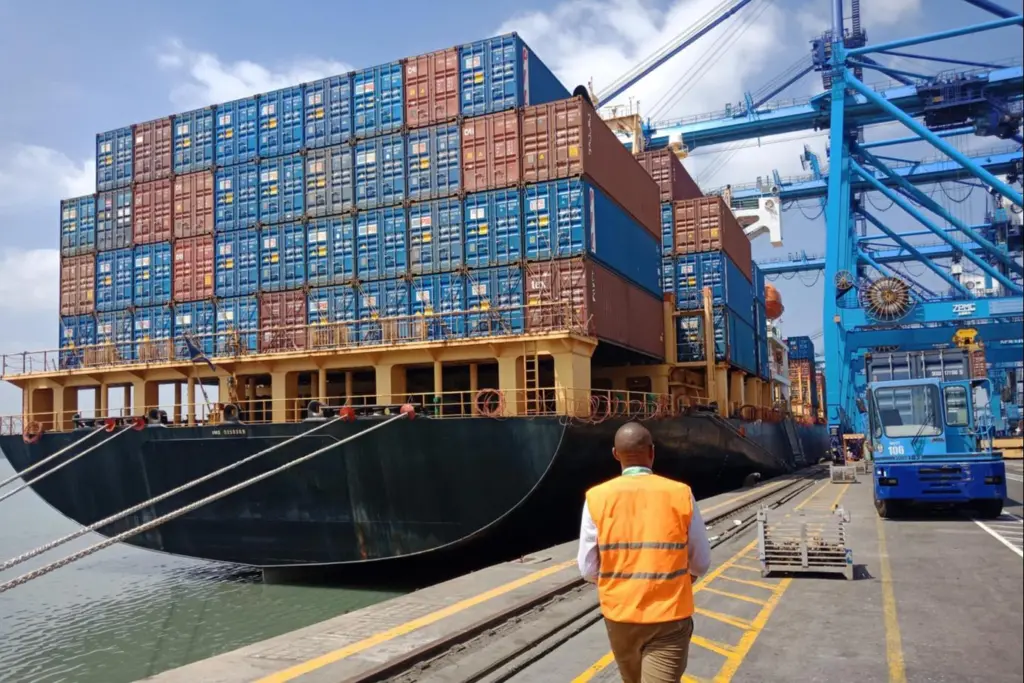
The Port of Mombasa, a member of Port Management Association of Eastern and Southern Africa (PMAESA), is in the process of improving its energy efficiency with renewable energy.
The project will especially focus on emissions generated from ships such as ventilation/heating/cooling, pumps, control systems and cargo handling systems.
Renewables focus
The port’s operator, Kenya Ports Authority (KPA), previously indicated the port emits more than 400 tonnes of carbon greenhouse gases annually, mainly coming from ships that keep their generators running as they load and unload at the port.
This a problem planned shore power is expected to solve.
Currently, KPA has completed a feasibility study on development of a new solar photovoltaic (PV) plant to generate renewable energy powered shore power.
The project is part of KPA’s US$36 million Green Ports Policy implementation plan, that is financed by TradeMark East Africa and is meant to ensure all vessels at the port of Mombasa “turn off onboard generators and operate from shore power.”
“A study conducted in 2021 indicated that 25% of vessels’ emissions are generated whilst stationary at port,” says Aimee Besant, energy storage lead at ABL Group, that has recently completed a feasibility study on the solar PV project.
She says use of electrical power from the shore can contribute significantly to emissions reduction, although the Port of Mombasa’s project goes a step further “in exploring the opportunity to generate the electricity from 100% clean local solar PV resources, creating an entirely green contribution to the shore power system.”
ABL Group’s renewable energy experts have also explored the suitability of installing a 5-10 MWp solar plant, energy from which can be harnessed to install a green energy shore power system.
The study identified two possible brownfield sites considered viable for solar PV plant development with the ABL team developing a conceptual design, each designed to maximise the PV output from the sites.
Significant opportunity
IMO has previously said shore power may potentially eliminate the local noise and air pollution related to ship activity in a port and depending on the energy source, it may also contribute positively to cleaner ship operation.
But as an isolated initiative, it is generally not considered to be among the most cost-effective climate initiatives. However, when combined with solar power it just could be.
“This project reflects the scale of the opportunity for other ports around the world to explore the installation of shore power generated from their local green energy resource, as well as the additional potential when combined with energy storage solutions such as lithium batteries or hydrogen,” says Ms Besant.
Related Articles
 ENERGY & TECHNOLOGY GREENPORT
 ALTERNATIVE FUELS GREENPORT
 ENERGY & TECHNOLOGY GREENPORT