![GreenPort[PortStrategy]](https://www.portstrategy.com/greenport/wp-content/uploads/sites/4/2026/09/GreenPortPortStrategy.svg)

NZ embraces electrification on the quayside
Port Nelson has welcomed New Zealand’s first electric dual-drive mobile harbour crane, a landmark investment in port electrification and sustainability.
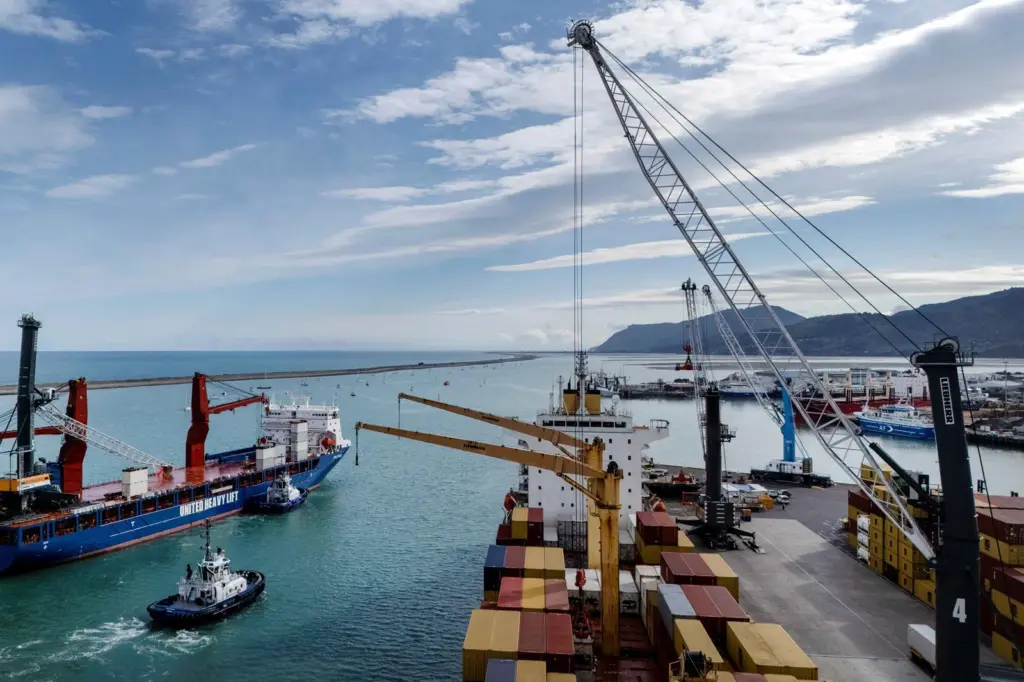
The NZ$17 million Liebherr LHM600E crane, supported by NZ$500,000 in co-funding from EECA’s Low Emission Transport Fund, is a significant step toward reducing carbon emissions and enhancing port equipment efficiency.
“This project will show how electrification of critical port equipment can be seamlessly integrated into operations, giving confidence to the wider industry,” said Richard Briggs, EECA group manager, delivery and partnerships.
Slashed emissions
The crane, which stands 52.8 metres tall and weighs 640 tonnes, is designed for dual-mode operation, using electricity for up to 85% of its work while retaining diesel capability for flexibility.
This innovative feature is expected to cut Port Nelson’s Scope 1 emissions from cranes, currently 22% of the total, while also reducing noise pollution and operating costs.
Additionally, Port Nelson is retrofitting an existing diesel crane with an electric motor, backed by NZ$375,000 from EECA.
CEO Hugh Morrison highlighted the broader benefits. He added: “Electric operation supports our noise management goals, reduces emissions and aligns with our strategy for sustainable growth by 2030.”
”This investment also boosts the local economy, with NZ$2 million spent on labour, materials and infrastructure upgrades.”
Port Nelson’s bold move towards port electrification will no doubt set a new standard for sustainable operations in New Zealand helping to position it as a leader in innovative, eco-friendly port equipment solutions.
Related Articles
 ENERGY & TECHNOLOGY GREENPORT
 ALTERNATIVE FUELS GREENPORT
 ENERGY & TECHNOLOGY GREENPORT