![GreenPort[PortStrategy]](https://www.portstrategy.com/greenport/wp-content/uploads/sites/4/2026/09/GreenPortPortStrategy.svg)


Overcoming grid power issues using batteries
Battery energy storage systems (BESS) can help ports overcome grid constraints which are seen as a barrier to decarbonisation, says the boss of Connected Energy.
That’s according to the boss of Connected Energy, who said that ports are putting major electrification projects on hold because 70% are already at or near their limit of available power from the grid.
“In many cases if ports want to meet their decarbonisation targets, they will need to upgrade their grid connections or find more cost-effective and flexible alternatives,” said Matthew Lumsden, chief executive of Connected Energy.
“Ship-to-shore capability can require 5MW of power, which is a huge spike. Ports that rely on energy-intensive pumps face a similar issue. BESS can help meet that demand without putting extra strain on the grid.”
Energy solution
In addition, all commercial sites have a limit on how much power they can consume, known as a maximum import capacity. Adding EV charging can push ports over their MIC, leading to expensive surcharges.
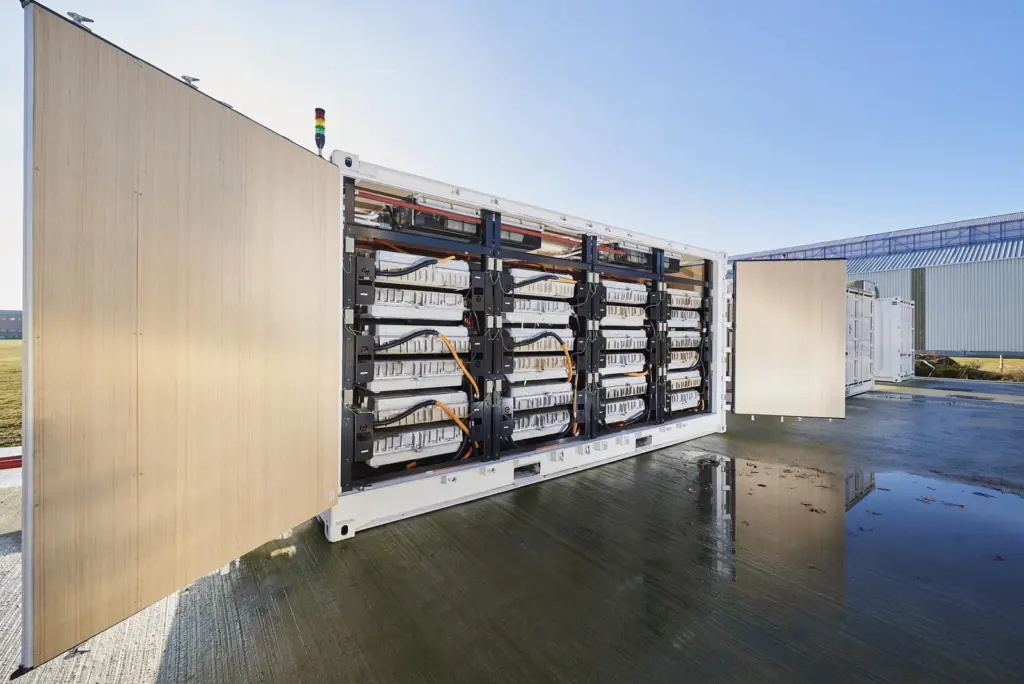
Connected Energy’s E-STOR system acts as an energy reservoir, drawing down and storing power during quiet periods, then providing it as needed. It is already in use around Europe for buildings and electric vehicle charging points.
The company calculates that a single 300kW E-STOR system can store 100MWh of electricity, which equates to saving 18 tonnes of carbon emissions each year. Connected Energy sources its batteries from end-of-life EVs, further reducing scope 3 emissions.
Mr Lumsden said that BESS can also make better use of solar panels and generate revenue by selling energy back to the grid. This could help make the unit price of electricity in ports cheaper as recent research suggests a prohibitive cost is putting shippers off using shoreside power.
Connected Energy is hosting a free webinar for the maritime industry on Wednesday 22 November.
Both operators believe that ports have a crucial role to play in the development of offshore wind power and are keen to support the implementation of FLOW in Taiwan
Related Articles
 ENERGY & TECHNOLOGY GREENPORT
 ALTERNATIVE FUELS GREENPORT
 ENERGY & TECHNOLOGY GREENPORT