![GreenPort[PortStrategy]](https://www.portstrategy.com/greenport/wp-content/uploads/sites/4/2026/09/GreenPortPortStrategy.svg)



The UK’s energy transition outlook
DNV’s fourth Energy Transition Outlook UK 2026 analyses how the UK’s energy system could evolve through to 2060 and assesses progress toward national decarbonisation targets.
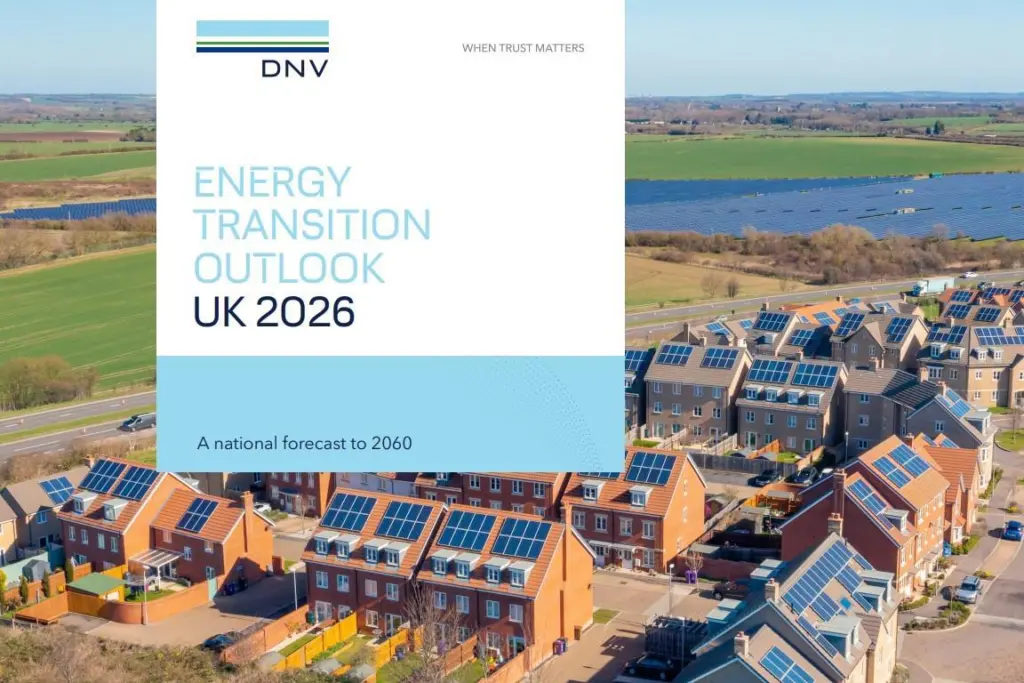
The report highlights momentum behind the energy transition, driven by policy initiatives including Clean Power 2030, Nationally Determined Contributions for 2035 and the UK’s Net Zero 2050 commitment.
It offers that the long-term outlook offers genuine cause for optimism, even though net zero is likely to be reached only in the decade after mid-century.
“The UK is transitioning fast – but not fast enough to hit targets,” said Hari Vamadevan, regional director, UK & Ireland, Energy Systems at DNV.
“The beginning of 2026 has shown that when government policy and business align, the energy transition can accelerate significantly; when they are disconnected, progress stalls. One thing the last 12 months have demonstrated is that we do indeed need to move forward, faster, together.”
Energy-efficient
The outlook identifies marine transport as the most energy-efficient freight mode over long distances, accounting for 11% of UK transport energy demand in 2024.
Demand largely comes from international shipping and vessels bunkering in UK ports, which represented 85% of maritime energy use in 2021.
Maritime energy demand is forecast to remain stable until 2027 before gradually declining, reaching 44% below current levels by 2060 as vessel efficiency improves.
Measures such as wind-assisted propulsion, increased ship utilisation and fuel switching are expected to drive these reductions.
The report also anticipates a significant diversification of marine fuels. By 2060 the maritime energy mix could comprise 26% bioenergy, 21% ammonia and 14% synthetic e-fuels, alongside smaller shares of oil, natural gas and electricity.
Across the wider energy system, renewable energy and nuclear are expected to supply 84% of the UK’s energy mix by 2060, with wind generation increasing nearly fivefold and solar output expanding more than tenfold.
Related Articles
 ENERGY & TECHNOLOGY GREENPORT
 ALTERNATIVE FUELS GREENPORT
 ENERGY & TECHNOLOGY GREENPORT