![GreenPort[PortStrategy]](https://www.portstrategy.com/greenport/wp-content/uploads/sites/4/2026/09/GreenPortPortStrategy.svg)


WATCH: Barcelona’s onshore power for ferries
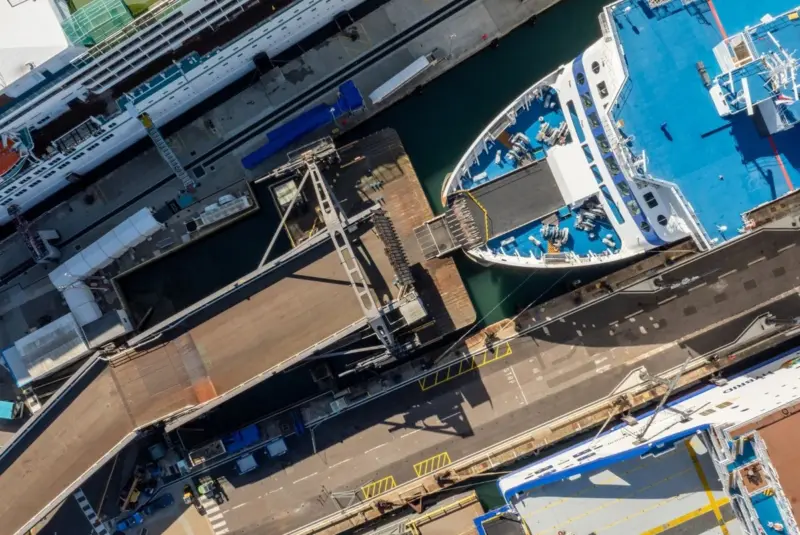
The Port of Barcelona has launched its first onshore power supply (OPS) for ferries at Grimaldi Terminal, which will significantly lower port emissions.
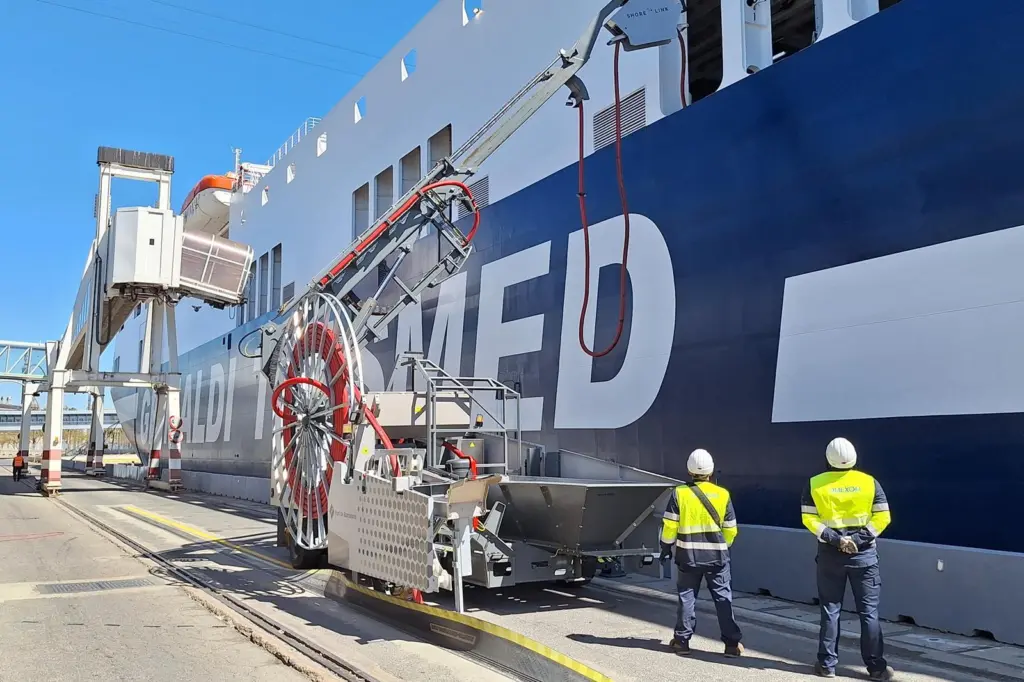
The system, now in operation at Sant Bertran Wharf, allows ferries to connect to shore power, cutting CO2 emissions by 2,090 tonnes annually.
“This OPS is especially important because it is located at the terminal closest to the city,” said José Alberto Carbonell, President of the Port of Barcelona.
“When we talk about decarbonising port activity, we are thinking about the climate emergency, but above all, the quality of life for those around us.”
Electrification plan
The new system is part of the Nexigen plan for port electrification, a €200 million investment aimed at reducing emissions from port activity by 47%.
The OPS connects ferries on the Barcelona-Palma route to 100% renewable electricity, eliminating the need for ships to run their engines while docked. This not only improves air quality but also reduces noise pollution for nearby residents and the rest of the port community.
The €3.5 million system, co-financed under Spain’s Sustainable and Digital Transport Support Programme, was developed in collaboration with Grimaldi Logística España and Trasmed.
It includes a fixed installation adapting power to ships’ needs and a mobile connection system to avoid interfering with dock operations.
”All (Grimaldi) vessels operating on the Italian market have been equipped with batteries for several years and have been operating with zero emissions in the port since then,” said Mario Massarotti, CEO of Grimaldi Logística España.
”This same commitment is shared by Trasmed, the group’s company operating in the Balearic market, which has invested over €1.2 million to adapt vessels to the OPS system. Thanks to these initiatives, we are proud to be the only group in the Port of Barcelona that operates in this terminal with zero emissions.”
The OPS installation is a key step in Barcelona’s plan to electrify all major wharves by 2030.
Related Articles
 ENERGY & TECHNOLOGY GREENPORT
 ALTERNATIVE FUELS GREENPORT
 ENERGY & TECHNOLOGY GREENPORT