![GreenPort[PortStrategy]](https://www.portstrategy.com/greenport/wp-content/uploads/sites/4/2026/09/GreenPortPortStrategy.svg)



Berthing system innovation
Data and analytics are being increasingly deployed to boost the safety and efficiency of the berthing process
An increase in the size of vessels and climate change means that there is an ever greater drive to deploy data and analytics within mooring solutions. Royal HaskoningDHV, Port consultant Koos Toebes says: “Vessels are becoming ever larger, but at the same time, the traditional infrastructure of bollards, quays and fenders remain in use. There is also climate change to consider, with winds and storms becoming heavier and more frequent, as well as appearing out of their traditional seasons. This makes data driven digital tools very valuable.” He explains that by using data to predict bollard forces, the combination of ever larger vessels with aging infrastructure can still be possible up to certain limits.
Furthermore, by using data analytics to provide insight into weather windows, ports can learn where it is still feasible and safe to moor vessels. This means that port authorities might postpone investments in new quay infrastructure, like bollards. The topic of mooring is an important part of the ‘smart port’ focus, with Toebes stating: “There are still many accidents and injuries with people around mooring operations so it is a part of the whole port process where it is important to improve and provide more insights on.”
Across the board, innovation is taking place in conjunction with the berthing process. Featured below is a company by company review of some of the more prominent developments.
DIGITAL FOCUS, MAXIMISING SAFETY, PRODUCT INNOVATION AND NEW INSIGHTS
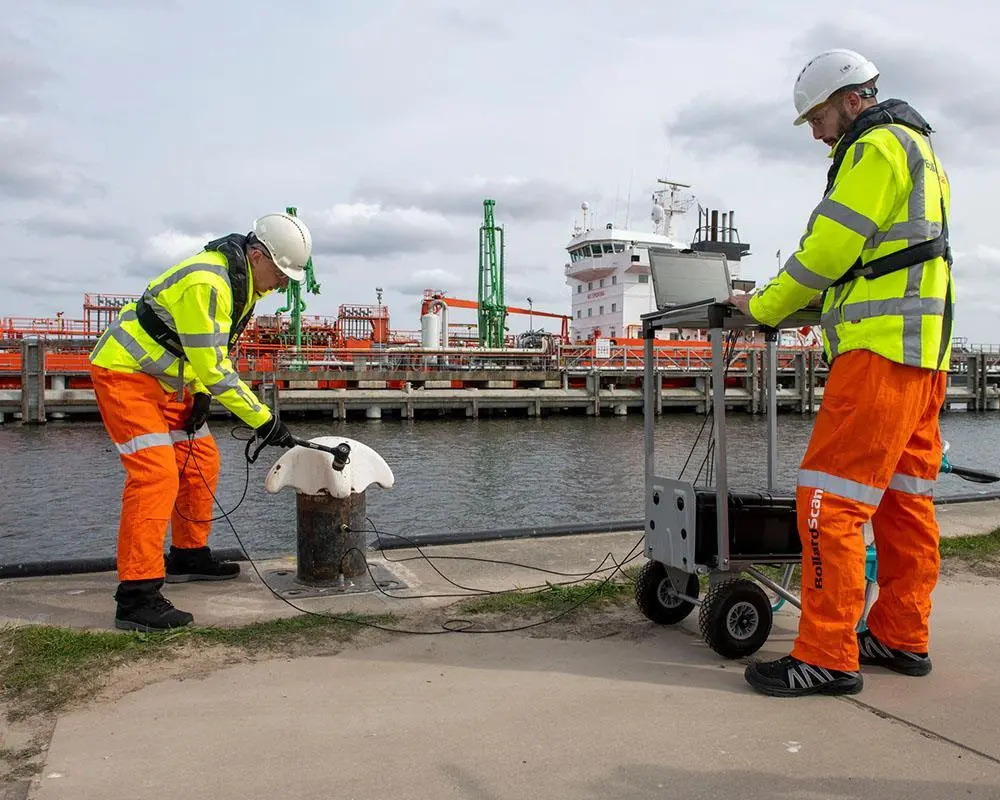
BollardScan: UK-headquartered BollardScan is an alternative to the load testing of bollards with tugboats, heavy wires and other machinery. This portable and lightweight equipment allows port operators to gain a comprehensive picture of the state of their bollards and indicates whether a replacement or corrective maintenance is needed. When scanning a bollard, sensors are placed on the surface of the structure above the ground. A vibration is initiated by tapping on the bollard in various directions and forces. The returned vibrations are recorded and analysed by a computer programme, with the results forming a basis for reporting including a risk analysis. BollardScan is certified by Lloyd’s Register, which says: “The inspection provides an empirical, non-destructive method of assessing and monitoring the structural integrity of a bollard and its mountings.”
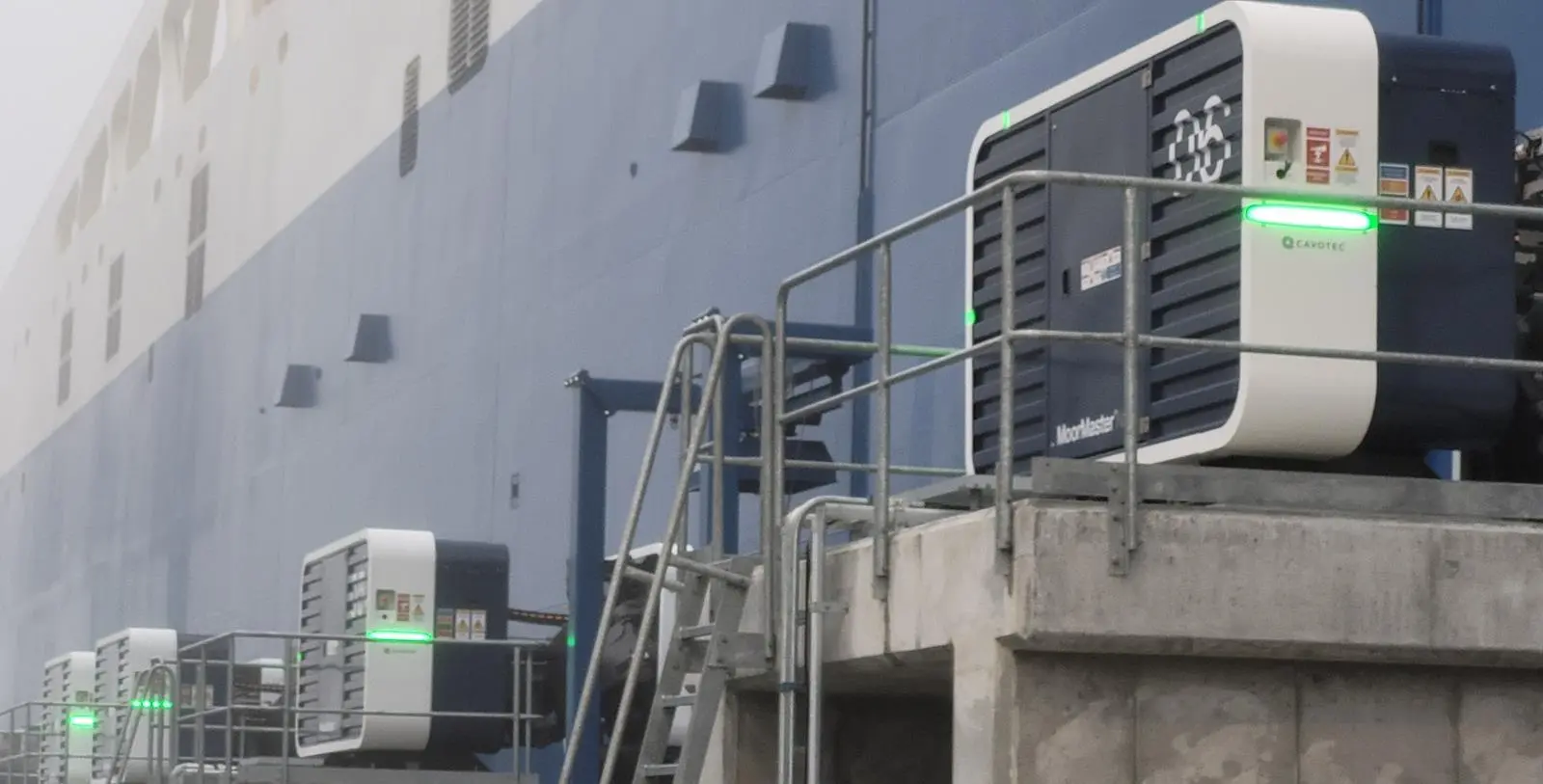
Cavotec: Switzerland’s Cavotec has scooped new port contracts for its MoorMaster NxG vacuum mooring system. In October last year its system entered service at Port of Kapellskär, part of Ports of Stockholm – a milestone, as this is the first application of its kind in Sweden. It is being used to moor Finnlines’ new ropax Finnsirius, mooring and releasing the vessel in less than 30 and 15 seconds, respectively. “[The] vacuum technology improves sustainability by providing a safer working environment and reduced environmental impact,” explains Johan Wallén, Chief Commercial Officer at Ports of Stockholm. Using MoorMaster enables ships engines’ to be shut off sooner after arrival in port, resulting in significant fuel savings and reduced NOx and CO2 emissions and noise reductions . Cavotec, which provides shore- and ship-based shore power connection systems, explains that MoorMaster eliminates the need for potentially hazardous mooring lines with automated vacuum pads that moor and release vessels “in seconds at the push of a button”.
MacGregor: Finland’s MacGregor was the company behind the mooring solution for the world’s first autonomous container ship, Yara Birkeland, which enables mooring operations to be deployed without human intervention. The fully electrical system is based on a seven-axis robotic arm that takes the mooring ropes with loops and wraps them around bollards on the dock. The mooring system has redundant kinematics, with built-in movement compensation and track planning. The vessel’s position against the quay informs the robotic arm where each bollard is located, and the track planning is automatically generated by the control system. When the loop has been placed around the bollard, load-controlled winches hold the vessel in the correct position against the quay. MacGregor says that its system “increases safety and eco-efficiency compared with conventional mooring operations”.
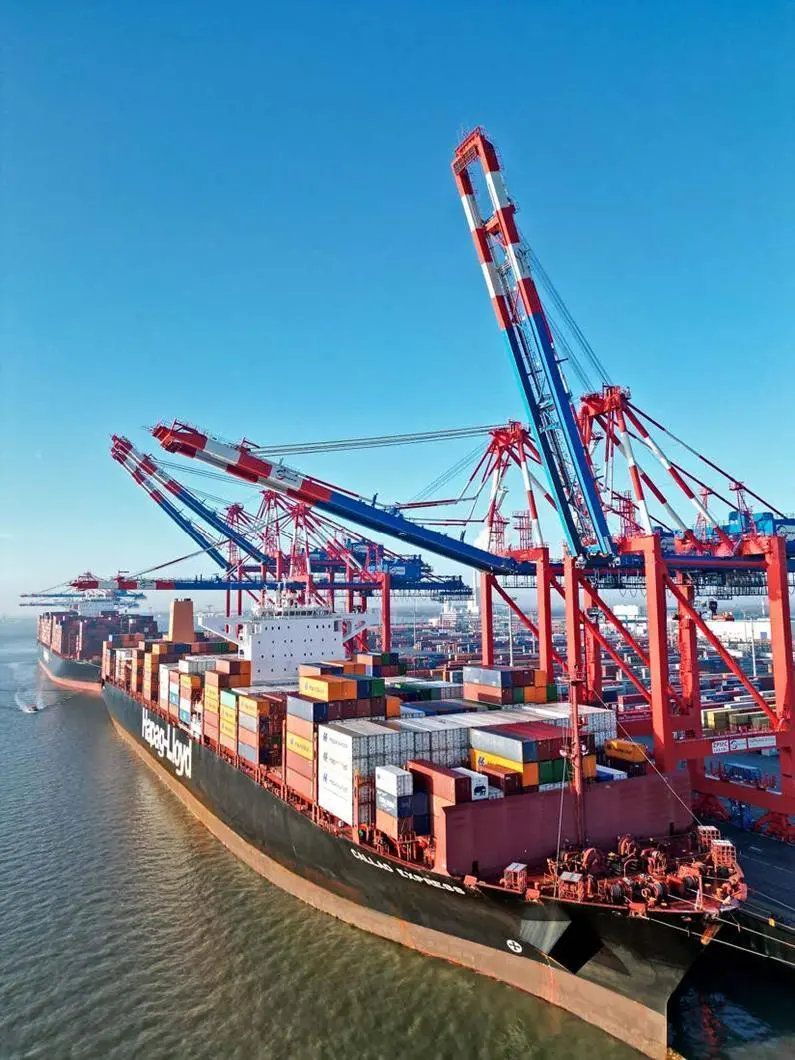
Portchain: Provider of berth alignment and planning software for container terminals Portchain has celebrated a milestone with the 100th terminal to be included in its Portchain Connect network, reaching 20 per cent of world capacity. This comes on the back of the Danish start-up’s announcement that it has raised a US$5m round from Angular Ventures. The latest funding for Portchain Connect, which was launched in 2021, takes external investment in Denmark’s Portchain to US$10 million. Portchain Connect streamlines the berth alignment process between terminals and shipping lines, enhancing the quality and speed of communication through ‘digital handshakes’ (indicators to identify when action is needed to re-align with a partner) and secure data sharing. Thor Thorup, CCO and co-founder of Portchain notes; “Portchain Connect empowers all 100 terminals in the Network to receive real-time updates directly from carrier systems, facilitating rapid responses and counter-proposals to align vessel schedules with terminal berth plans.” Portchain unveils future plans, saying it “looks forward to further collaboration in simplifying communication channels and improving overall berth alignment”. Its latest implementation is with Eurogate Container Terminal Wilhelmshaven (CTW). CTW will use Portchain Connect to increase the quality and speed of its berth alignment with customers.
RightShip: The Singapore-headquartered digital maritime platform has launched RightPORT, a risk management solution aimed at boosting operational efficiency and decision making for terminal operators during vessel pre-arrival preparations. Built using RightShip’s database, the solution’s features include pre-arrival checks and reviews to streamline processes and it provides full visibility of vessels’ risk profiles before they arrive in port. “This facilitates proactive risk mitigation for operators, but also supports effective resource allocation, berth management, and efficient operational processes”, says the company. The technology is fully automated, and integrated digital forms and terminal questionnaires enable swift communication between ports and incoming vessels, which the company says further optimises resource usage and reduces labour intensity.
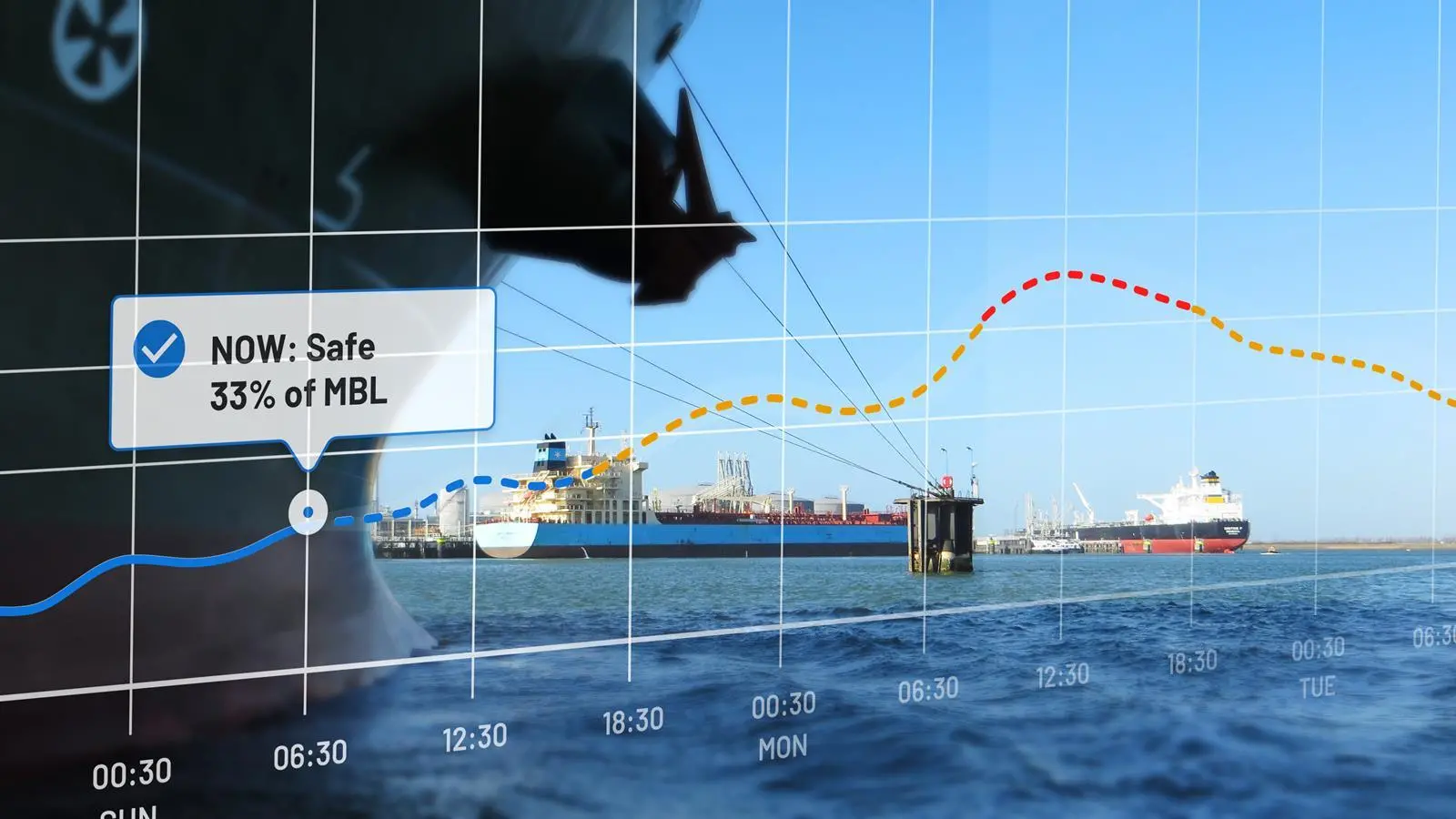
Royal HaskoningDHV: The Netherlands-headquartered consultancy’s Twinn Smart Mooring solution combines the results of hydrodynamic calculations and simulations of moored ships with local weather forecasts, in an online tool with a user interface that can be used in daily operations. The tool predicts mooring line forces, vessel motions and fender deflections and bollard forces days in advance. Royal HaskoningDHV port consultant Koos Toebes says: “Over the last 18 months, we have rebuilt the whole application from proof of concept into a really professional software package that is ready for the future and ready to scale up.” The company is planning to add a new insight into mitigation measures, either this year or the next. Toebes explains: “Currently, we predict situations, but the next step is what are the effective solutions to mitigate situations. For example, how many tugs are needed to push the vessel against the quay to reduce the mooring line load and for which time slots? That is a black box at the moment for many port authorities.” Twinn is also taking part in a pilot project with the Port of Rotterdam, whereby smart bollards have been implemented on one berth, that measure the forces on them. The data that they are collecting is being measured against Twinn’s predictions in a validation programme. “If our predictions are in line with what is being measured, then we can really prove that our solution adds value,” says Toebes. The project is expected to finish in the third quarter of this year.
Samson: US developer of synthetic rope solutions Samson has introduced Defender Fuse. Designed to complement standard mooring systems, Defender Fuse is an overload warning system engineered to mitigate ‘snapback’ (mooring line recoil) situations before they occur. Consisting of a trigger and a catch, the catch material will elongate until it reaches its final length, up to 150 per cent more than its original, before complete rupture. In this way, the elongating material acts as an early warning system. The product, launched in October last year, has been designed to absorb energy within the entire mooring system.
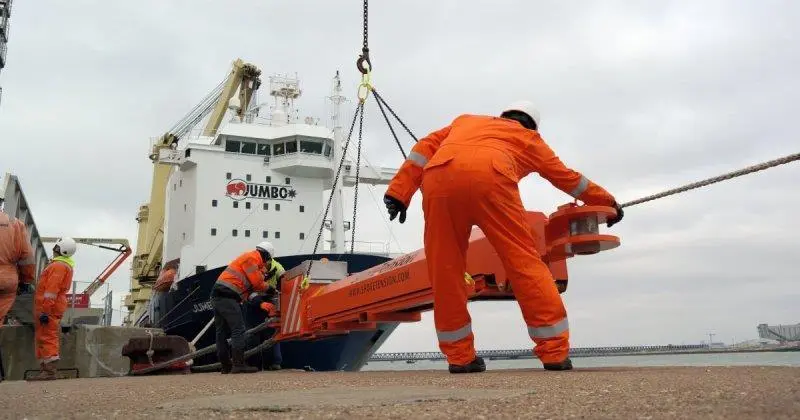
ShoreTension: Netherlands’ ShoreTension has won a clutch of recent contracts for its cylindrical stand-alone device that anchors ships of any size to the quay. The company explains that it significantly reduces movement caused by strong winds, currents, swell or passing ships. It also aims to allow terminals to operate more efficiently. “Because ships are moored alongside the quay with greater stability, the ShoreTension promotes unhindered quay crane operations and significantly reduces the risk of damage during unloading and loading,” says the company. Furthermore, operations can continue for much longer in bad weather, and visiting ships can be handled more quickly. In October last year, ShoreTension received an order to deliver eight more Dynamic Mooring Systems to the Port of Jorf Lasfar, Morocco, bringing the number of systems in the port to 20. ShoreTension is being used at the port to provide safety and stability to moored vessels in (long) swell periods. In August last year it announced that four of its Dynamic Mooring Systems have been purchased by Port of Salalah, bringing the total number of systems to eight at the port.
Straatman Mooring Systems: Straatman Mooring Systems has launched Smart Bollard, which uses advanced technology to improve safety and efficiency in mooring operations. The bollard is equipped with sensors to measure the load on mooring lines and translate the structural movement arising from mooring line tension. The company explains that they increase safety by giving a real-time overview of the loads on the mooring lines and provide a better understanding of overall mooring forces as data is logged. The system’s dashboard displays and logs pivotal data for analysis, including load on the bollard ship, line, direction and angle, tide level, weather conditions and vessel history (using AIS data). Administrators can add users, establish alarms, and integrate the data into other systems through the provided API. The Netherlands-based manufacturer’s mooring and berthing equipment also includes Quick Release Mooring Hooks, Berthing Aid Systems, Ship-to-Shore Link systems and solar power systems.
Trelleborg: Dubai-headquartered Trelleborg Marine and Infrastructure has boosted the use of its mooring solution DynaMoor with a trial in Japan that is slated to commence this year. This marks the debut of DynaMoor in a Japanese port. The company has entered into an agreement with power generation company JERA Co. Inc. and NYK to trial two DynaMoor Type-L ship mooring systems at JERA’s Hitachinaka thermal power station. The system will be installed at the coal unloading berth and tested to assess its ability to minimise vessel movements and improve the overall cargo handling process. Richard Hepworth, Business Unit President, Trelleborg Marine and Infrastructure, reports: “…The challenging sea conditions at this location often result in mooring line breakage during ship unloading, which impacts operational efficiency and poses safety risks. The DynaMoor system will enable effective control of mooring line tension, minimising the likelihood of line breakage and ensuring safer and smoother operations.” DynaMoor features an electronically controlled hydraulic damper that regulates the tension of the mooring rope, resulting in reduced ship surge movement while at port. By balancing loads on the ship’s mooring lines, it ensures a more secure mooring experience. It Incorporates computer-aided design, finite element analysis, and hydrodynamic analysis technologies.
Wilhelmsen Ships Service: Norway’s Wilhelmsen Ships Service’s total mooring solution consists of rope products, technical services and digital innovation. Included in the portfolio is its Line Management Application which provides a holistic overview of mooring lines in one app. It combines forecasting with Wilhelmsen’s AI system to allow the evaluation of surface-level rope abrasion, thereby reducing accidents and enhancing compliance of the vessel. Elsewhere, its digital mooring system Timm Smart Ropes has been developed and refined over the past three years. A measuring unit transmits key tension, time and temperature information via wireless communication to a command module located on the bridge. This data is processed and transferred to a live feed, backed-up in the cloud, making mooring operations safer and more efficient. Elsewhere, in December 2022 Timm’s Snap Back Arrestor (SBA) received DNV’s Certified Technology approval – which it says is the world’s first and only SBA rope to receive this. “Wilhelmsen Ships Service have with their Snap Back Arrestor developed new technology going beyond existing standards. The intention of the technology is to increase safety in maritime by minimising the effect of snap-back in case of rope failure,” says Ingrid Skutle Høgsæt, Principal Engineer, DNV.
Related Articles
 EQUIPMENT