![GreenPort[PortStrategy]](https://www.portstrategy.com/greenport/wp-content/uploads/sites/4/2026/09/GreenPortPortStrategy.svg)
A call to the EU to prioritise green port ambitions
Port of Rotterdam Authority has penned a position paper to emphasise to the future European Commission and Parliament the need for a vigorous stimulus of green energy and a circular economy.
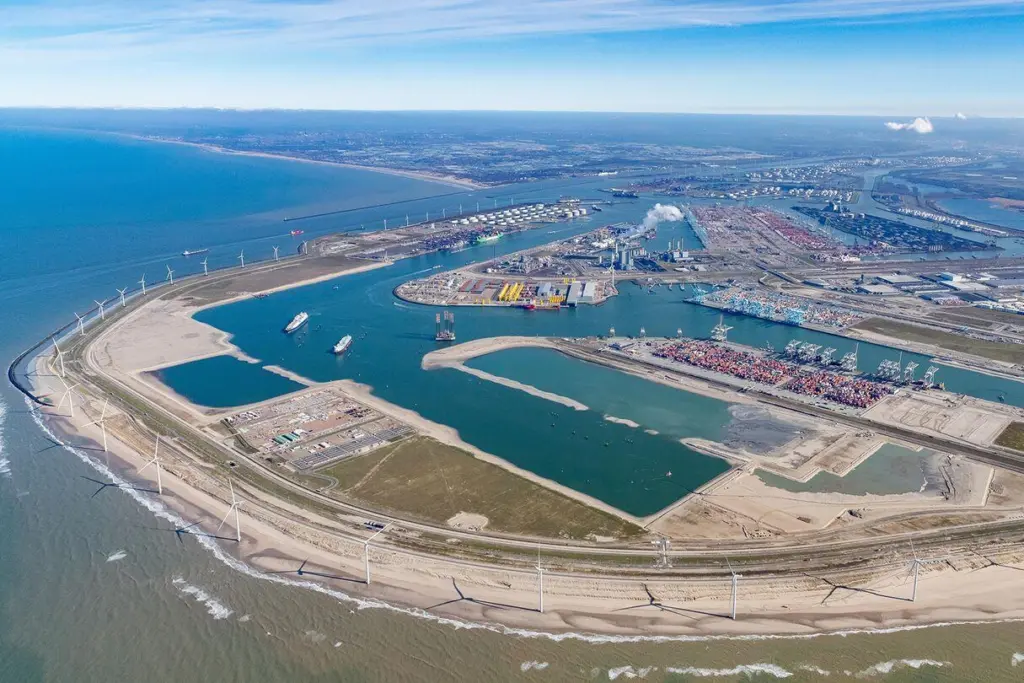
The position paper outlines that the European Union faces the challenge of reconciling the transition to a sustainable economy with preserving prosperity. Fit for 55 and REPowerEU are aimed at achieving this, but the concern is how to accelerate the sustainability of the industry without losing competitiveness.
“[We need to] put implementation of the energy transition centre stage and use European ports intelligently to secure strategic autonomy,” said Boudewijn Siemons, CEO of the Port of Rotterdam Authority.
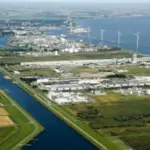
“The Port of Rotterdam has a large industrial complex and is a major hub for containers, energy and raw materials. Here, as in many other European ports, there is a confluence of major challenges, such as making international transport more sustainable, reliable supply chains for businesses and consumers and accelerating the sustainability of industry without losing competitiveness.”
Stimulus-based
The port authority said that many industrial companies in Rotterdam are keen to invest in making their production more sustainable, but have not yet made a final investment decision.
For them, the port said it is crucial that the European investment climate offers sufficient securities and prospects for the future. The European Emissions Trading System (ETS) encourages industry to become more sustainable and the Carbon Border Adjustment Mechanism (CBAM) reinforces a level playing field globally.
It points out that broad, stimulus-based European industrial policy is a necessary complement to maintaining commercial activity, especially if Europe wants to reduce its dependency on other countries and remain a leader in innovative, sustainable manufacturing.
Several Rotterdam-based public and private projects are making major contributions to ensuring industry in Northwest Europe becomes more sustainable.
These include storage of CO2 under the seabed, the import and production of hydrogen and the expansion of the circular economy. These projects are currently being implemented and the port authority is keen to see the European Union’s continued support.
For example, the port authority said it would like to see a more distinct focus at the European level on the link between the energy transition and the raw materials transition.
In addition, it wants the EU to work on an approach based on acceleration areas in industrial clusters such as ports. The port also advocates accelerating the build-up of renewable energy chains in Northwest Europe with European funds contributing to this.
Related Articles
 ENERGY & TECHNOLOGY GREENPORT
 ALTERNATIVE FUELS GREENPORT
 ALTERNATIVE FUELS GREENPORT