![GreenPort[PortStrategy]](https://www.portstrategy.com/greenport/wp-content/uploads/sites/4/2026/09/GreenPortPortStrategy.svg)

ASEAN ports get sustainability support
The ASEAN Ports Association (APA) and German Technical Cooperation (GTZ) are jointly implementing the “Sustainable Port Development in the ASEAN Region” project, designed to help selected ports comply with international environment and safety standards while improving their efficiency.
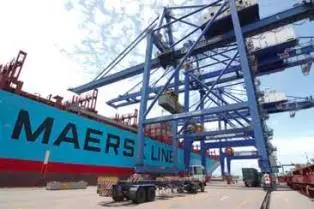
Tanjung Priok is one of nine ports selected for sustainability aid. The three-year project is financed by the German Federal Ministry for Economic Co-operation and Development. Nine ports in five countries have been selected to participate in the project: Sihanoukville Autonomous Port and Phnom Penh Autonomous Port (Cambodia), Tanjung Priok and Tanjung Perak (Indonesia), Iloilo and Cagayan de Oro (Philippines), Bangkok and Laem Chabang (Thailand), and Saigon Port (Vietnam). The three-year project is financed by the German Federal Ministry for Economic Cooperation and Development (BMZ). “Ports are an important factor in the economic sustainability of the ASEAN region, they need to continue growing. Without proper planning and well managed operations, port-related activities can impact on the environment and nearby communities,” said Uwe Breitling, GTZ Team Leader. The project will work with individual ports and address their specific needs, as well as engaging in the development of training for a wider audience in each of the countries. The project will also collaborate with the Partnership in Environmental Management for the Seas of East Asia (PEMSEA) to assist the participating ports to implement and continually improve their safety, health and environmental management via an integrated approach. Attorney Gloria J Victoria-Baas, head of the permanent secretariat of APA, said “With the assistance of the project consultants and the total commitment of the participating ports towards the goals of the project, it is expected that the adoption of a pro-active approach in achieving quality, efficiency and sustainability in port environmental and safety management will be institutionalised. Hence, within this particular context, the need for improvements/enhancements in port safety processes becomes constant and continuing. By the end of 2012, a marked improvement in this regard is expected to be visible in all the participating ports of this project.” The first international workshop in Bangkok was held on 22 January, hosted by the Port Authority of Thailand. The workshop resulted in a mutual understanding among participants about the approach and the objectives of the project. It also facilitated the exchange of experiences between all participants who will gain insight into the main problems and possible solutions for sustainable port development.
Related Articles
 ENERGY & TECHNOLOGY GREENPORT
 ALTERNATIVE FUELS GREENPORT
 ALTERNATIVE FUELS GREENPORT