![GreenPort[PortStrategy]](https://www.portstrategy.com/greenport/wp-content/uploads/sites/4/2026/09/GreenPortPortStrategy.svg)


Barcelona air quality improvement plan
The Port of Barcelona has presented its Air Quality Improvement Plan which aims to help effectively reduce emissions from port activities.
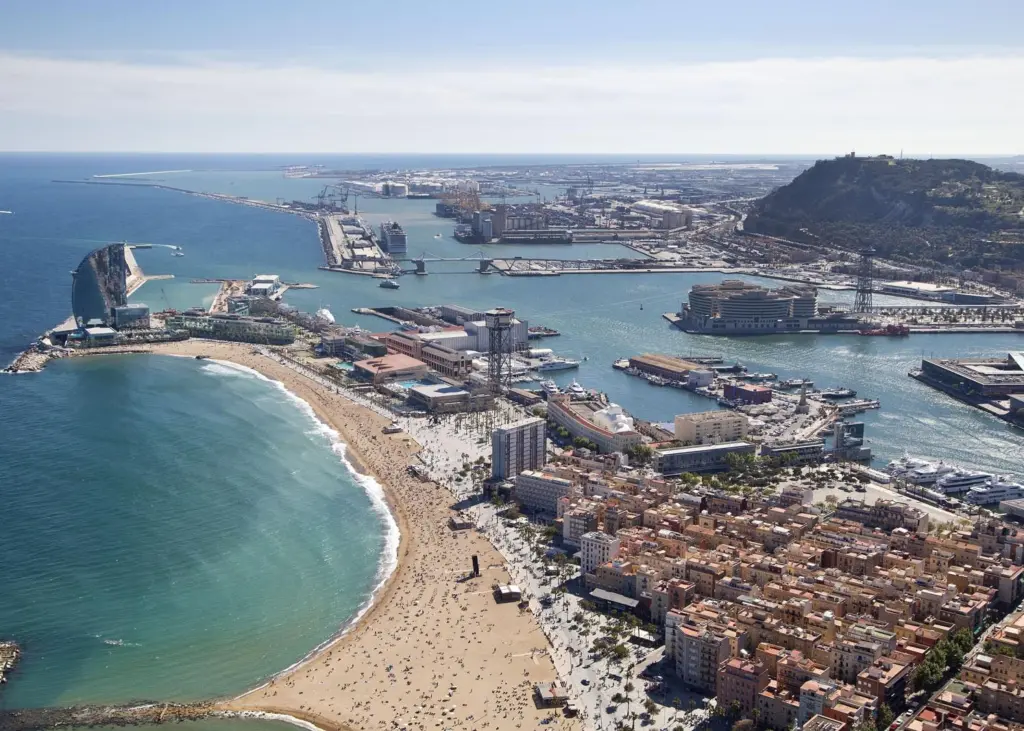
Its main ideas include promoting LNG as an alternative fuel for vessels, an ambitious policy of discounts for cleaner ships and replacing the port’s internal fleet with electric vehicles.
The document, approved by the Port’s Management Board and put to the Table on Air Quality in the Barcelona Conurbation, involves 25 actions rolled out in 53 operations.
Sixte Cambra, Port of Barcelona’s president, said: “Over the last two decades our Port has led the way on environmental issues and we are firmly committed to continuing in this leading role. We are aware that our responsibility as a public company is to lead the change towards a more sustainable model.”
Port activity is said to be responsible for 7.6% of average annual concentrations of NOx emissions in the city and over 1.5% of particulate matter.
Container ships are responsible for 1.7% of the annual average concentration of NOx in the Catalan capital, with other cargo ships representing 2%, ferries 1.4% and cruise ships 1.2%.
Promoting LNG as an alternative fuel for ships, terminal machinery and trucks is one of the highlights of the plan because its use can lead to NOx emissions being cut by 80% as well as stopping particulate and sulphur oxide emissions.
This action hopes to provide the Port of Barcelona with LNG supply infrastructure and to develop pilot and demonstration projects.
Initiatives are under way to look at installing a flexible cryogenic loading arm at the Enagás terminal to supply LNG to a barge and small boats as well as adapting a barge to supply LNG to larger vessels.
Both initiatives are set to receive EU funding since they are part of the CORE LNGas hive project run by the European Union.
The plan also includes the policy of environmental discounts on ships’ fees. The port believe discount applied to port fees is a fundamental instrument for bringing about change in the vessels.
Although, the problem is that at present the law allows a maximum discount of 5% for environmental reasons on ships’ fees, which is a very small margin for building an ambitious environmental strategy.
José Alberto Carbonell, general manager at the port, explained: “The Port of Barcelona will ask the Ministry to amend the Ports Law in order to implement environmental discounts of up to 40% of ships’ fees, just like the ports of northern Europe (Rotterdam, Hamburg, Antwerp)”
“With the new regulations, the Port of Barcelona aims to more effectively attract cleaner ferries, cruise ships and cargo ships.”
Related Articles
 ENERGY & TECHNOLOGY GREENPORT
 ALTERNATIVE FUELS GREENPORT
 ALTERNATIVE FUELS GREENPORT