![GreenPort[PortStrategy]](https://www.portstrategy.com/greenport/wp-content/uploads/sites/4/2026/09/GreenPortPortStrategy.svg)
British ports warned about clean air act
The UK government has made clear that there will be a new clean air act coming into force that all areas of transport will have to adhere to.
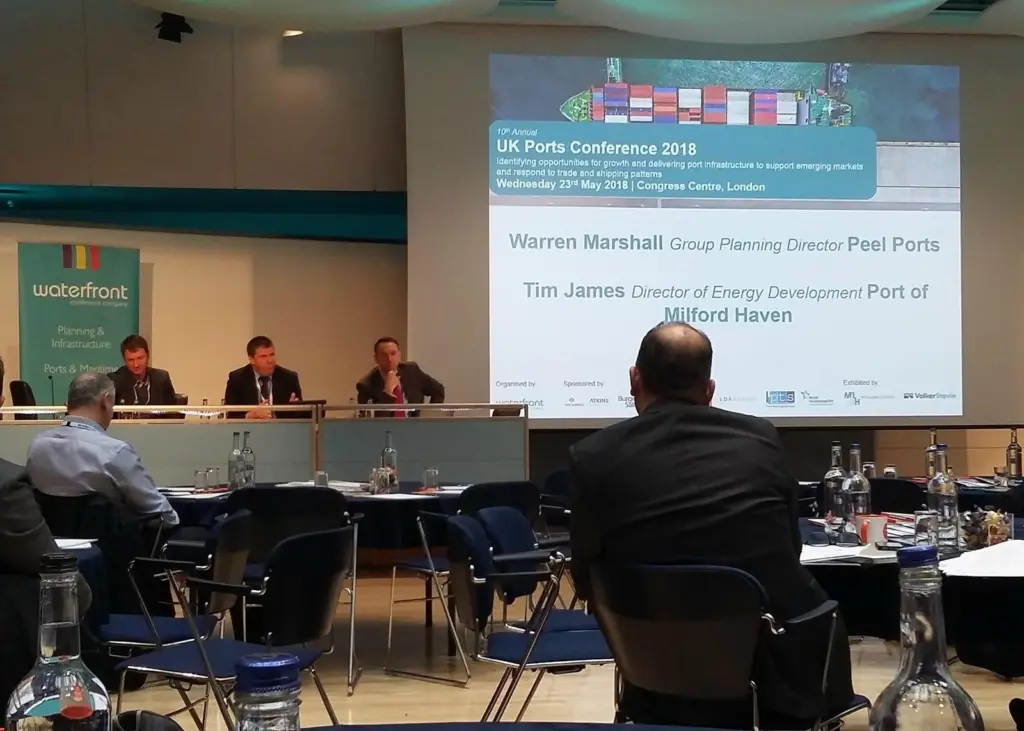
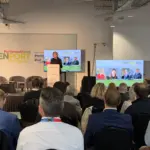
This was a key issue discussed at the second day of the 2018 UK Ports Conference with the warning given that UK ports need to join together to take a unified approach across the sector to meet any new legislation.
“The clean air act will call on ports to look at ship to shore movement, cost demand and local energy supply,” said Richard Ballantyne, chief executive of the British Ports Association and chair of the conference.
“We’ve got to have a unified approach across the sector as we don’t want to upset out customers and stakeholders. This also needs to be balanced with an appropriate response from the shipping and transport sectors where many of the emissions come from.”
Cleaner outlook
The day also took a closer look at some of the largest UK ports clean air action plans.
Warren Marshall, group planning director of Peel Ports, explained what has been keeping the operator busy over the last twelve months, it has been master planning a £100m biomass terminal at Liverpool.
It has also been working on “Maximising the shipping leg and minimising the road and rail legs” to attract new customers.
Another hot topic of the day was on the importance of port master planning.
Independent planning expert, Nigel Bodell, advised ports to come up with a masterplan to inform, advise and plan for the future that can be used as a benchmark for change.
“Creating a publicly accessible Masterplan should enable authorities to align the port’s ambitions to their own investments,” he said.
“They can also be used for talking to communities, can help prevent objections and help the planning process run more smoothly.”
Zero emissions
Perhaps the most innovative talk of the day came from Steve Guest, Kongsberg Norcontrol, who spoke about autonomous emissions free ships and the need to consider future infrastructure for them in ports.
Together with the shipping operator, Yara, Kongsberg is creating what it calls the world’s first electric zero emissions autonomous feeder vessel.
The Yara Birkeland will transport fertiliser from Yara’s Porsgrunn plant in Norway via inland waterways to the ports of Larvik and Brevik removing 40,000 truck trips in the region.
Kalmar will provide one Kalmar Automated Rail Mounted Gantry Crane (AutoRMG), three Kalmar FastCharge(TM) AutoStrads, a FastCharge charging station and related automation and safety systems at the ports.
“Autonomy is a disruptive technology which is coming quickly. Are you as ports ready to receive autonomous ships? Make sure you consider it in your port master plans,” said Mr Guest.
He explained that as with most other new technology, it will be the ports that embrace it that will be the most competitive in the future, especially in light of upcoming environmental regulation.
Related Articles
 ENERGY & TECHNOLOGY GREENPORT
 ALTERNATIVE FUELS GREENPORT
 ALTERNATIVE FUELS GREENPORT