![GreenPort[PortStrategy]](https://www.portstrategy.com/greenport/wp-content/uploads/sites/4/2026/09/GreenPortPortStrategy.svg)
Developing a green smart and resilient port
GreenPort sits down for a Q&A with this year’s Congress and Cruise host, the Port of Lisbon, to talk the conference, environmental plans and objectives.
Q As this year’s host port, why do you think Lisbon is the right choice to hold the conference this year?
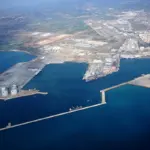
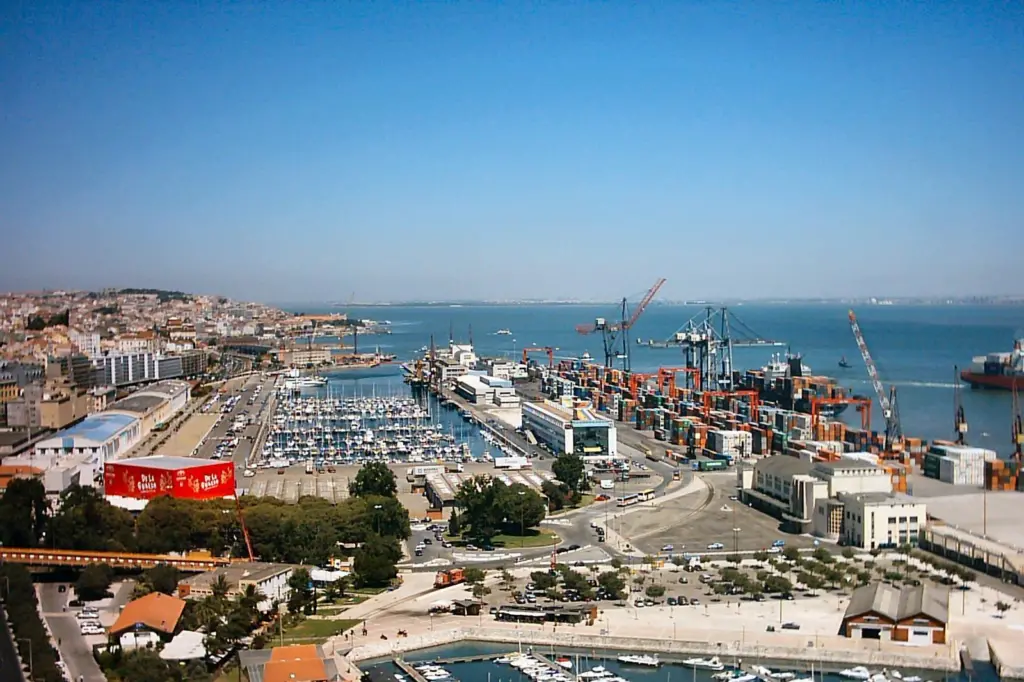
A The Port of Lisbon is a vast port, located in the Tagus estuary which, not only is the centre of the largest and most densely populated metropolitan area of Portugal, but also holds significant nature conservation values and cultural heritage interests, due to its ancient origins.
Located in the capital and neighboring cities and bordering 11 municipalities, the port must tackle several environmental, social and economic challenges.
More than half of the port area is in the Natura 2000 Network, where we intend to develop inland navigability in the Tagus estuary, one of the most emblematic projects of the port aiming to mitigate carbon emissions.
In addition, large operational port areas are located within urban areas with heritage protection status, which requires increased investment efforts towards reconciling the port with the environmental and municipal and citizen interests. Strong investments are being made in environmental monitoring and actions to give the port a benchmark of high environmental quality.
Moreover, occupying an area of the globe which is very susceptible to the effects of climate change, the port is continuously being forced to invest in adaptation to become a more resilient port.
In 2023, we are developing a significant set of projects beyond the inland navigability of the Tagus estuary, such as Onshore Power Supply, the production of electricity from renewables, the accelerator of the blue economy, and so on.
We consider these excellent reasons to host an event like the GreenPort Congress that will allow us to show the work and projects that we have been developing with our partners and help us celebrate the 136th anniversary of the Port of Lisbon Authority.
Q In terms of your own environmental objectives what are you striving for in the short and longer term?
A The European Green Deal and the whole legislative train/package it has been delivering, requires a systematic approach to ESG issues so, in 2022, the Port of Lisbon joined the UN Global Compact, to align the port strategy with the ten principles of the UN Sustainable Development Goals.
In environmental terms, our main goal is to develop a green, smart, and resilient port. Our main focus is nowadays on reducing CO2 emissions and improving air quality in operational areas.
We have already started the energy and digital transition with our partner Liscont, which is making major investments in the modernisation of the Alcântara Container Terminal, by reorganising the entire container park to improve operational efficiency and retrofitting and installing new electrical equipment.
We’ll also proceed with the installation of OPS at the Lisbon cruise terminal and four more cargo terminals in the eastern area of the port and with the improvement of the conditions for inland navigation of the estuary. This will allow us to reduce the impact of the port on air quality and to transfer cargo from road to barges reducing the number of heavy vehicles with containers crossing urban roads between the terminals in Lisbon and the logistics areas located upstream.
We will maintain and increase the ongoing environmental monitoring effort, especially with regards to the monitoring of dredging and cruise activity and we will start the production of energy from renewable sources.
Our effort to fully integrate the port in the urban surroundings involves the requalification of port areas, which involves continuous work with the municipalities. We have several redevelopment projects for the areas of Alcântara, Santos and Pedrouços. The latter, will create a new centrality in Lisbon and Oeiras with a high-quality hub for blue economy – the Ocean Campus.
We are in the process of improving the recreational ships repair park located next to recreational docks in the UNESCO cultural heritage area of Belém. In the eastern port areas, where the municipality of Lisbon is undergoing huge urban interventions, we intend to qualify all terminals (including green clauses in the new concessions) and the access to the port. We will build a new port gate and improve road access and parking contributing to high-standard landscape integration in the city.
Q What green projects are currently underway at the port?
A Right now, we are particularly focused on energy and digital transition.
The main projects under development are the inland navigability of the Tagus estuary, Onshore Power Supply, the Ocean Campus and the production of energy from renewable sources. We are looking to the creation of a community renewable energy hub to which we hope several of our partners will join in the future.
In addition, we are working on future digital monitoring of the port – we aim to start with environmental monitoring, production and consumption of electricity to later develop a port digital twin.
Q Can you give us some facts and figures on how these projects have impacted efficiency and emissions at the port?
A The pandemic has introduced a huge distortion in the emissions statistics therefore we have not yet been able to get the true dimension of its impacts.
In Portugal, a lockdown policy was adopted during the pandemic that has drastically reduced travel and transferred part of the energy consumption associated with economic activities.
For example, regarding energy consumption, the resumption of office work in 2022 led to a growth of about 50% in total energy consumption, compared to 2020 and 2021.
Electricity consumption increased by about 80% but this was offset by a roughly 10% reduction in fossil fuel consumption in fleets and heating. The reasons for these figures may be, not only the increase in office occupancy but also in the number of trips made with the electric vehicles in our fleet, most of them acquired in 2019, just before the lockdown.
In terms of CO2 emissions, the increase in electricity consumption has not been accompanied by an increase in emissions, which is due to the supply of greener energy from the current operator.
We believe that maybe within a year, statistics will start to reflect the true impact of our newly adopted measures and projects.
Q What projects are next for the port, including alternative fuels?
A In terms of energy and digital transition we are building a roadmap for future investments. Naturally, this roadmap is based on the above-mentioned projects, but we intend to actively seek partnerships to develop innovative projects in these areas.
We are already starting with the creation of a blue economy innovation accelerator program in the Port of Lisbon in partnership with the Ocean Forum and through which we will host a pilot project of innovative urban wind turbines.
The port has also started a pilot project with Repsol in order that the port authority fleet is operated on greener fuel, we hope that we will see the impact of this pilot in 2024. At the same time, we are constantly seeking partnerships to develop R&D projects that promote the increased resilience of the port.
Q What messages are you looking to deliver to the industry at the GreenPort Congress?
A The main message we want to deliver is that sustainability is the only way forward for ports that want to survive. At the current time, energy and digital transition are among the prime issues to be addressed. And we believe that the establishment of partnerships and innovative collaborations are crucial for the overall sustainability success of Port of Lisbon.
Q Why is it so important in your opinion to attend the event?
A As our chairman of the Board, Mr Carlos Correia, says: “To host the GreenPort Congress & Cruise conference in Lisbon is a unique opportunity to gather the port community together to discuss port sustainability issues and to showcase the Portuguese practice and expertise in the transition to a greener, digitalised and decarbonised port ecosystem.”
The conference will cover a wide range of themes and will be an opportunity to bring together the whole port community, working as a platform for exchange of information on the latest in sustainable environmental practice.
We are looking forward to welcoming the port community to Lisbon for the Greenport Congress & Cruise 2023 and we believe it will be a success.
……………………………
The 2023 GreenPort Cruise and Congress conference takes place from 18 to 20 October at the Port of Lisbon. Don’t miss the opportunity to participate at this popular event – book your delegate place online or contact the team on +44 1329 825335 or email congress@greenport.com
Related Articles
 ENERGY & TECHNOLOGY GREENPORT
 ALTERNATIVE FUELS GREENPORT
 ALTERNATIVE FUELS GREENPORT