![GreenPort[PortStrategy]](https://www.portstrategy.com/greenport/wp-content/uploads/sites/4/2026/09/GreenPortPortStrategy.svg)

EXCLUSIVE: Bilbao’s plan for sustainable cruise growth
The Port of Bilbao is investing in new infrastructure for sustainable development. Cruise Manager Gloria Frau tells Michele Witthaus how cruise traffic will benefit.
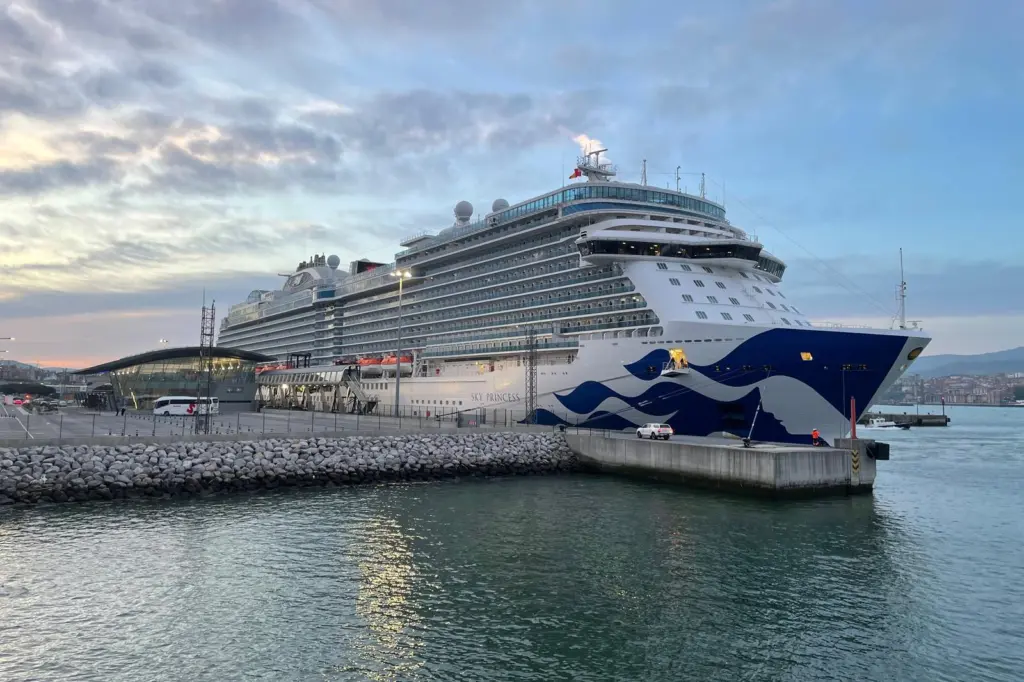
Situated in northern-central Spain, Bilbao is the main urban area in the autonomous community of the Basque Country and the largest city in the Province of Biscay (Bizkaia).
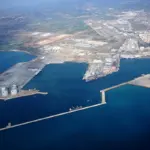
The city has the 11th largest population of any city in Spain (347,342, according to the most recent count in 2024. Its location in the north of the country means that Bilbao features on many cruise itineraries that encompass ports in the UK, France, the Netherlands, Belgium, Portugal and other parts of Spain. Passenger ships call at the cruise port of Getxo, as the city of Bilbao itself is situated inland on an estuary off the Bay of Biscay.
Good transport links enable easy access to and from Bilbao. The port’s cruise ship terminals are only 20 minutes from the centre of the city and 14 km from Bilbao Airport, which offers flights to all major destinations in the Iberian Peninsula and Europe, as well as Newark in the United States. Visitors to the metropolitan area of Bilbao can enjoy its Guggenheim Museum and other places of interest in the old town, while shore excursions take in historic sites and natural attractions nearby.
“The Bilbao Port Authority, with the support of government agencies, tourist offices and tour operators, has worked hard to make Bilbao, Bizkaia and the Basque Country an attractive destination for both shipping companies and tourists,” says Cruise Manager Gloria Frau.
“As a result, during the 2025 season we broke the previous record for cruise ships calling at our port in Getxo, with a total of 95 stopovers and over 180,000 cruise passengers.”
Modern facilities
With three docks, measuring 366, 355 and 318 metres in length, and with a draught of 12 metres, the cruise port at Getxo is equipped to receive vessels of any size, says Ms Frau. “It offers state-of-the-art facilities that guarantee a comfortable, safe and efficient experience for passengers and shipping companies.
“The terminals are equipped to accommodate all types of cruise ships and handle both transit and embarkation/disembarkation passengers, thanks to their modern facilities dedicated exclusively to this type of traffic and ongoing projects to ensure efficient and sustainable tourism.”
For cruise operators, explains Ms Frau, the Getxo 1 and Getxo 2 terminals offer a wide range of services, including “vessel repairs, fuel, water and supplies, waste collection with all the necessary health and environmental guarantees, and safety and security measures such as ISPS Code, scanners, security arches, surveillance, port police and restricted access areas, among others.” Passengers benefit from free Wi-Fi, a VIP lounge, tourist information, and stopover facilities.
“The Getxo 3 cruise ship dock also has a modern, dynamic, user-friendly, functional and competitive passenger terminal known as Olatua, designed to deliver the highest standards of quality and maritime safety which make it one of the most advanced terminals in Europe,” says Ms Frau.
Shore power focus
An important feature of the Port of Bilbao’s strategy to promote sustainability and decarbonisation in the sector is the ongoing work on installing onshore power systems at several of the docks in the port, in a project known as BilbOPS.
“To this end, the cruise ship docks will be equipped with an onshore power supply system in 2027, as part of the wider BilbOPS project to electrify the docks for recurring traffic,” says Ms Frau.
The BilbOPS initiative will see the cruise terminals equipped with three power connection points, enabling two cruise ships to be connected at any one time. The installation will have a capacity of 0.5 MW, with power coming from renewable sources such as PV solar panels fitted to the roofs of the carports in the terminal car park.
Work is also underway to connect the port’s Ro-Pax and Ro-Ro ferry terminals and the container docks to the system.
The wider BilbOPS project, which will provide 30 MW of onshore power across the Port of Bilbao, has required the port to commit to significant enhancements to the power supply to the docks. This includes building a 1.34 km subsea cable from the town of Santurtzi in the Bilbao Abra Bay, near the mouth of the Nervión river, as Getxo does not have an electrical substation nearby.
When completed, a total of three distribution centres, 11 transformation centres and 11 OPS connection points will be installed on the quayside, providing 20 power plug-in points accessible to vessels regardless of where they are berthed in the dock.
Part of the funding for the OPS system is from the Connecting Europe Facility, with the rest of the funding provided by the Bilbao Port Authority itself, supplemented by part of an 80 million euro loan secured from the European Investment Bank.
Environmental goals
Looking ahead, the port will continue to engage in targeted activities to ensure it meets its global sustainability commitments.
“We are working on a new, sustainable and participatory management model, aligned with the metropolitan strategy and the United Nations 2030 Agenda for Sustainable Development,” explains Ms Frau.
“This model will not only shape the port as a lively, open, modern and sustainable area fully integrated into the urban environment, but also further consolidate its role as a driver of economic and social development through cooperation and dialogue.”
Stakeholders in the project, which focuses on the marina and cruise terminals at Getxo, include the UN Local2030 Coalition Secretariat for the implementation and development of the SDGs and the Getxo Town Council, among others. The long-term vision of the project is to enable the transformation of the port to act as a catalyst for local and provincial change.
At the launch of the initiative in October 2025, Ivan Jimenez, president of Bilbao Port Authority, describedit as “the beginning of an ambitious transformation, rooted in institutional cooperation and a strong commitment to the people of Getxo and the province of Bizkaia.”
He added: “The port authority is fully involved in the design of a new model of green port that is of use for society, combining nautical activity with environmental, economic and social sustainability within a project that aims to be an international benchmark in port-city integration.”
As can be seen in the various projects outlined above, collaboration with public and private stakeholders is a key part of the Bilboa Port Authority’s strategy to promote the destination and contribute to the economic, social and environmental development of the region.
“We are in constant contact with shipping companies and associations to work together on any issues that promote the sustainability of our activity and the cruise sector,” says Ms Frau.
“In addition to continuing to promote the Basque Country as a destination and the advantages offered by its facilities among shipping companies and at major cruise fairs, we are members of the Cruise Europe Association, where we share the challenges and latest developments in the sector with other ports and shipping companies. Our goal is to continue growing and offering a quality service while maintaining our high standards of sustainability.”
Related Articles
 ENERGY & TECHNOLOGY GREENPORT
 ALTERNATIVE FUELS GREENPORT
 ALTERNATIVE FUELS GREENPORT