![GreenPort[PortStrategy]](https://www.portstrategy.com/greenport/wp-content/uploads/sites/4/2026/09/GreenPortPortStrategy.svg)
EXCLUSIVE: GreenPort Congress to crown an Olympic year for Le Havre
The 19th GreenPort Congress & Cruise will take place from 23 to 25 October in Le Havre this year. GreenPort sits down with Krishnaraj Danaradjou, deputy director, general development, HAROPA PORT, to talk a pivotal year for the operator
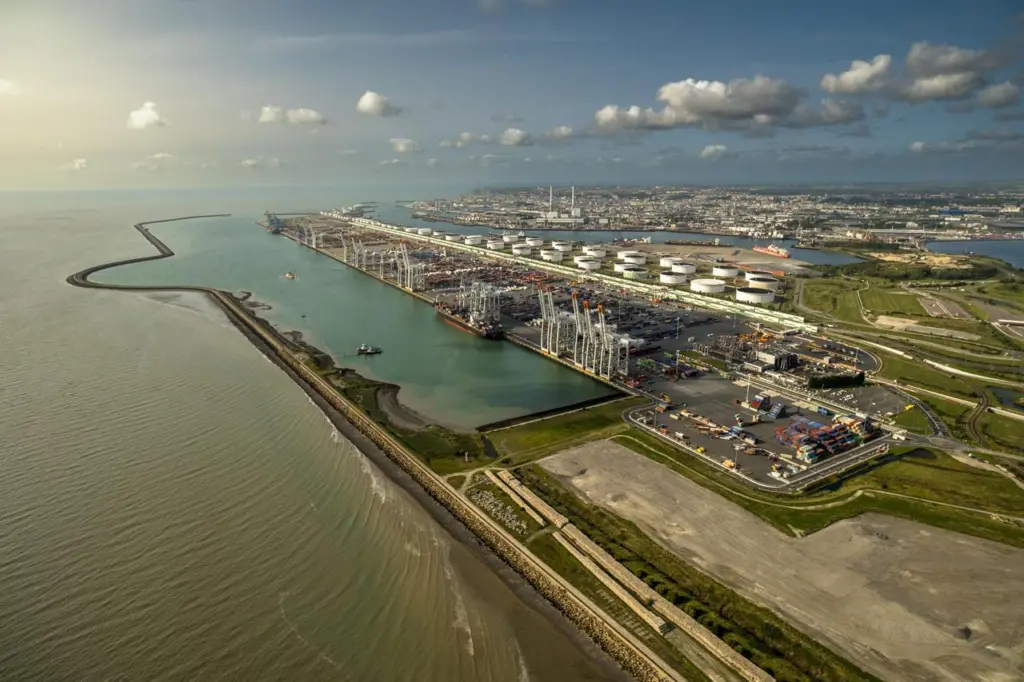
Q Can you please give a bit of background to HAROPA PORT operations, how has the operator been performing over the last few years and how does this fit into overall European multimodal strategy?
A To start with, allow me to say something about the organisation of the Paris 2024 Olympic and Paralympic Games. The Olympics that put the Seine and the Paris port domain in the spotlight, especially during the opening ceremony. As a partner of the Games, HAROPA PORT contributed to the preparation of the event, an event that has had the effect of accelerating the Paris river fleet’s energy transition.
This year the principal vessel owners have begun to operate their first electric craft. The goal is to achieve complete electrification of the sector by 2037 in alignment with the COP 21 Paris Agreement.
Such greening and multimodality goals are central to the project launched on 1 June 2021 when the ports of Le Havre, Rouen and Paris came together to form the major Seine Axis river and sea port. In terms of traffic, HAROPA PORT is France’s leading port and ranks fourth among those of the Northern European range.
The creation of a single entity went hand in hand with a €1.45bn investment plan for the years 2020-2027, confirming the determination to make HAROPA PORT a maritime and river port complex in the first rank in Europe.
In 2024, HAROPA PORT is continuing to invest with an initial budget of €201m aimed at strengthening the decarbonised industrial ecosystem while also supporting the structural organisation of the Seine Axis multimodal logistics corridor. Our major infrastructure projects for the period to 2030 include the direct river access channel in Le Havre, the creation of PSMO (the western metropolitan Seine port for the Paris area), and expansion of the Radicatel multimodal terminal at Saint-Jean-de-Folleville.
The EU’s Global Gateway strategy is intended to speed up digital, energy and ecological transitions in emerging and developing countries, while at the same time fostering European firms’ capacity to invest. HAROPA PORT has adopted this approach, most notably through cooperation agreements with ports in both West and East Africa.
As an example, I can point to the partnership established by HAROPA PORT with Kribi port authority in Cameroon with the intention of strengthening cooperation between the two ports and developing trade flows. Both wish to identify investment opportunities in each of their ports and in their hinterlands for French and Cameroonian businesses.
Q Regarding sustainability, what is currently the focus of HAROPA PORT?
A HAROPA PORT’s strategic project sets the ambitious goal of making the Seine Axis a port, logistics and industrial system that is in the first rank and exemplary on issues related to the ecological and energy transition, one capable of supporting far-reaching change in its local areas consistent with the societal expectations of the population.
In 2023, public investment of €126m and private-sector investment of €462m led to a reinforcement of the decarbonised industrial ecosystem along the Seine Axis.
Following a call for project proposals published by HAROPA PORT in 2022, ENGIE is to set up France’s biggest facility for industrial-scale production of renewable and low-carbon fuels located within Le Havre’s port industrial area under the auspices of Project Salamander.
Another facility for the industrial production of low-carbon hydrogen and synthetic fuels will be created in Grand-Quevilly, near Rouen. Beginning in 2029, this site, to be developed by Verso Energy, will produce over 50,000 tonnes of hydrogen using water electrolysis.
HAROPA PORT’s teams are also fully focused on issues relating to the energy efficiency of buildings and infrastructure. A major programme has recently been started for the renovation of HAROPA PORT’s local office in Rouen. PV solar canopies have been installed at our Radicatel offices and new outdoor lighting masts have been erected at TCMD, the Container and General Cargo Terminal in Grand-Couronne/Moulineaux. Additionally, all three ports are developing their own fleets of electric vehicles.
Quayside electrification is another major focus of effort. Our RENAQ project (Raccordement Électrique des Navires A Quai / Electrical connections for vessels at berth) is driven by an environment-centred approach and designed to be in full alignment with EU regulations (AFIR and FuelEU Maritime legislation) and the targets for maritime transport electrification by 2030. In Le Havre, we have therefore begun a complete overhaul and electrification of the Florida Point cruise passenger terminal.
Electrification of Pierre-Callet quay will be operational from the second quarter of 2025 and is the first phase of this far-reaching programme. Roger-Meunier and Joannès-Couvert quays will provide the same facilities by end 2025 and early 2026. Each connection will be capable of supplying up to 13MW, with a maximum of 30MW (equivalent to the power required by 5,000 homes) on all three quays simultaneously. In this way, dockside electricity supplies will make it possible to avoid between 15,000 and 20,000 tonnes of CO2 emissions every year.
In Paris, some river passenger stops have already been equipped, such as Grenelle port for example, which now has three connection points. Similarly, Paris river sightseeing boats with onboard accommodation have already been provided with connections to the electricity grid.
Along the Seine Axis as a whole, 44 power supply points have been set up on quaysides managed by HAROPA PORT and VNF (French Waterways Authority), enabling 4,300 tonnes of CO2 emissions to be avoided yearly.
By the end of 2024, 82 additional points will be available on the Seine and Oise rivers, combining connections for freight (16A, 32A, 63A), cruise boats (400A) and wintering (125A), as well as events and recreational facilities (125A). By 2026, the aim is to reach a total of 132 connection points across the Seine basin to meet users’ needs.
The programme being driven by HAROPA PORT and VNF to provide water and electricity supply points calls for investment of €9.2m, with support from the European Union and the Greater Paris regional administration.
With the focus still on river access, we are working to create a 2km-long embankment intended to develop container traffic on the basis of a protected river access channel between the historical port and Port 2000.
The channel’s entry into service is scheduled for 2026. Its completion will help enhance HAROPA PORT’s competitiveness thanks to an effective, reliable and competitive offering of river services. The future channel will also help reduce the environmental impact of our activities by encouraging modal shift and increasing river transport’s percentage share. The €200m project will also generate value-added and local jobs.
Q I’m aware that the focus for HAROPA PORT since 2021 has been on rail and river connectivity – what work has been done there and what still needs to be completed?
A Helping multimodality take off is a central concern for us. The strategy of developing mass transport modes must inevitably involve improvements in rail connectivity and support for the launch of new services and new destinations.
In 2023, modal shift increased by one percentage point for river transport and by 0.2 for rail originating in Le Havre. This is reflected in the opening of river services: Le Havre/Rouen/Longueuil-Sainte Marie/Gennevilliers/Le Havre, operated by Fluviofeeder Marfret, and Le Havre/Bonneuil-sur-Marne, run for Hapag Lloyd by Greenmodal.
Where rail is concerned, traffic has been benefited by the opening of a Le Havre/Bordeaux-Bassens service with Ferovergne (Combronde group); Le Havre/Tours, run by Naviland Cargo; Le Havre/Clermont-Ferrand, operated by Ferovergne (Combronde group), and a Bonneuil-sur-Marne/Voutré service provided by Carrières de L’Ouest (Cinérites group). Worth noting is a doubling of the frequency of the Delta Rail service to Chalon-sur-Saône.
Last year, SNCF Réseau and HAROPA PORT launched the PERL programme (Performance Régularité Lignes / High line regularity performance). The aim of this initiative is to improve quality of service in order to double rail’s modal share on the Seine Axis by 2025.
Increasing the modal shift of goods transport to river/rail is a key issue for development in terms not only of economics – lower transport costs and therefore improved competitiveness for HAROPA PORT – but is also central to lowering greenhouse gas emissions.
Q Regarding the GreenPort Congress and Cruise conference, why did you choose to be the host this year?
A Ports are now strategic locations for the decarbonisation of transport and industry, as well as for energy transition. HAROPA PORT stands as a new model for port authorities; it is a corridor that is developing around a unique river infrastructure, and we are keen to share our experience and deepen our contacts.
HAROPA PORT is an enthusiastic participant in this event, one that allows experience to be shared in the areas of ecological and energy transitions, sustainable development, infrastructure improvement and the electrification of port activities, as well as the economic and social integration of ports into their local surroundings.
We work every day to decarbonise container logistics along the Seine and to develop new, green fuels to make the Seine Axis a model green corridor. HAROPA PORT is a highly committed actor in the decarbonisation of transport and industry.
Q Why is the conference a must attend for ports/terminals and their stakeholders?
A The conference addresses a wide range of topics essential for all ports today. This type of gathering makes it possible to compare and contrast methods, share experience and take mutual inspiration from innovative approaches adopted by others.
It is an ideal opportunity to find out about and discuss the latest approaches to sustainable development and the environment. The goal of the ports represented is to implement the changes needed to continue to reduce their carbon footprint and enhance their awareness of environmental issues.
Why attend the GreenPort Congress?
Electrification of Ports: Hear about the latest developments in the electrification of ports, cruise terminals and equipment. Including insights from HAROPA Port, EOPSA, PowerCon and IGUS.
Green Corridors: Get an update on recent projects and developments for creating green corridors, featuring Port of Dover, Port of Gothenburg, RoyalHaskoningdhV and NatPower.
Infrastructure Development for Multimodal Services: A look into the adaptations needs to meet decarbonisation goals and address ecological transitions for logistics and supply chains. With Port of Moerdijk, Port of Trieste, HAROPA Port and Port Feeder Barge.
Green Fuel Transition for Ports: A review of the progress being made to meet the 2050 goals for decarbonisation and current projects in place, with presentations from Baltic Ports Organization, North Sea Port, PlugPower and HAROPA Port.
Find out more in the Full conference programme
Go to GreenPort Congress & Cruise for more information and to book from or email: sales@greenportcongress.com
Related Articles
 ENERGY & TECHNOLOGY GREENPORT
 ALTERNATIVE FUELS GREENPORT
 ALTERNATIVE FUELS GREENPORT