![GreenPort[PortStrategy]](https://www.portstrategy.com/greenport/wp-content/uploads/sites/4/2026/09/GreenPortPortStrategy.svg)
EXCLUSIVE: The power behind Malta’s green port strategy
When the GreenPort Congress and Cruise returns this October, it will mark a significant milestone – its 20th anniversary.
The 2025 conference will for the first time be held in partnership with the European Onshore Power Supply Association (EOPSA) and run concurrently with the DTF: Decarbonising the Future conference in collaboration with Transport Malta.
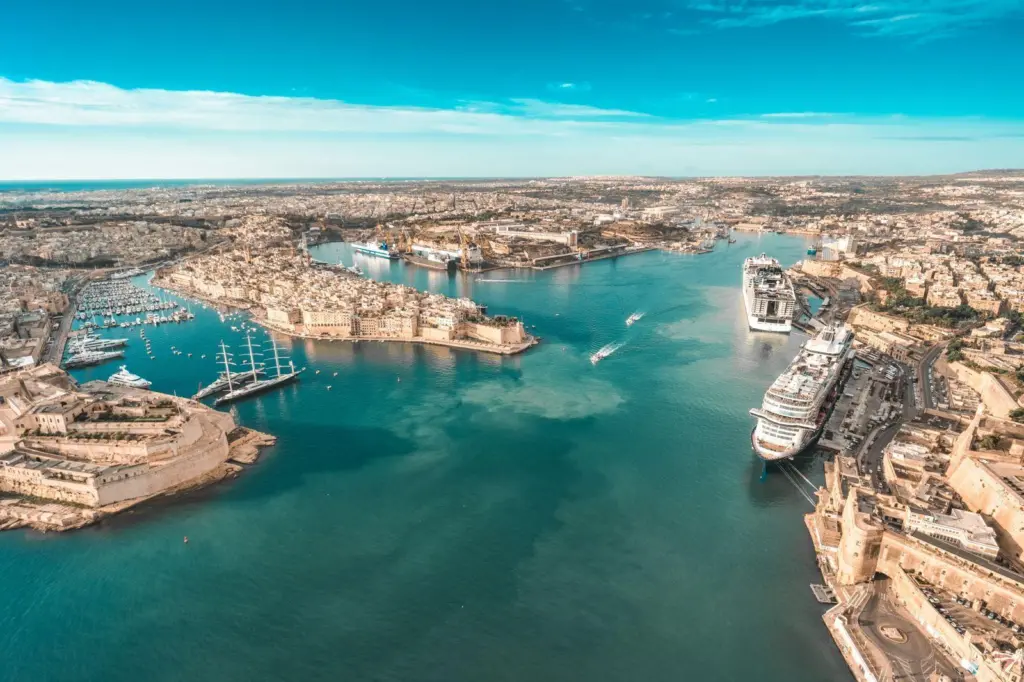
As the host port for the conference this year, Port of Valletta stands out as a case study in how ambition, planning and collaboration can transform a national port system into a model for port electrification and sustainable operations in Europe and beyond.
At the centre of this transformation is the port’s Onshore Power Supply (OPS) Infrastructure initiative, an ambitious project designed to reduce emissions, improve efficiency in neighbourhood living and act as a catalyst for wider electrification across the maritime sector.
From vision to reality
The origins of Malta’s OPS journey can be traced back to 2020, when the government issued its first tender to construct and implement the HVSC shore power project at Valletta’s Grand Harbour.
“Way back, prior to 2020 though, there were some studies which we undertook to understand what the shore power project would entail – starting with the cost benefit analysis and so on,” explains Norbert Grech, Board of Directors EOPSA & Senior Manager Ports & Yachting Transport Malta.
Construction and infrastructure were initially overseen by Infrastructure Malta before the project was formally and fully handed over to Transport Malta to manage all the operations and management of the project.
For Mr Grech and his team, this handover marked not only the beginning of operational oversight, but also a chance to rethink the port’s broader sustainability strategy.
“As soon as we were handed over this project, we started digging deeper on where we could achieve our goals. We realised the importance of connecting with the wider European shore power community and that’s how we initially engaged with the European Onshore Power Supply Association (EOPSA),” he says.
Membership of EOPSA – Transport Malta is a Gold Member – has given it both a platform and a network for the work that it does.
“We are proud to say that we are sharing our knowledge with other ports, other people, other key stakeholders. Under one umbrella you can find a good network of people who can exchange knowledge, share expertise and move the industry forward collectively,” Mr Grech stresses.
Delivering tangible results
By 2023, Valletta’s shore power project had been tested and commissioned, making the Grand Harbour among the first in Europe and the largest OPS installation in the Mediterranean. The results speak for themselves. In its first full year of commercial operations, Valletta’s infrastructure has connected more than 73 times to shore power, delivering nearly 3.7 million kilowatt hours of electricity.
The project’s scale is equally impressive. With the capacity to connect to five vessels simultaneously up to a total load of 64 MVA, Valletta’s infrastructure sets a benchmark for the region.
As Mr Grech notes, “We can connect five vessels simultaneously up to 64 MVA. That is a big number when it comes to energy with todays’ port challenges and operations. This makes us a great asset in the shore power community.”
Beyond emissions savings, Valletta’s OPS system also plays a strategic role for cruise operators.
The port has become a commissioning hub where vessels can test and certify their onboard OPS systems, reinforcing Malta’s role as not just a port of call, but a facilitator of industry-wide decarbonisation. ”We have commissioned nearly up to 20 vessels,” Mr Grech says.
While cruise ships were the first to benefit from Valletta’s OPS rollout, Transport Malta has ensured that shore power acts as a springboard for electrification across the wider maritime economy.
“Infrastructure Malta has now given the go ahead to expand shore power in the Grand Harbour to facilitate cargo and ro-ro vessels and also to equip Dock 6, one of the docks at the main shipyard,” says Mr Grech.
This shipyard is already a vital hub for retrofitting vessels and equipping it with OPS will further integrate deeper sustainability into repair and refit operations.
Meanwhile, Malta Freeport Corporation, the nation’s container terminal hub, which is operated by Malta Freeport Terminals, has launched two OPS tenders, one of which is under implementation and the other under adjudication.
Malta Freeport Terminal has also begun deploying battery-electric container handlers, dovetailing with shore power to reduce emissions across cargo operations.
The combined effect is a port ecosystem in which OPS serves as the backbone for a broader electrification strategy.
A European example
The HVSC shore power projects in Malta were supported by EU funding, reflecting its significance in Europe’s decarbonisation drive.
Malta is such an interesting example because the government takes a whole system approach, with the main entities: Infrastructure Malta, Malta Freeport Corporation, Transport Malta and Enemalta, the national energy provider, pushing in the same direction.
Transport Malta and Enemalta work in close coordination to align port electrification with national grid generation and distribution development.
“It all boils down to the government’s vision,” Mr Grech emphasises. “All Government entities and stakeholders are pushing forward, understanding where Malta’s vision lies. We don’t follow – we always like to lead.”
In less than five years, this vision has taken Malta from feasibility studies to Europe’s largest Mediterranean OPS hub.
“It’s quite a short period of time when you look at how long some of these projects take,” Mr Grech acknowledges. “But where there’s a will, there’s a way.”
Case studies
Valletta’s experience demonstrates how onshore power supply can be adapted across a wide spectrum of maritime operations.
Cruise vessels were the first beneficiaries of course, they’re a natural priority given the importance of cruise tourism to Malta’s economy.
By connecting ships to the grid during their stay, the port has enabled operators to drastically cut emissions, improving local air quality and reinforcing Malta’s reputation as a sustainable destination.
With cargo, ro-ro and the shipyard now also being brought into the electrification fold, shipping lines carrying out retrofits in Malta will not only complete essential engineering work, but also leave the yard with vessels fully ready to plug into shore power elsewhere in Europe.
Collectively, these examples underline how a single infrastructure project has triggered a ripple effect across different sectors of the port, embedding sustainability into cruise, cargo, repair and certification alike.
DTF and GreenPort Congress
Malta isn’t just making its mark as a trailblazer in OPS, it’s also taking the lead as a networking facilitator.
Alongside GreenPort Congress this year, Valletta will also host the DTF: Decarbonising the Future conference, born in 2024 from Malta’s ambition within the European Onshore Supply Association vision to create a platform dedicated to shore power and electrification.
This year, DTF will move the discussion further, focusing on ports and power – specifically, the question of how ports source their electricity and ensure security of supply.
“Now the question is power, energy. Where are ports getting the power from? That’s one of the topics we will be discussing this year, highlighting the commitments when it comes to PPA signings,” Mr Grech says.
This of course fits neatly into discussions taking place at the GreenPort Congress this year with the two events running side by side.
Both will ensure that delegates will experience a comprehensive programme covering policy, technology and operational realities of port decarbonisation.
For conference attendees, Valletta is more than just a backdrop to the conferences – it is a live case study of transformation.
Delegates will see first-hand how a small island nation has turned OPS into a catalyst for wider change, with lessons applicable across Europe and globally.
Mr Grech is clear about the value of attendance.
“You’re going to find everything under one umbrella – policymakers, government ministers, manufacturers, EU associations like ESPO, EOPSA, Medports and Westmed, suppliers, terminals, ports. You cannot ask for more. The shore power community will be there to share, discuss and widen the debate. It’s absolutely the event to attend this year.”
The story of Valletta is proof that shore power is not an isolated environmental measure, but a driver of systemic change.
By investing early and ambitiously, Malta has created infrastructure that reduces emissions, boosts efficiency and provides the foundation for electrification across the entire port ecosystem.
As ports across the globe confront the urgent challenge of decarbonisation, Valletta shows that decisive leadership, close coordination and a willingness to share expertise can deliver rapid, tangible progress.
This October, the GreenPort Congress will shine a spotlight on that progress, inviting the global maritime community to see what has been achieved so far and to join the conversation on what comes next.
Don’t miss your chance to attend
This year’s GreenPort Congress, held in partnership with EOPSA will run concurrently with the DTF: Decarbonising the Future conference in collaboration with Transport Malta. It will bring together key stakeholders from across the global ports and shipping industry.
Over three days of expert-led presentations, interactive panels and practical workshops, delegates will explore the most pressing challenges and opportunities shaping sustainable ports.
This year’s event takes place from 15 to 17 October at Boiler Wharf, L-Isla, Malta’s Grand Harbour, Southern, Port of Valletta.
More information and booking at https://www.portstrategy.com/greenport-congress and https://dtfconference.com
Related Articles
 ENERGY & TECHNOLOGY GREENPORT
 ALTERNATIVE FUELS GREENPORT
 ALTERNATIVE FUELS GREENPORT