![GreenPort[PortStrategy]](https://www.portstrategy.com/greenport/wp-content/uploads/sites/4/2026/09/GreenPortPortStrategy.svg)

GreenPort 2009 Environmental Study Tour
Prior to GreenPort 2008 in February the world’s first environmental port study tour was held: devised to enable GreenPort delegates to experience environmental projects and management expertise in other ports.
Twenty-two participants joined the 2008 Tour representing ports and government agencies from Australia, South Africa, Spain, Netherlands, UK, USA, Finland, Israel, Canada and Turkey and over 4 working days visited Southampton, Portsmouth, Harwich, Felixstowe, Antwerp, Rotterdam and Amsterdam. The combination of lectures in the morning and site visits in the afternoon proved popular and participants went away with a lot of information and practical “hands-on” experience from the port authorities visited, terminal operators such as ECT and Hutchison and port stakeholders such as Natural England and the RSPB. Following the popularity of the inaugural study tour, a 2009 Tour has been planned. Convening in the Port of Marseilles on the afternoon of February 17th. After a full day in Marseilles the Tour moves on to Genoa, La Spezia and Livorno. The weekend will be spent in Rome and then continue on to Civitavecchia and Salerno to arrive in Naples in time for the GreenPort 2009 Conference on February 25-26.
PLANNED ITINERARY
Day 1 – 18th February – MARSEILLE
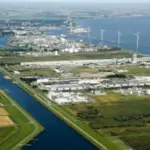
Marseille is the No. 1 port in France and the fourth largest port in Europe. Marseille Fos port is a major player in the Euro-Mediterranean region, with sufficient infrastructure and space to accommodate all types of traffic: container, general cargo, dry bulk, liquid bulk, ro-ro, cars, conventional passenger and cruise traffic. The Port is constantly investing and innovating to satisfy the demand generated by international maritime transport development. Conscious of its role as corporate citizen, the Port gives priority to initiatives which reconcile economic, social and environmental issues.
Day 2 – 19th February – GENOA
Genoa – the capital of Liguria – birthplace of Christopher Columbus and 2004 European Capital of Culture. The Genoa Port Authority is in year two of its Three-Year Operative Plan, a tool used to establish the scope and objectives required to achieve its development. The Plan covers the development strategies of the port with the purpose of guaranteeing the objectives as set out in the port master plan, aimed at transforming the waterfront with a series of islands to increase the capacities of the Voltri container terminal, existing oil facilities; cruise terminals and a new marina.
Day 3 – 20 February – LA SPEZIA
La Spezia Container Terminal Spa (LSCT), belongs to Contship Italia Group and is one of the most important and experienced container terminals in Europe. Part of the Eurokai Group, LSCT is located on the east side of the Gulf of La Spezia. LSCT has invested heavily in technology and innovation in order to reduce dust substances and to achieve harmony between volume growth and the environment at a “zero impact” balance. The PORTO LAB project meets over 6,000 students every year who visit the Groups port facilities and intermodal hubs, to experience contact with transport and port culture. A trip to Livorno is also being considered subject to time – details to be announced.
Days 4 and 5 – 21-22 February – ROME
Rome has one of the richest and fullest histories of any city. Its unique position in the world’s greatest Empire, its significance as a religious and cultural centre, its turbulent centuries of aristocratic rivalries and upheavals should ensure a fascinating weekend break for the Study Tour.
Day 6 – February 23 – CIVITAVECCHIA
The Ports of Rome – Civitavecchia, Fiumicino and Gaeta – are the centre of a logistics system that links Italy to the rest of the world, in particular Rome with its 3 million plus inhabitants and is the regional hub for – Umbria, Toscana, Abruzzo, Marche and Puglia. The Civitavecchia Port Authority plans strong and dynamic expansion. In the next few years,
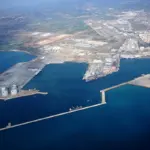
Civitavecchia will become the leading cruise ‘Head Port’ in the Mediterranean, with new cruise terminals located along the 3km long Cristoforo Colombo breakwater. The Port is expanding north with a new container, agricultural, bulk and car terminals together with a distripark The hub of the Grimaldi Napoli Group’s new Motorways of the Sea protocol links Antwerp and Civitavecchia – a new ferry dock is currently under construction near the harbour mouth with berthing for 10 ships simultaneously.
Day 7 – February 24 – SALERNO The Port of Salerno plays a strategic and important role within the industrial and commercial system in central and southern Italy. The Port is linked to the logistic platform of Nola-Marcianise, Battipaglia and to the airports of Capodichino and Salerno-Costa d’Amalfi , through the road and motorway networks. Many shipping lines link Salerno with the Mediterranean ports and Tyrrhenian ports, and there are regular liner services with main European and ports worldwide. The Port of Salerno has a total area of 1.7m2, 15 moorings on 5 piers, covering a total length of 3 km.
Panoramic view of Salerno
governing organisation of the port area which stretches for about 20 km along the coastline from La Pietra (Pozzuoli) to Pietrarsa (Portici). The main cargo port area is about 4 km and stretches from Vigliena to Molosiglio, including the port of Sannazzaro.
Related Articles
 ENERGY & TECHNOLOGY GREENPORT
 ALTERNATIVE FUELS GREENPORT
 ALTERNATIVE FUELS GREENPORT