![GreenPort[PortStrategy]](https://www.portstrategy.com/greenport/wp-content/uploads/sites/4/2026/09/GreenPortPortStrategy.svg)
The shortsea port that’s a centre for manufacturing
In this Q&A, GreenPort sits down with Stephen Carr, commercial director, Peel Ports Group to discuss what as host the Port of Liverpool will bring to Coastlink this year.
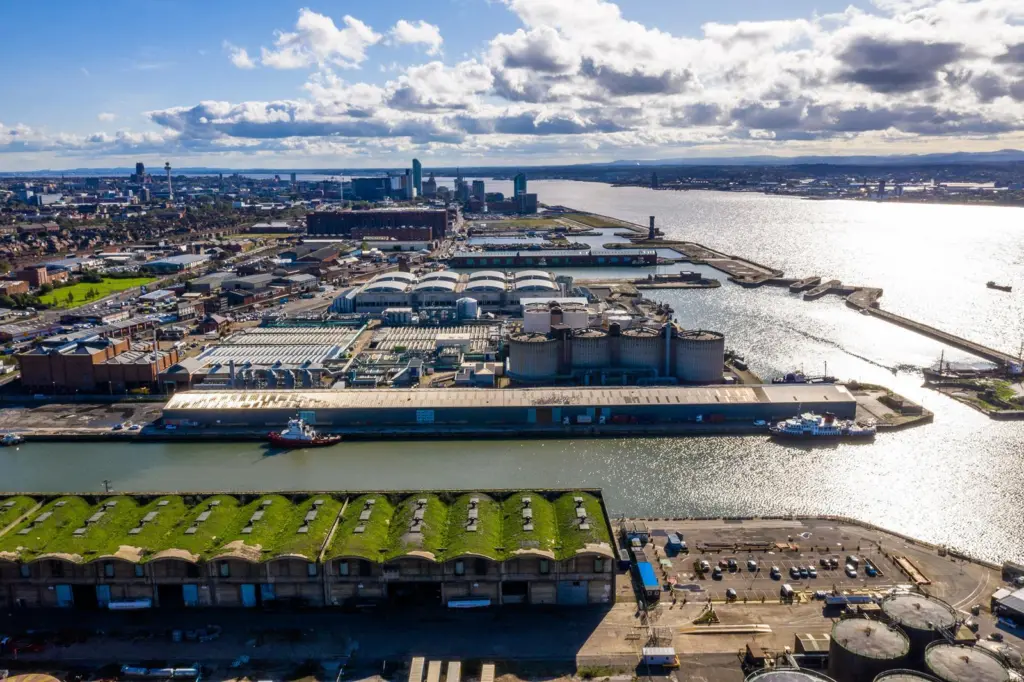
Q Why is the Port of Liverpool well placed to host this year’s Coastlink conference?
A North-West England, with the cities of Liverpool and Manchester at its heart, was the birthplace of the industrial revolution. This was a time of great change in industry, technology and science. This significant period of change and innovation means that manufacturing, transport and marine have always been a key part of this region’s natural DNA.
Industry 4.0, to which many would refer to as the fourth industrial revolution, is now shaping our everyday lives. Once again, extraordinary technological advancements are developing industries at speed, bringing both significant opportunities and challenges. Liverpool remains at the forefront of this innovation, so hosting the conference here seems like an ideal fit.
It is also worth mentioning that Liverpool knows how to host a good event and this year the Coastlink conference precedes the other phenomenal European gathering – the Eurovision Song Contest.
Q With regards to short sea, can you explain the port’s offering and give some context on market share?
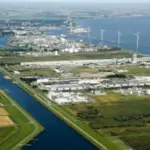
A The Port of Liverpool’s core advantage is its proximity to market. Sitting in the very heart of the UK’s industrial manufacturing hub and providing access to major consumer markets, including those in Ireland.
The major population centres of Birmingham, Manchester, Liverpool, Leeds and Dublin are all within easy reach from the port and this advantageous location brings both cost and environmental benefits to the supply chain.
This means that any businesses who exploit the benefits of short sea shipping through Liverpool can get closer to the end destination, or origin of goods, whilst minimising the use of onward land-based transport and reducing the impact this has on the environment.
The Mersey cluster, which includes both Liverpool and the nearby port of Heysham, consistently account for more than half of RORO freight traffic between Great Britain and Ireland. Since Brexit rules came into force in 2021, this has risen to 55% given the growth in unaccompanied freight.
Liverpool consistently scores as the top UK port for container trade with Iberia, accounting for fifty-six per cent of the market in 2021. And, in the same year, Liverpool became the only northern UK port to offer a RORO service to and from the region, taking trucks off the long-haul route through Spain and France.
In addition, despite being a man-made waterway, the Manchester Ship Canal, which is otherwise referred to as the Port of Manchester, reliably appears annually in the top twenty UK ports by volume with 7 million tonnes of cargo handled annually, which is almost entirely serving short-sea trade, connecting key industrial sectors like chemicals, glass manufacturing and construction to the rest of Europe.
Q What makes Peel Ports unique in its approach to environmental readiness, including short sea?
A Peel Ports Group was the first major privately owned port operator in the UK to set out its commitment to reducing its carbon emissions, with an ambition to become net zero by 2040. This is ten years ahead of the UK government targets.
It is worth pointing out that this was not a randomly selected target date. A detailed study, analysis and a methodical review of scope one and two emissions was carried out examining all energy consuming equipment, vehicles and infrastructure so the net zero target date would be realistic.
Yet, none of this is new. We have invested more than GB£1.2 billion in sustainable technology and infrastructure over the last ten years. There is much to be done still, but we have already made some significant progress.
These investments and innovation in sustainability have made us an industry leader in the race to net-zero, reaching milestones and targets well ahead of our peers.
We’re working to make the Port of Heysham the UK’s first 100% carbon-neutral port. Already we’ve reduced the carbon emissions of its landside plant, equipment and vehicles by up to 90%. All vehicles and equipment at Heysham now operate on either electricity or Hydrotreated Vegetable Oil (HVO).
Across all our sites, 88% of our plant equipment fleet now runs on HVO and 83% of our vehicle fleet is electric. As well as reducing our carbon emissions, this helps to improve air quality around our ports.
Q Which key green targets are next on the agenda for the port, short sea and on a wider scale?
A One of our key challenges is the provision of shore power given the range and size of vessels using our ports. Having equipment which can be easily deployed to berths without restricting the operation or with flexibility for vessel type is something we are looking into.
Like many other port operators located in highly populated city areas, air quality from vessels alongside impact our local communities.
We are working to provide a large proportion of renewable energy to our ports are our tenants in the short to medium term and ensure all our new buildings have an EPC rating of B and existing buildings are at a rating of C.
This year we will measure our scope 3 emissions and set a target to reduce these significantly by the end of 2024.
All this is achieved by collaborating with academics, entrepreneurs and industry colleagues to develop innovative trials and projects which help to speed our race to net zero.
Q In terms of getting ready for the global energy transition, can you please explain the port’s strategy?
A Our ports are well placed to enable this and take advantage of the global energy transition.
The UK is the global leader in offshore wind energy, with more capacity than any other country. Our key locations of Liverpool, Clydeport, Hunterston and Great Yarmouth are able to service this market and enable the maintenance and development of wind farms.
Hydrogen is also a key opportunity for Liverpool and the wider Mersey cluster. Essar’s Stanlow Terminal, on the Mersey estuary, recently announced it’s investing in vital infrastructure to secure green ammonia supply chain to help decarbonise UK energy. It aims to create a leading European integrated energy transition hub in the North West of England and this will bring a new open access import terminal for green ammonia.
The Port of Liverpool is ideally placed to support this project and, through partnerships with organisations such as Essar, at this and other UK locations we are ready to enable the supply chain for Hydrogen and explore opportunities in the area of carbon capture.
Q What other green projects are on the horizon for the port in the future?
A The green and sustainable agenda must extend beyond energy and for us, it also means investing in our people and our local communities as well as our commitment to protecting marine life and natural habitats.
Our determination to become a good employer and responsible neighbour means we will provide tens of thousands of hours in training, professional development and personal wellbeing for our people. We are committed to recruiting hundreds of apprentices and graduates over the next few years, with at least fifty percent being from a diverse background which reflects the communities where we are based.
We will also invest significantly in scientific research over the next few years to protect, preserve and enhance marine biodiversity. We will enable the beneficial reuse of dredged materials from our rivers and aim to ensure we work towards zero pollution incidents as part our wider sustainability strategy.
Q Lastly, can you please impart some words of wisdom about how Liverpool has made the most of opportunities arising from these challenging times that we all find ourselves living in at present?
A Given the challenges over the last few years; ranging from the global pandemic to energy security and a stagnant economy as a result of high inflation, it would be easy to push environmental concerns down the priority list.
However, at Peel Ports we believe this has made matters much more pressing than ever before. High energy prices and energy security make these matters more important for ports to address, not less. .
This is evident in all we do today, and the investments we make to support he development of projects designed to decarbonise and support the transition to secure and renewable energy.
The CoastLink Conference will be held at Royal Liver Building, Liverpool on 3 and 4 May 2023. For more information and to book visit: https://www.portstrategy.com/coastlink
Related Articles
 ENERGY & TECHNOLOGY GREENPORT
 ALTERNATIVE FUELS GREENPORT
 ALTERNATIVE FUELS GREENPORT