![GreenPort[PortStrategy]](https://www.portstrategy.com/greenport/wp-content/uploads/sites/4/2026/09/GreenPortPortStrategy.svg)


Unifying the way we all count emissions
The European Commission has put forward a new proposal for counting greenhouse gas (GHG) emissions of freight and passenger transport, writes Isabelle Ryckbost, secretary general, ESPO.
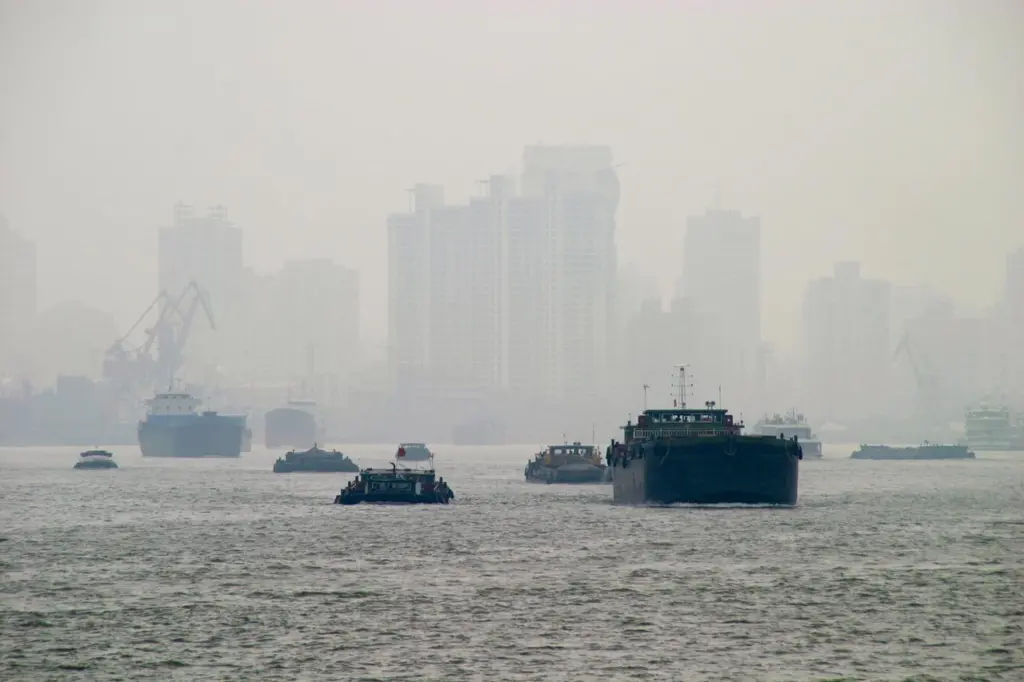
This “CountEmissions EU” proposal, part of the the long-awaited Green Freight package, wants to create an internationally accepted standard which includes emissions stemming from “hub operations”.
The proposal as such is not obliging operators or whoever to count or publish emissions from transport services but it will help them avoid non accurate data and/or false comparisons.
It also means that any existing or future legislation, be it at EU, national or local level, that obliges GHG counting will have to use this unique model. The same goes for operators or entities who decide to count emissions on a voluntary basis.
The scope is restricted to transport services that start or end on the Union territory, in which a transport service means transporting freight or a passenger from an origin to a destination. A transport service can imply one or multiple transport chain elements requiring both transport and/or hub operations.
Tried and tested
The method proposed for calculating GHG emissions of transport services uses the methodology established by the new ISO standard (EN ISO 14083:2023), which calculates transport operations based on the ‘well-to-wheel’/ ‘well-to-wake’ concept.
As such, it includes emissions from both vehicle use and vehicle energy provision. Since this standard is international, it could also be used for calculating emissions from international transport operations, including those involving more than one transport mode.
Important from a port’s perspective is that this new standard includes the operational GHG emissions from hubs – including ports – where they facilitate transfer of freight or passengers from one element of a transport chain to the next.
It also takes account number of empty trips required for subsequent transportation of freight or passengers and is applicable at all stages along the entire transport chain. But it doesn’t include offsetting in the calculation.
Translating this to maritime, this means that emissions from short-sea shipping within the EU are included. With regards port operations, loading and unloading operations seems to be counted as well since the standard includes “action by which freight is transferred from one means of transport to another during the course of one transport chain”.
Carbon footprint
Using this model should give a result in terms of total mass of carbon dioxide equivalent (CO2e) per transport service. For freight transport, the user of the data will see the mass CO2e per tonne kilometre, or equivalent units. The emissions of the freight hub throughput will be expressed in mass CO2e per tonne or equivalent units.
The use of data obtained during the actual carrying out of a transport service will be prioritised according to the draft legislative text but if these primary data are not possible, secondary data would be allowed, including default values and modelled data.
External calculation tools such as web-based applications, models or software are allowed but these will need to be certified under the CountEmissions EU framework.
In Dutch, there is a phrase “meten is weten” which means “measuring is knowing”. It is very much true that the path towards greening transport should involve the user – the customer, the passenger, the cargo owner.
Once the user has a clear picture of the carbon footprint of the different travel options, of the different supply chain options, they make a more responsible choice and sustainable transport operators can include this information in their branding.
But will the calculation method proposed in the CountEmissions EU proposal allow the user to make the right choice? While important, is it correct to only look at GHG emissions and not integrate noise, congestion, accidents, etc. into the calculations?
Will the inclusion of hub operations not be by definition a game stopper for all intermodal and combined transport solutions and put the maritime, which almost by definition needs to be combined with another transport mode, in a negative daylight?
The proposal is out and must now go to the European Parliament and Council. It is still early days and we have not seen many simulations of what this would mean in concrete terms, but something tells me that this could come with some adverse effects on the modal shift policies that have always been supported and promoted.
Related Articles
 ENERGY & TECHNOLOGY GREENPORT
 ALTERNATIVE FUELS GREENPORT
 ALTERNATIVE FUELS GREENPORT