![GreenPort[PortStrategy]](https://www.portstrategy.com/greenport/wp-content/uploads/sites/4/2026/09/GreenPortPortStrategy.svg)



BPA supports post-Brexit customs partnership
The British Ports Association (BPA) has backed the idea of a customs partnership as the UK’s post-Brexit customs setup, saying that it “looks to be the [UK Government option on the table for new customs arrangements] that will have least impact at the border”.
In an article expressing the port organisation’s views on the UK Government’s customs proposals, Richard Ballantyne, the BPA’s chief executive, said that the partnership choice “would create a framework where goods crossing the Irish border could continue uninterrupted and allows the UK to negotiate new trade deals with countries outside the EU”.
“The customs partnership proposal offers the advantage of maintaining ‘business as usual’ for goods and this would appear to be the only proposal where freight is not subject to new customs controls at those ports dealing with EU traffic,” said Mr Ballantyne.
On May 16, the UK newspaper the Daily Express said that there was “deadlock” in the UK Cabinet over the preferred customs arrangement with the EU after the UK’s departure from the multinational body.
Potential congestion
In his article, Mr Ballantyne said that adapting to life outside the EU’s customs union “will be manageable and relatively straightforward” for a lot of the UK’s ports and that docks handling containers or bulk loads should be able to adjust infrastructure, systems and procedures relatively easily.
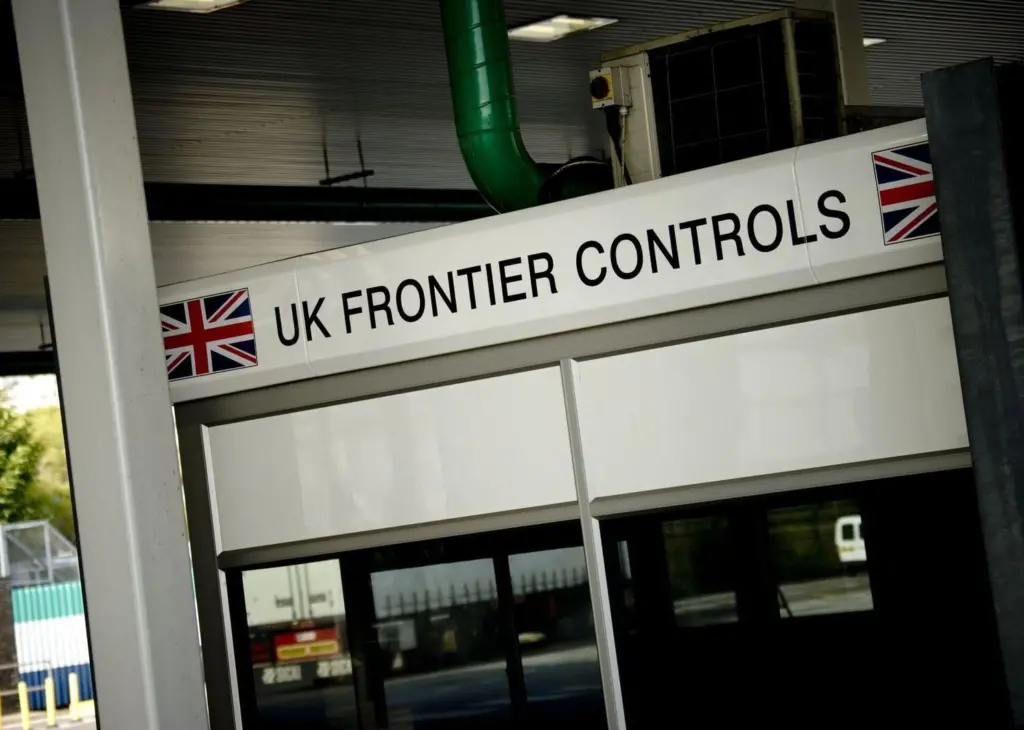
However, when it came to transport on lorries through ro-ro ferry ports, the chief executive said that “the prospect of lorries being stopped for customs purposes at the border remains daunting”.
At these docks — which include the likes of Portsmouth and Dover — business models are based around traffic moving freely through the port gate, but with new requirements to approve each vehicle’s customs declarations before they enter the UK and depart to the EU, traffic could build rapidly in and around these ports.
The local area surrounding these facilities could possibly become very congested, with stoppages representing inefficiencies and hold-ups increasing costs for manufacturers and consumers, Mr Ballantyne also said.
The chief executive claimed that UK ro-ro ports do not generally have readily-available facilities for customs declarations checks and that due to their almost-exclusive handling of EU traffic, customs examinations have not had to be undertaken for decades and large amounts of space are not available for such work.
Mr Ballantyne also argued in his article that the UK Government’s other main customs option, a highly-streamlined customs arrangement, or maximum facilitation (max fac), is essentially the UK’s setup for non-EU or “‘third-country’” traffic but with new digital and physical infrastructure, particularly at ro-ro ports, which would need a lot of border preparation for both the UK Government plus “the relevant parts of the industry”.
Related Articles
 EUROPE
 ALTERNATIVE FUELS GREENPORT