![GreenPort[PortStrategy]](https://www.portstrategy.com/greenport/wp-content/uploads/sites/4/2026/09/GreenPortPortStrategy.svg)
Countdown to a zero-emission port
Michele Witthaus finds out why the Norwegian Port of Oslo is the ideal location for GreenPort Congress 2019.
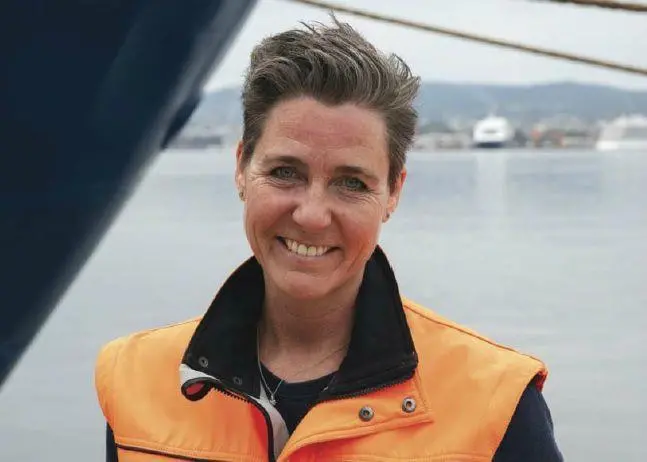
Answers by Heidi Neilson, Environmental Manager, Port of Oslo
Q. What would you say are the qualities that make the Port of Oslo the ideal host for GreenPort Cruise & Congress 2019?
Oslo is ‘blue and green’ and has a fantastic City Port in between. We have green forest and parks to ensure high quality of living. We have moved parts of the port away from the inner city and thus can welcome people all the way down to the fjord along our Port Promenade. And we are building a cargo port with zero-emission solutions to realise low-emission logistic chains combining road, some rail, and sea transport.
The City of Oslo and Port of Oslo have together made a commitment to face challenging climate changes. All sectors need to reduce CO2 emissions, and global cities need to aim for zero emission. Oslo has a goal for 95% reduction by 2030, the port aims to reduce 85% by 2030 and by 2050 the Port City of Oslo should have zero emission. This is possible with brave and ambitious politicians, who take measures to make sure that Oslo keeps being a great city to live in even though it is growing fast. All transport sectors will grow, but at the same time the emissions must go down.
Q. Please tell us about the most significant sustainability initiatives that are currently underway at the port, and what additional developments you are planning over the next few years.
Oslo has renewable energy and plenty of it, so electrification in all transport sectors is happening right now. The South Port will increase the capacity of cargo handling, and we are building infrastructure to ensure zero-emission solutions in all parts of the logistic chain. The City and Port of Oslo have a common zero-emission action plan, where we look at the largest contributors and build solutions for them first. In our port this was five ropax ferries, four of which are now on shore power. By 1Q 2020 all five foreign ferries will use shore power and thus reduce more than 5,000 tons of CO2 each year.
Q. How is the port working with its shipping and logistics customers and partners to ensure compliance with environmental regulations?
The zero-emission action plan includes us all – we are all in the same boat. We want to grow in all of our business segments and still reduce our emissions. Finding the cooperation and partnership is the only way forward. Based on the zero-emission action plan many customers see the opportunity to renew their equipment and change their fuels. The Port is planning to build a zero-emission cargo port, and the necessary input before building the right infrastructure comes from our customers. Being a platform for co-creation, partnership and rewarding innovative solutions is part of the Port of Oslo’s policy.
Environmental regulations in Oslo is not enforced by legislation, but the common path towards a zero emission city is clear for all sectors, and public procurement leads the way by demanding services with zero-emission solutions. The Port of Oslo is part of the Green Shipping Programme that supports green pilots, and focuses on moving cargo from road to low-emission sea transport. The pilots show what is possible. They identify boundaries and encourage open discussion. The forum gives the opportunity for problem solving in cooperation with governmental and regulatory bodies that again gives the extra push towards the green shift.
Q. What lessons can you share with regard to the port’s track record of building good port/city stakeholder relations for sustainability?
Get your facts in order and invest time in open dialogue. Gather the facts regarding your port emissions, cooperate with the city. Share knowledge with city politicians so they can make long-term commitments to emission reduction. Look for the largest contributors and invest time in open dialogue. Public funding from organisation like Enova is important to reduce risk in new projects. And start building solutions in cooperation with ship owners or cargo owners, who want to take sea transport to the next level to reduce emissions from the whole logistic chain.
<!–
Congress workshop yields insight into port practices
Dr Chris Wooldridge reports on an emissions survey undertaken at GreenPort Congress 2018. Last year’s GreenPort Congress, held in Valencia, included a workshop session entitled ‘You can’t manage what you can’t measure’, specifically organised to facilitate views and experience on the measurement and reduction of air pollution and GHG emissions.
During this session a survey was distributed among the participants and was completed by 55 port-related agents from all over the world. Of the participants, 45% were from Europe, 11% from America and 8% from Africa. Most of the participants were environmental managers (40%) followed by project managers (17.5%), port top managers (10%) and environmental experts (10%).
Based on the results of this survey, 81% of ports organisations believe that climate change has impacts on their organisations, such as sea-level rise. This shows that they are aware of the importance of this issue. In addition, 81% of organisations collaborate with other third-party organisations on the issue of climate change. This shows that ports are already taking into account the port community and other stakeholders to face climate change.
One of the main problems that ports encounter to deal with climate change is collecting data and having sufficient information. Based on the results of this research, only 47% of organisations are collecting data on climate change.
Concerning the existence of a climate change Risk Assessment plan, 57% of the participants have a plan to face this situation. Moreover, only 24% of organisations are aware
of the future release of PIANC WG 178 guidelines that will help port operators to deal with climate change.
The results of this survey also show that 62% of the organisations report their carbon emissions. However, the method used has not been specified. Concerning monitoring, the
results show that over half of the ports monitor their energy consumption, air quality and waste. In the case of climate change, only 13% of ports monitor it.
With respect to the use of Environmental Performance Indicators (EPI), just 50% of the ports are using them in the case of energy consumption. For the issues of air quality, waste and noise, around 30% of the ports are using EPIs in their effort to control them.
In the case of climate change, only 13% of ports have performance indicators to measure this aspect. Participants were also asked to list the main drivers of carbon management programmes at their ports, in order of importance.
The main drivers to implement Carbon Management Priority
Drivers
Leadership role in Carbon management practices……………………………………………………………………………………………….1
Compliance with emerging regulations……………………………………………………………………………………………………………….2
Potential to influence practice and regulation through innovation and investment…………………………………………………….3
Opportunity to reduce and offset emissions from infrastructure development…………………………………………………………..4
Stakeholder pressure to reduce environmental impacts………………………………………………………………………………………..5
–>
Related Articles
 GREENPORT CONGRESS GREENPORT
 ENERGY & TECHNOLOGY GREENPORT
 GREENPORT CONGRESS GREENPORT