![GreenPort[PortStrategy]](https://www.portstrategy.com/greenport/wp-content/uploads/sites/4/2026/09/GreenPortPortStrategy.svg)


Commission urged to review ETS rules
The European Sea Ports Organisation (ESPO) has welcomed the European Commission’s Electrification Action Plan while urging changes to EU ETS proposals to protect port competitiveness.
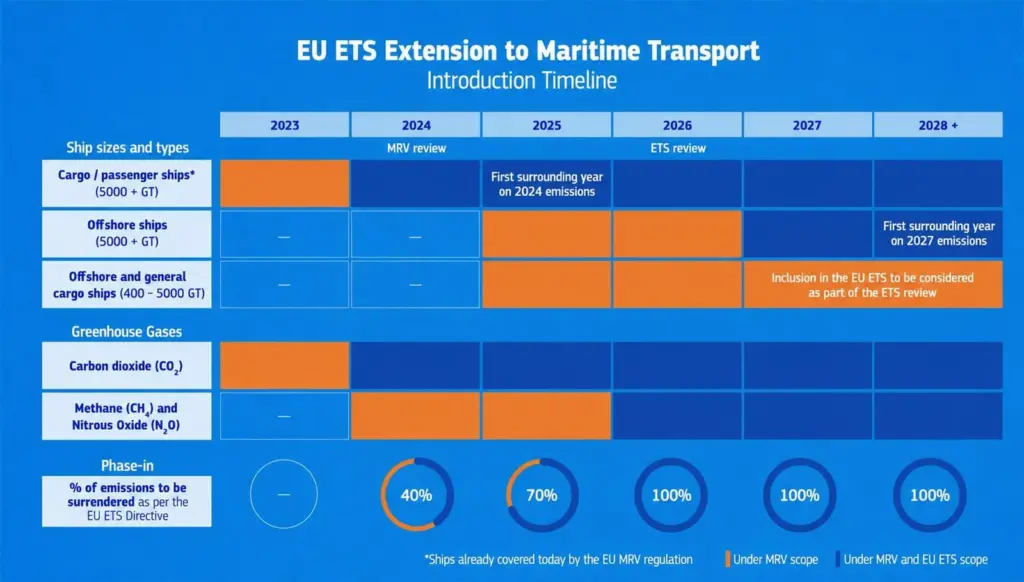
ESPO said the Commission’s review of the EU ETS acknowledges concerns over carbon leakage and business leakage affecting European ports, but warned that elements of the proposals could undermine climate objectives and distort competition.
“We see a certain willingness of the Commission, recognising that carbon and business leakage are real issues that need to be addressed,” said Isabelle Ryckbost, Secretary General of ESPO.
”While changes to the neighbouring ports list may help reduce certain forms of evasive behaviour, EU ports still suffer a disadvantage towards the surrounding non-EU ports. Moreover, new issues risk to arise with bringing the smaller shipping segment under the EU ETS. The competitiveness of Europe’s ports and Europe’s economy and resilience are at stake.”
Full review
ESPO wants a full assessment of the measures as the legislative process moves to the European Parliament and Council, especially important once the International Maritime Organisation agrees its Net-Zero Framework.
The organisation welcomed proposals to reduce evasive port calls by revising the list of neighbouring ports, describing the move as an important recognition that the current EU ETS framework has created competitive distortions between EU and neighbouring non-EU ports.
However, it cautioned that the proposals must not introduce unnecessary complexity or create new opportunities for avoidance.
ESPO also opposed extending the EU ETS Maritime scope to vessels between 400 GT and 5,000 GT, warning the measure could accelerate a modal shift from short sea shipping to road transport, contrary to wider European port policy objectives.
With regards to the Electrification Action Plan, that has largely been welcomed by the industry with most saying the Commission’s plans strengthen the case for accelerated port electrification investment.
But most agree that Europe’s port electrification ambitions will require coordinated public policy alongside significant private investment in port infrastructure.
Related Articles
 CRUISE GREENPORT
 INSIGHT & OPINION GREENPORT
 INSIGHT & OPINION GREENPORT