![GreenPort[PortStrategy]](https://www.portstrategy.com/greenport/wp-content/uploads/sites/4/2026/09/GreenPortPortStrategy.svg)
Green rail vs the all-water alternative
Container rail between China and Europe is now more cost-efficient than the all-water alternative.
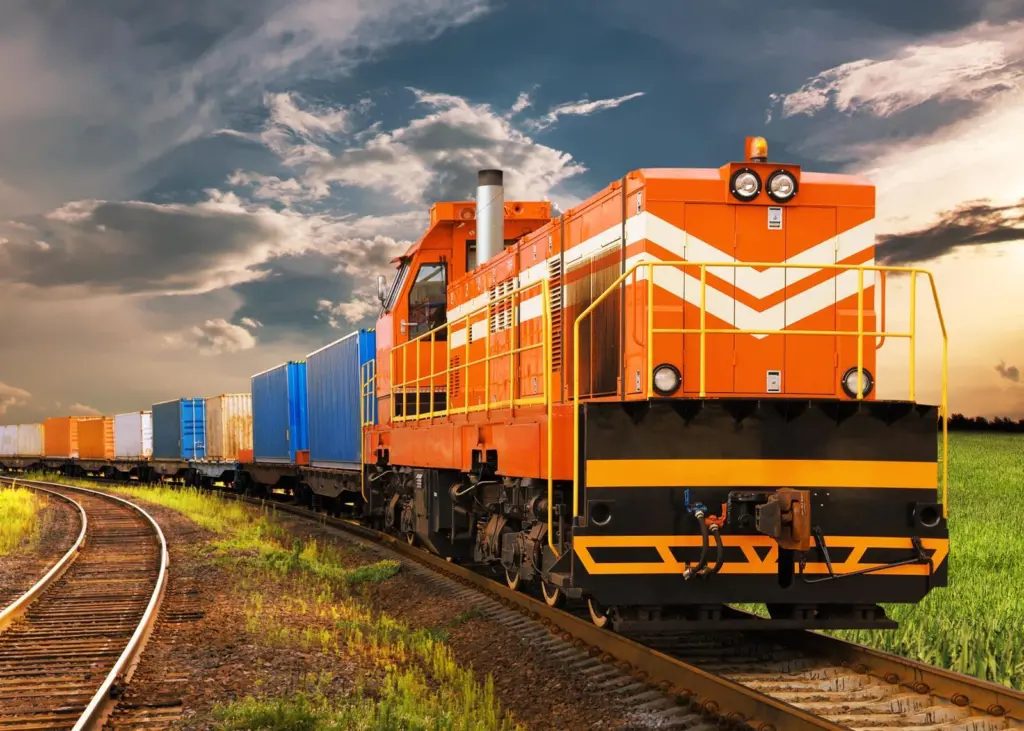
That’s according to Rachelle Slingerland, logistics business development manager at Samskip, who is of the view that that shippers are benefiting from new levels of supply chain visibility as a result.
“Faster service means suppliers can react more quickly to changing market demands and plan for holding less stock in the supply chain,” she said.
Rail push
Ms Slingerland said that fast rail routes are attractive for higher value products, including electric bicycles, laptops, smartphones and other electrical goods and clothing westbound, with eastbound moves for cars, alcohol and furniture.
Temperature-controlled loads move more efficiently both ways, she said.
Urgent container capacity shortages and intense sea freight rate inflation are giving an extra push to rail cargo service links between China and Europe.
Ms Slingerland suggests a recent traffic surge of 10-15% in loads moving overland between China and Europe highlights the growing appeal of established ‘silk road’ rail services over their deep-sea counterparts.
With transit times between 16-18 days comparing to around 35 days for Shanghai-Rotterdam 40ft high-cube container moves by sea, speed is certainly a key advantage for rail, with the superiority gap widening as distances lengthen between Chinese seaports and locations inland.
The multimodal option is being strongly boosted by supply chain disruption in traditional sea routes in early 2021, said Ms Slingerland.
“Perhaps it’s no shock that the amount of CO2 generated in moving freight by air between China and North Europe is around 12 times the equivalent rail move,” she said.
“What may be surprising given a container ship’s economies of scale, is that these rail moves generate 25% less CO2 than sea transportation. Last year has shown us that we can do things differently: 2021 is the year for shippers to switch supply chain and focus on shorter transit times combined with lower emissions.”
Integration model
Ms Slingerland said that the rail route is a model for how best to integrate dedicated account management, local offices and the ‘control tower’ approach to customer care that makes shipments fully visible in a supply chain.
In August 2020, Samskip enhanced its rail connection by launching a direct rail service between Amsterdam and Duisburg to support this three-times weekly train service connecting Xi’an and Changsha to Duisburg.
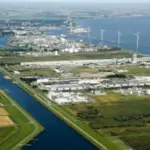
The Amsterdam to Duisburg shuttle is a collaboration involving Nunner Logistics, TMA Terminal Amsterdam, the Port of Amsterdam and Duisport Group, with DistriRail providing rail haulage.
Related Articles
 CRUISE GREENPORT
 INSIGHT & OPINION GREENPORT
 INSIGHT & OPINION GREENPORT