![GreenPort[PortStrategy]](https://www.portstrategy.com/greenport/wp-content/uploads/sites/4/2026/09/GreenPortPortStrategy.svg)


Australias new dawn
HFWs Connie Chen discusses Australias newfound enthusiam for port privatisation
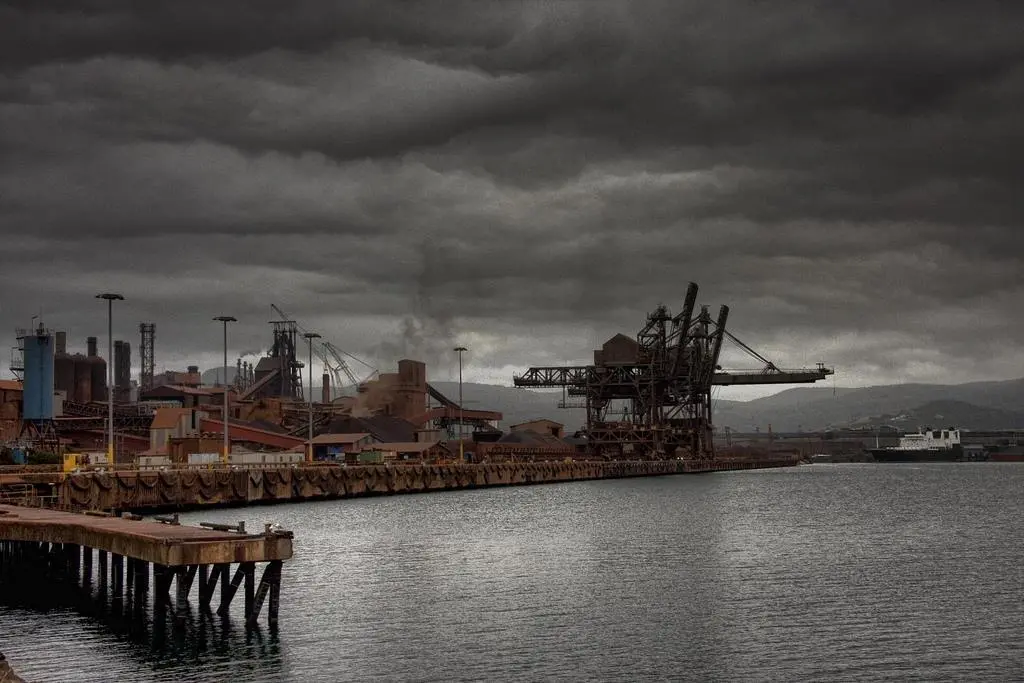
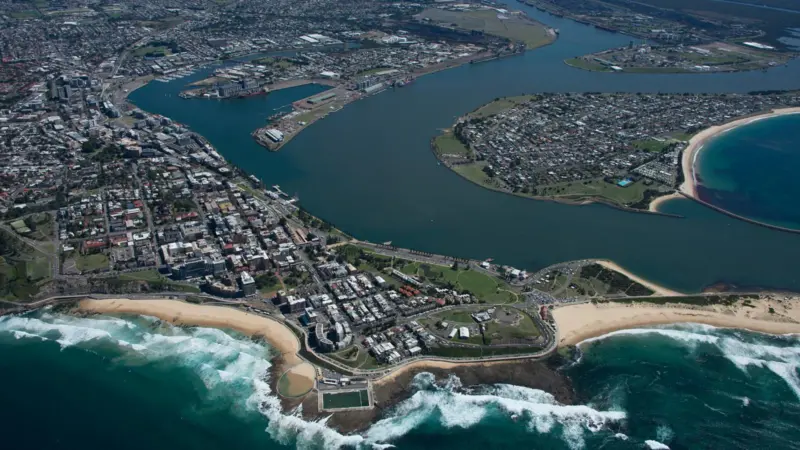
The Government of New South Wales announced in June that it would sell the Port of Newcastle to fund significant infrastructure projects. This followed the Queensland Government’s announcement in May 2013 that it would consider offering long-term leaseholds on the Port of Gladstone and Port of Townsville to the private sector.
Both were encouraged by the recent privatisation of Port Botany and Port Kembla to the NSW Ports Consortium – made up of a group of pension and infrastructure funds – on a 99-year lease for a combined A$5.1bn.
Earlier on, the Queensland Government off-loaded its Port of Brisbane in November 2010 to Q Port Holdings on a 99-year leasehold, and the Abbot Point Coal Terminal in May 2011 to Mundra Port Pty Ltd, the Australian subsidiary of Mundra Port and Special Economic Zone Ltd, a company that develops and manages the largest privately developed port in India.
Port privatisation is not a new phenomenon in Australia. Since the late 1990s, Australia has followed the international trend of reducing government’s involvement in port infrastructure to improve port performance and efficiency. However, before the sale of the Port of Brisbane, only some smaller public ports were privatised.
The Port of Geelong and Port of Portland in Victoria were sold in 1996, and the Port of Adelaide in South Australia was sold in 2001. The majority of capital city ports had been publicly owned. The debt refinancing behind the A$2.1bn Port of Brisbane privatisation has started the latest trend of significant Australian State capital city port privatisation.
Land sale
As to what is being privatised under the current reform, the functions of any port corporation can be broadly classified into three areas:
- Regulatory functions – providing marine services (e.g. harbour control, pilotage) and emergency pollution response, maintaining maritime safety and promoting general efficiency of the port.
- Landowner functions – providing port planning and development, navigational aids, breakwaters, entrance channels and maintaining basic port infrastructure such as wharves and berths.
- Operator functions – providing cargo-handling services and other value-adding functions such as warehousing, storage and towage.
In the cases of the Port of Brisbane, Port Botany and Port Kembla, what was for sale to the private sector was the port land only. Before the privatisation, the State Port Corporations owned the land and controlled the regulatory functions. Private stevedore companies such as DP World, Patrick and Hutchison were given concessions for cargo handling services. After the privatisation, the port land remains in the ownership of the State Port Corporations, but is leased to the private sector under a 99-year lease.
Port privatisation globally has been pursued by different governments for different reasons and it has always been controversial. The question is are significant State assets being sold for efficiency gains and competitive advantage, or for political, budgetary or even ideological goals?
From a microeconomic reform perspective, increased port efficiency is often cited as the primary reason for privatisation. The private sector is recognised for its stronger management capability, quicker decision-making process, greater access to investment capital and potentially better industry experience. Government constraints and bureaucratic process are not always conducive to efficient operations of commercial activities.
While empirical studies that have investigated the association between port ownership structure and port operation efficiency have produced different results, it is recognised that port efficiency is affected by port ownership. In particular, it has been found that while private sector participation in the port industry is useful for improving port efficiency, full port privatisation is counter-productive. The optimal model has been found to be where the private sector participates in the landowner and operator functions and the port authorities retain the regulatory functions. This is consistent with the privatisation model adopted by the Queensland Government for the Port of Brisbane, as well as Port Botany and Port Kembla by the NSW Government.
Money earner
From the political standpoint, the pressure to balance the State budget has increased. The sale of Port of Brisbane generated A$2.1bn in proceeds, with the new owner Q Port Holdings agreeing to a future upgrade of the Port of Brisbane Motorway at an estimated cost of A$200m.
In NSW, the sale of Port Botany and Port Kembla together produced net proceeds of around A$4bn, which will be used to fund other needed infrastructure, such as the upgrades of the Princes and Pacific Highways, restoration of bridges at 17 key locations around NSW and the progress of the WestConnex motorway.
Infrastructure and pension funds were the main bidders for the Port of Brisbane, Port Botany and Port Kembla. They are experienced asset owners and are attracted to ports infrastructure which delivers a stable and mature business and, with port throughput seemingly increasing faster than GDP, delivers consistent cash flows for investors.
The Port of Melbourne is the only major capital city port on the East coast still owned by the State Government. Ports in Victoria went through major reform in 1994-5, when the port system was extensively restructured. As part of that reform, the Port of Geelong and Port of Portland were sold in 1996. At that time, the Government also intended to privatise Port of Melbourne, but following intense opposition from port users, abandoned the proposal.
So far, the Victorian Government has not given any indication of intention to sell. With the State finances under growing pressure, it would not be surprising if the Victorian Government was doing the calculation and considering the timing, in conjunction with the Government’s long-term plan to develop the Port of Hastings, and the shorter-term plan to extend the third International Container Terminal at Webb Dock East.
Connie Chen is special counsel at Holman Fenwick Willan, a law firm advising businesses engaged in international commerce.