![GreenPort[PortStrategy]](https://www.portstrategy.com/greenport/wp-content/uploads/sites/4/2026/09/GreenPortPortStrategy.svg)



Automation back on
Automation is back on the agenda for a New Zealand port operator following a safety incident.
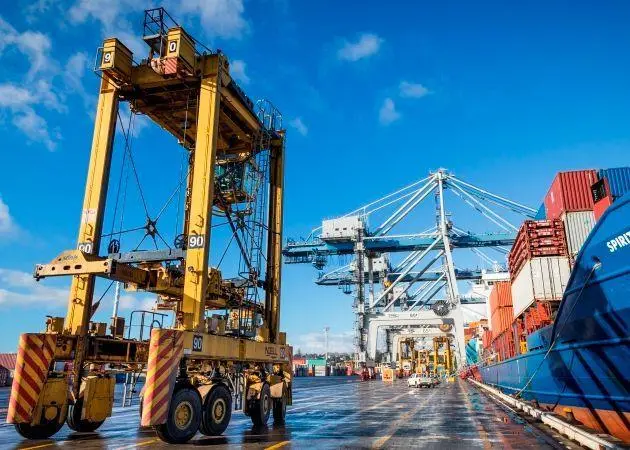
Ports of Auckland (POAL) paused automation in June after a software fault resulted in a container which was being carried by an automated straddle, hitting a stacked container.
“The safety risk has been fixed and we are now ready to restart with a revised implementation plan,” said POAL, which wants to provide more freight capacity without additional harbour reclamation.
It pointed out: “Unlike other, larger ports, Auckland doesn’t have space to build a new automated terminal off-line, and then turn it on when complete. We are having to automate our terminal while still operating, making it a more complex project.”
Four-stage rollout
The project will be implemented in four stages, with the first to start shortly. Each stage has milestones which must be met before the project can progress to the next stage. The milestones are based on safety, reliability, productivity, and operational readiness.
The stages are: Systems acceptance testing; Automation of part of Fergusson Terminal North Berth; Automation of all of Fergusson Terminal North Berth; and Full automation of Fergusson Container Terminal (go-live).
The automation project has successfully handled over 100 ships, but the speed and reliability of the system still needs improving, said POAL. A safety review also found that the safety assurance framework for the project needed more work.
POAL continues to work on safety and can now able to bring in overseas experts to help complete the automation project.
Go live date
“A detailed project review has found it is realistic and achievable to complete the project and go-live by late March 2022. However, this timing could impact existing import volume demand and the peak export season and cause further supply chain disruption,” said POAL.
“For this reason, we won’t give a go-live date until later in the project. If we feel that going live in March would jeopardise the 2022 export season, we will delay it.”