



Avoiding catastrophic crane failure
Wire rope monitoring needs to be stepped up, warn lifting specialists.
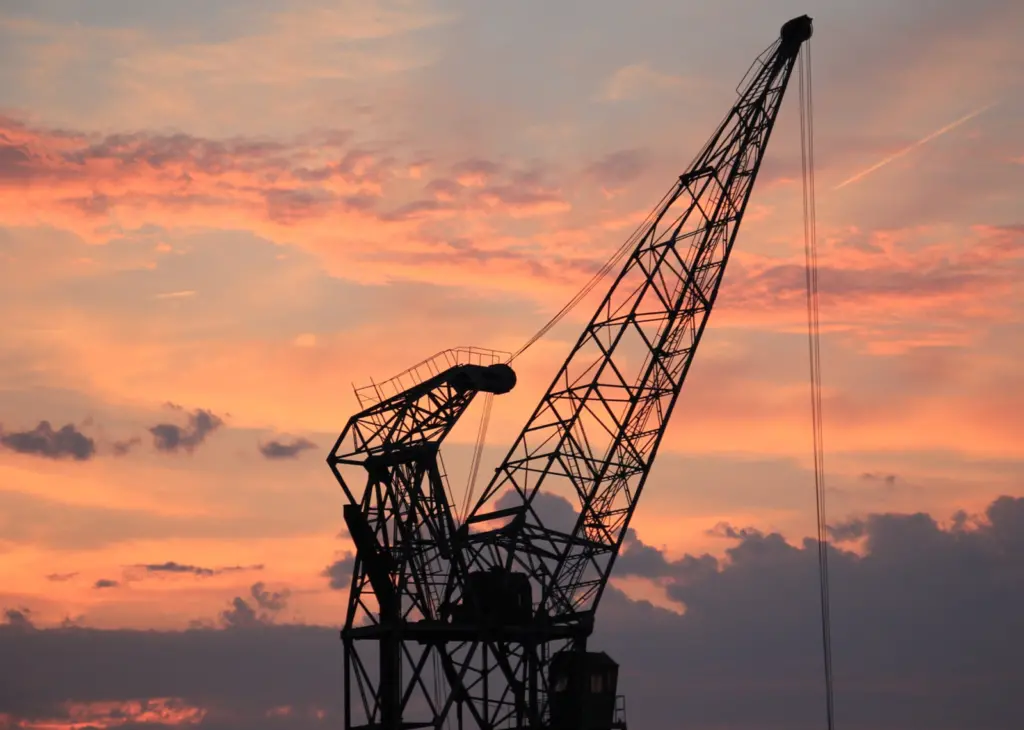
In May 2017 a port-side crane in Falmouth Docks failed without any warning, leading to its jib crashing down to the ground. Fortunately, there were no significant injuries. While no official cause has been published as yet, the immediate prohibition notice issued by the UK’s Health and Safety Executive described a failure to ensure that lifting equipment was maintained in an efficient state, efficient working order and good repair.
The need for regular maintenance and inspection of lifting equipment at ports is critical. Provision and Use of Work Equipment Regulations 1998 Regulation 5 requires employers to ensure that cranes are maintained in an efficient state, in efficient working order and in good repair. The Health and Safety at Work etc. Act 1974 [1] sets out a general duty requiring that work equipment is maintained so that it is safe. Additionally, thorough examination of cranes is required in some circumstances by Lifting Operations Lifting Equipment Regulations 1998 Regulation 9.
Regular inspection on the structure of a port crane, its sheaves, the jib and the slew mechanism are just some of the areas of focus for maintenance programmes carried out by port operators. Wire ropes should also be a key part of the programme, yet too often this element is overlooked.
Without proper maintenance and inspection of the crane rope, there is a risk of internal degradation that can lead to the wire rope giving way completely, with catastrophic results.
Fortunately, condition monitoring of ropes on cranes is coming to the fore. The ISO 4309 standard published at the end of 2017, which provides the international inspection and rejection criteria for crane ropes, now includes non-destructive testing of steel wire rope as an important element to ensure that the condition of the rope is monitored from cradle to grave.
This allows operators to predict the point where the wire rope actually needs to be changed, allowing planned preventative maintenance and maximisation of uptime.
Proven technology
Magnetic Rope Testing (MRT) technology for the non-destructive examination of wire rope has been around since the mid-1950s, when it was developed in conjunction with the National Coal Board for checking the condition of deep shaft mining ropes. It involves running a wire rope through a magnetic head that allows an inspection right into the centre of the rope, giving clear visibility of any broken wires, voids and corrosion.
Rope manufacturers on certain products will pass the wire rope through a magnetic head during the final stage of its manufacture, when they close the strands around the core. This produces a trace showing the state of the rope when it was created and before it was installed.
Then, by checking on a regular basis — typically every six months, although the period will depend on usage of the crane — one trace can be compared with the next to observe any developing defects. When the rope gets to the point of rejection criteria, managers can plan in the change without fear of rope failure, maximising uptime in busy ports.
Advances in technology have made MRT eminently portable, and it can even become a fixture of the crane itself in some cases, allowing the rope to be constantly monitored as it is used. An MRT unit can send a signal directly to the manager’s computer screen to give a visual representation of how the wire rope is deteriorating over time. In fact, MRT technology is now considered so important that it has been incorporated into ISO 4309.
When it comes to the provision of lifting equipment maintenance and repair services it is always prudent for ports to seek out the ‘gold standard’. Seeking expertise on MRT and condition monitoring of wire ropes will allow ports to further mitigate the risk of crane failure and to improve the management of their lifting equipment uptime, allowing them to handle growing volumes safely.
Denis Hogan is performance and special projects manager and Keith Tonge is technical officer at the Lifting Equipment Engineers Association (LEEA), a representative body for all involved in the lifting industry worldwide. For more information go to www.leeaint.com.
Related Articles
 PORT TALK
 PORT TALK