




Deal to commercialise oil spill technology
A material made from waste cooking oil and sulphur that can soak up oil spills and other pollution looks set to be commercialised.
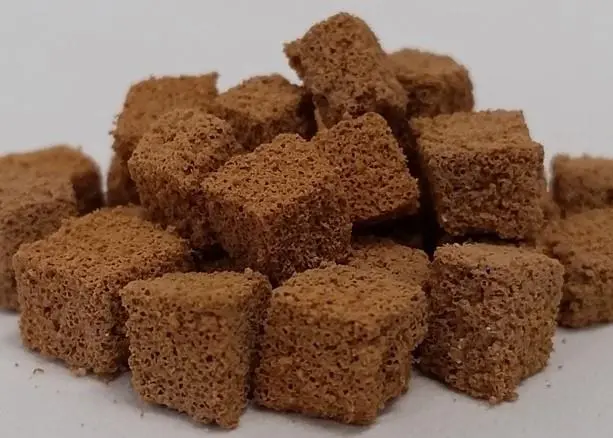
The collaboration between the South Australian inventor Flinders University and Singapore’s Clean Earth Technologies (CET) will result in a manufacturing facility in South Australia to produce commercial quantities of the absorbent polysulfide, which could be utilised at ports in the future.
Flinders University Associate Professor Justin Chalker, who heads up the international team that developed the product, said: “Just making a product from waste, regardless of what the end use, is a viable thing to think about. In this case, we’re converting waste into something that can help clean up the environment.”
Dr Louisa Esdaile, product specialist at CET, said: “This material will have a wide variety of maritime applications, and we are in discussions with several organisations regarding testing our material for several maritime purposes. We are of course interested in looking at possible port applications as well.”
Suite of patents
The agreement assigns a suite of patents to CET ahead of production for global markets. The patents cover numerous areas, including a class of novel polymers used for environmental remediation, and a new mercury and cyanide-free method of precious metal extraction and recovery.
Mr Chalker described the sponge-like polymer as a new class of oil sorbent that is low-cost, scalable and enables the efficient removal and recovery of oil from water.
The product is hydrophobic – meaning that it separates from water and binds well to oil. The polymer absorbs oil much like a sponge, forming a gel that can be scooped out of the water.
Porous polymer cubes can soak up two-three times their weight in oil or diesel and is reusable.
Related Articles
 PRODUCTS & SERVICES GREENPORT
 ENERGY & TECHNOLOGY GREENPORT
 ENERGY & TECHNOLOGY GREENPORT