![GreenPort[PortStrategy]](https://www.portstrategy.com/greenport/wp-content/uploads/sites/4/2026/09/GreenPortPortStrategy.svg)

Developing a port so it’s fit for the future
Eco-efficiency is a key driver of Associated British Port’s latest GB£1.6 million investment on the Humber, says Simon Bird, regional director (Humber) at ABP
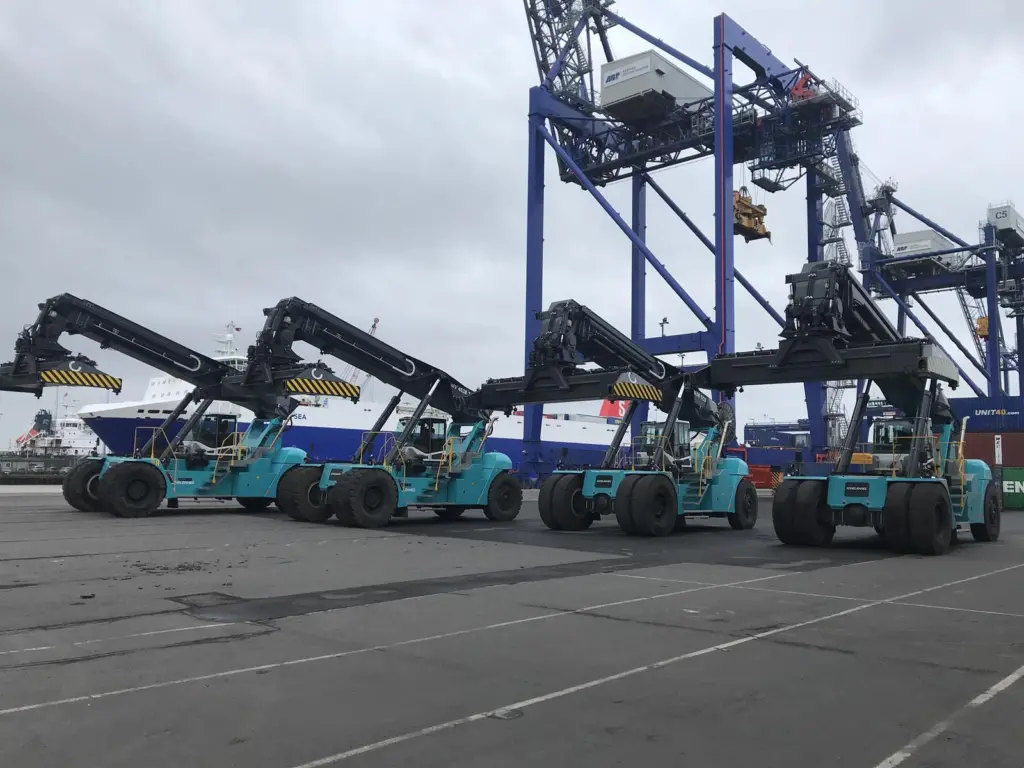
Four new Konecranes reach stackers are being used in the UK Port of Immingham, all running on Hydrogen Vegetable Oil (HVO), a renewable, fossil free version of diesel which can cut carbon emissions by 90%.They also feature a start/stop function, which means the amount of time the engine is idle is cut, further assisting in reducing carbon emissions.
This is one of the many steps ABP is taking to ensure it remains at the fore of green energy in the Humber. These new reach stackers are part of an ongoing effort to invest in our infrastructure to enhance the service we offer to our customers. They will improve efficiency and help us improve our carbon footprint. It is part of a wider investment into more efficient plant and equipment over the next five years.
Equipment focus
Investing in equipment of the highest quality will help us maintain our productivity, which is critical in the port that cargo handling is both efficient and economic. Being ecofriendly helps align with our long-term commitment to the environment and sustainability.
This strategy will see older equipment being replaced with more reliable and energy efficient machinery. The Konecranes reach stackers replaced older equipment which had reached the end of their usable life. Used to move containers around the port primarily on the Immingham Container Terminal (ICT,) they will be more efficient at travelling over longer distances. ICT covers quite a vast area and we needed machinery which would be robust enough to do the job entailed, but also do it in a greener way.
As part of this move to ensure the Humber ports are sustainable, multiple electric vehicle schemes have also been rolled out with Port House, Hull the first to be completed. Eight vehicle charging points have been installed in the staff car park.
These are available for visitors use, as well as ABP employees and a further eight chargers have been installed at Immingham Dock Office in the engineering yard.
This investment of GB£150,000 into this EV infrastructure is critical for lowering our carbon emissions. Our ambition is to keep reducing emissions and the Humber ports are leading the way in supporting sustainability and investing in new green port equipment.
Renewable transition
Longer term we are looking at renewables and how they can be used to power the port, whether that’s wind turbines, tidal power or solar. We already have the UK’s largest array of solar panels at the Port of Hull and we’re leading the way commercially.
There are plans for installation of further EV charging points for both employee and visitor use across all the Humber ports, along with the installation of EV chargers for plant and equipment as ABP transitions from diesel to electric technology.
In addition, our marine team are trialling the use of new electric cars for the transportation of the pilots around the four Humber ports of Grimsby, Immingham, Goole and Hull. These points will be installed at Grimsby Marine Control Centre by the end of March 2022.
It does not stop there. We have also invested GB£9 million in a fleet of more fuel-efficient pilot boats, that improve consumption of power as well as reduce emissions.
Seventeen of ABP’s 21 ports have renewable energy generation projects, providing clean power for ABP and its customers. The Humber ports are the jewel in our renewable producing crown with more than 25% of its energy use produced from renewables (solar). We completed the UK’s largest commercial rooftop solar array at our Port of Hull in 2020, which produces 6.5MW energy, reducing carbon emissions by 2,600 tonnes every year.
The five-year crane investment strategy is being rolled out which involves purchasing new cranes and the full refurbishment of existing cranes. The plan has involved looking at the eco-friendliness of new plant and equipment ensuring there are green credentials among those chosen.
The ongoing strategy has been split between investment in mobile harbour cranes and hydraulic cranes – the first of which the Mantsinen 300, the world’s largest hydraulic crane, is due at the Port of Immingham mid-April.
As part of this long-term investment into new equipment electric cranes are also being looked at, and later in the year 14 electric forklifts will arrive for use across the port.
Operating sustainably
ABP is committed to making our port operations as sustainable as possible, and since 2011, we’ve invested over GB£55 million in sustainability measures. At the heart of our environmental plan is decarbonisation of our own operations, building a sustainable supply chain and supporting the UK’s move to decarbonisation.
Our ports gained an ISO Certification in Environmental Management in February 2021 and we continue to invest and roll out programmes to promote energy efficiency, including the installation of low-energy LED lighting. ABP also ensures that all our newly procured sheds have the option for solar panels.
ABP continues to deliver major investment in solar and wind generation to maximise the use of renewables for powering our business. By the end of 2021, ABP had 29 MW of operational wind and solar assets; generating approximately 19% of our total annual consumption.
By 2025, our aim is to gain more than another 40 MW of wind and solar being commissioned, along with some energy storage. This will help facilitate further electrification of dockside equipment and transportation at the ports, provide additional zero carbon power for our customers and potentially also power production of zero or low carbon fuels, such as green hydrogen electrolysis.
We’ve become partners in a ground-breaking feasibility study into the production of green hydrogen for use at our Port of Immingham, the UK’s largest container port by tonnage. Called Zero Carbon Humber, this is a consortium of leading energy and industrial companies and academic institutions with a shared vision to transform the Humber region into the UK’s first net-zero carbon cluster by 2040.
We continue to support the UK’s progress towards decarbonising the economy by investing in green technologies and our ports that support the offshore wind industry. With over 30 years’ experience, we provide Operations and Maintenance for over 50% of the UK’s Offshore Wind activity.
As the largest ports group in the UK, it might seem obvious that ABP supports the largest number of UK Operations and Maintenance (O&M) bases for the offshore wind industry, at our Port of Grimsby, which is currently the world’s largest base for offshore wind O&M activity.
As a group we have invested over GB£300 million in recent years to deliver state-of-the-art facilities and infrastructure to support the growth of the offshore energy sector, delivering on ambitious goals by working in partnership with our customers, industry leaders and government.
We invested GB£310 million in a joint investment in a new offshore wind facility at Green Port Hull with Siemens Gamesa. The offshore wind manufacturing facility is helping to accelerate the growth of offshore wind energy generation and secure supply chain benefits for the local economy. It now employs over 1,000 people, servicing the growing offshore wind industry in the North Sea.
From supporting renewable and low carbon energy production, such as offshore wind, to the future of hydrogen production and carbon capture, utilisation and storage, our ports are helping to decarbonise energy generation, transport and industry.
Related Articles
 ENERGY & TECHNOLOGY GREENPORT
 ENERGY & TECHNOLOGY GREENPORT
 PRODUCTS & SERVICES GREENPORT